Final Presentation at Tempe City Council
Following the open house, we refined the health scenarios by directly addressing real challenges faced by Tempe residents, grounding each concept in community feedback and lived experience. The final scenarios, Healthy Horizons and Connected Resilience, balanced visionary futures thinking with real-world governance, infrastructure, and feasibility.
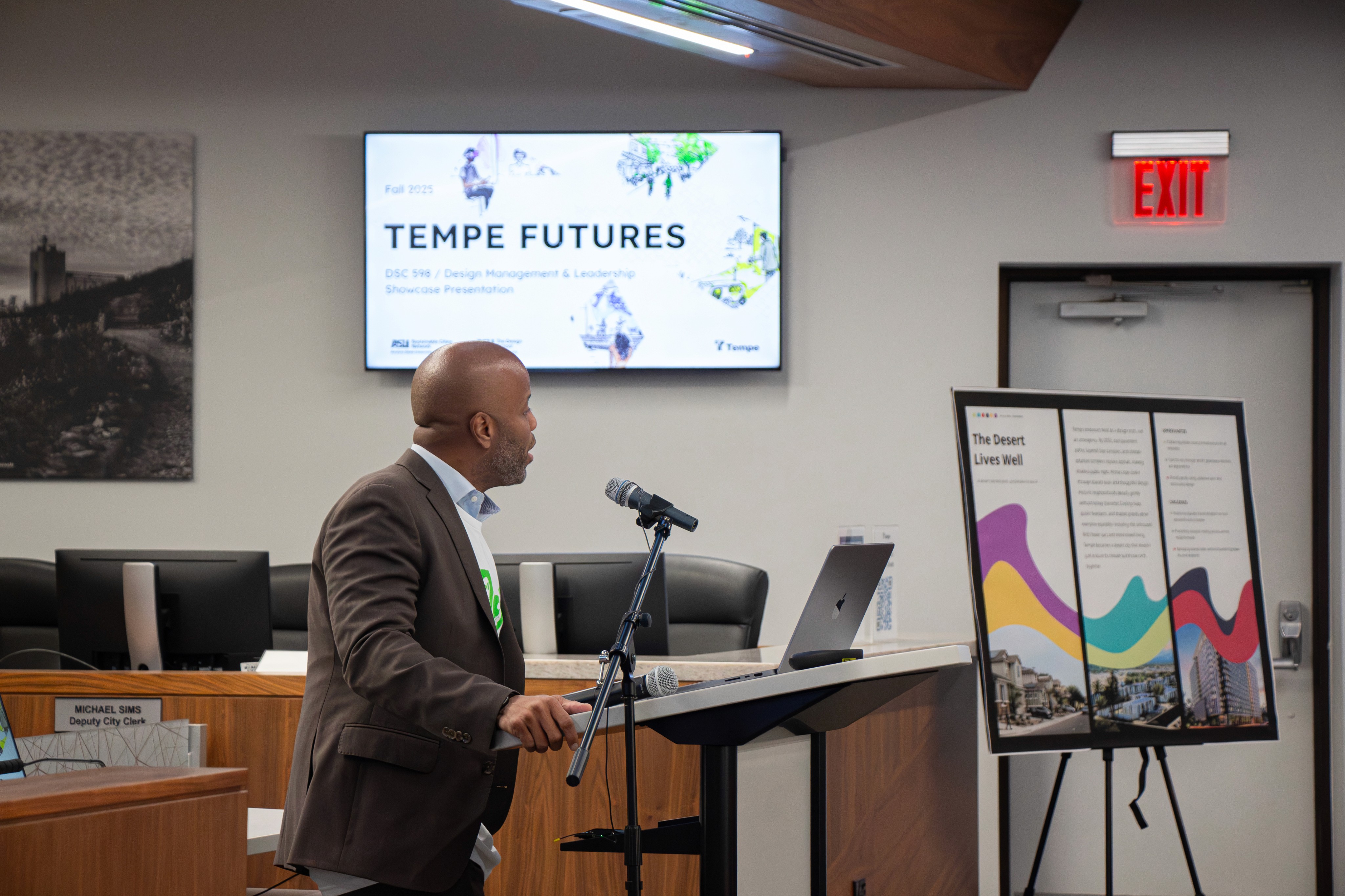
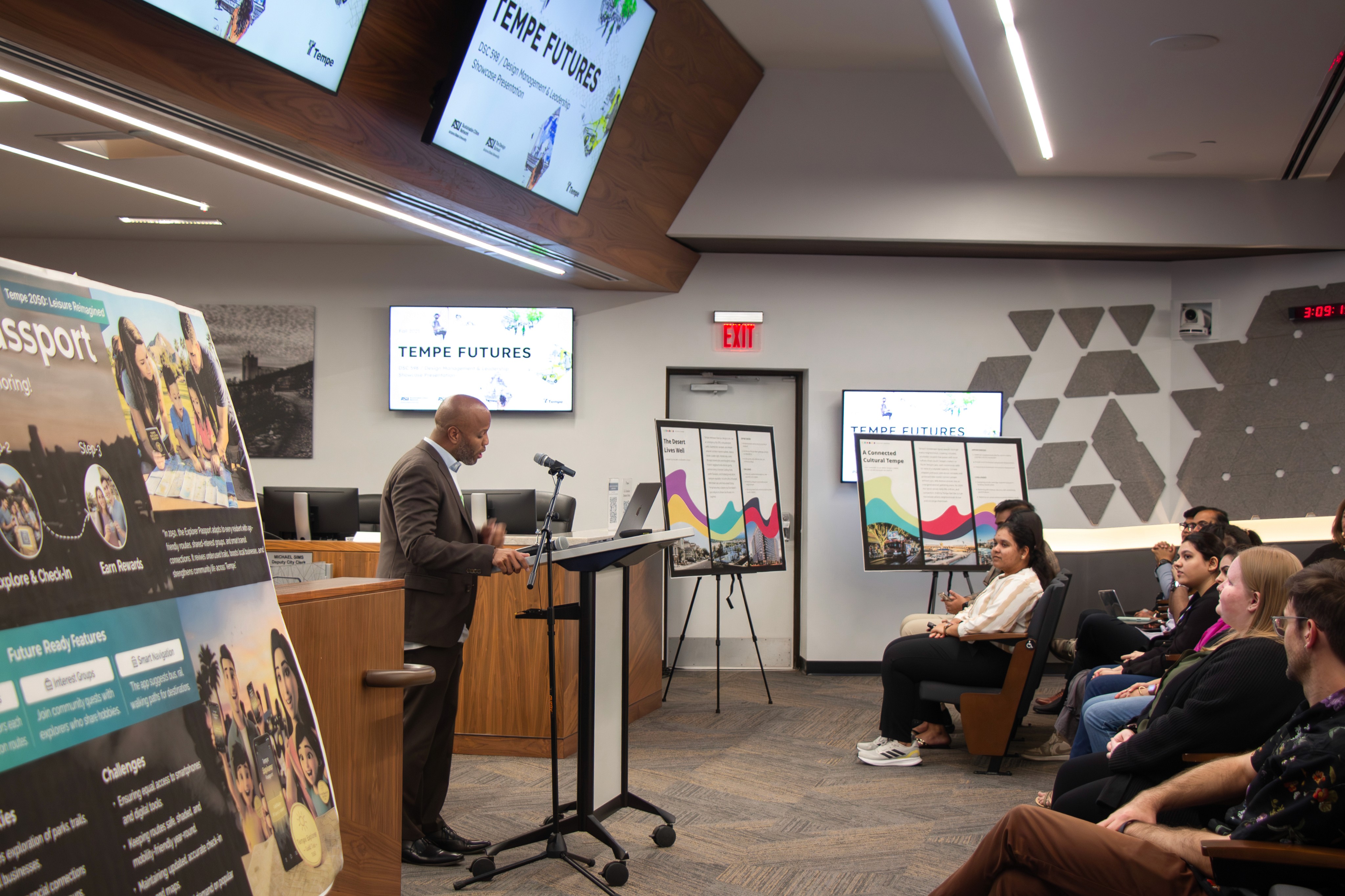
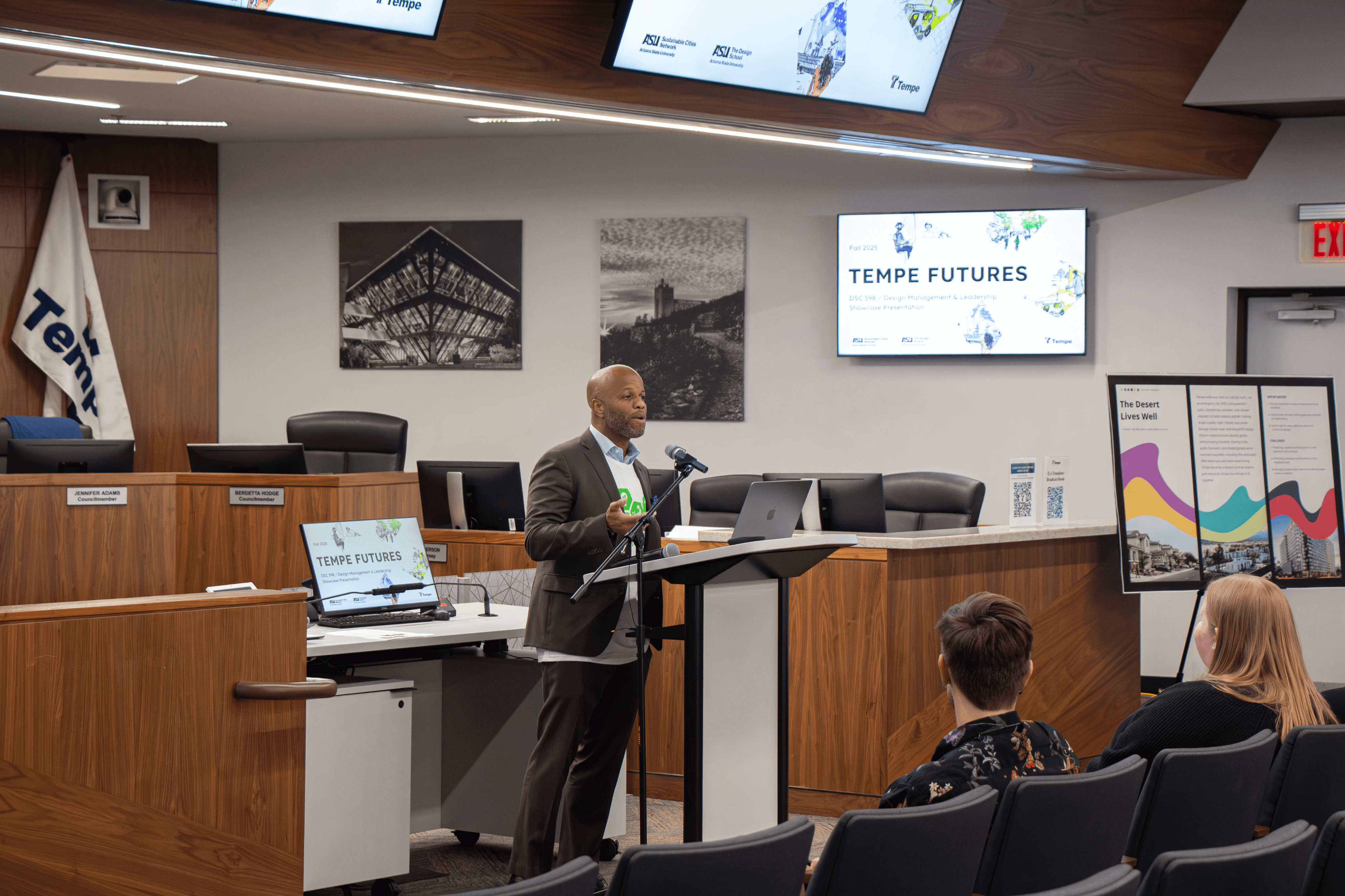
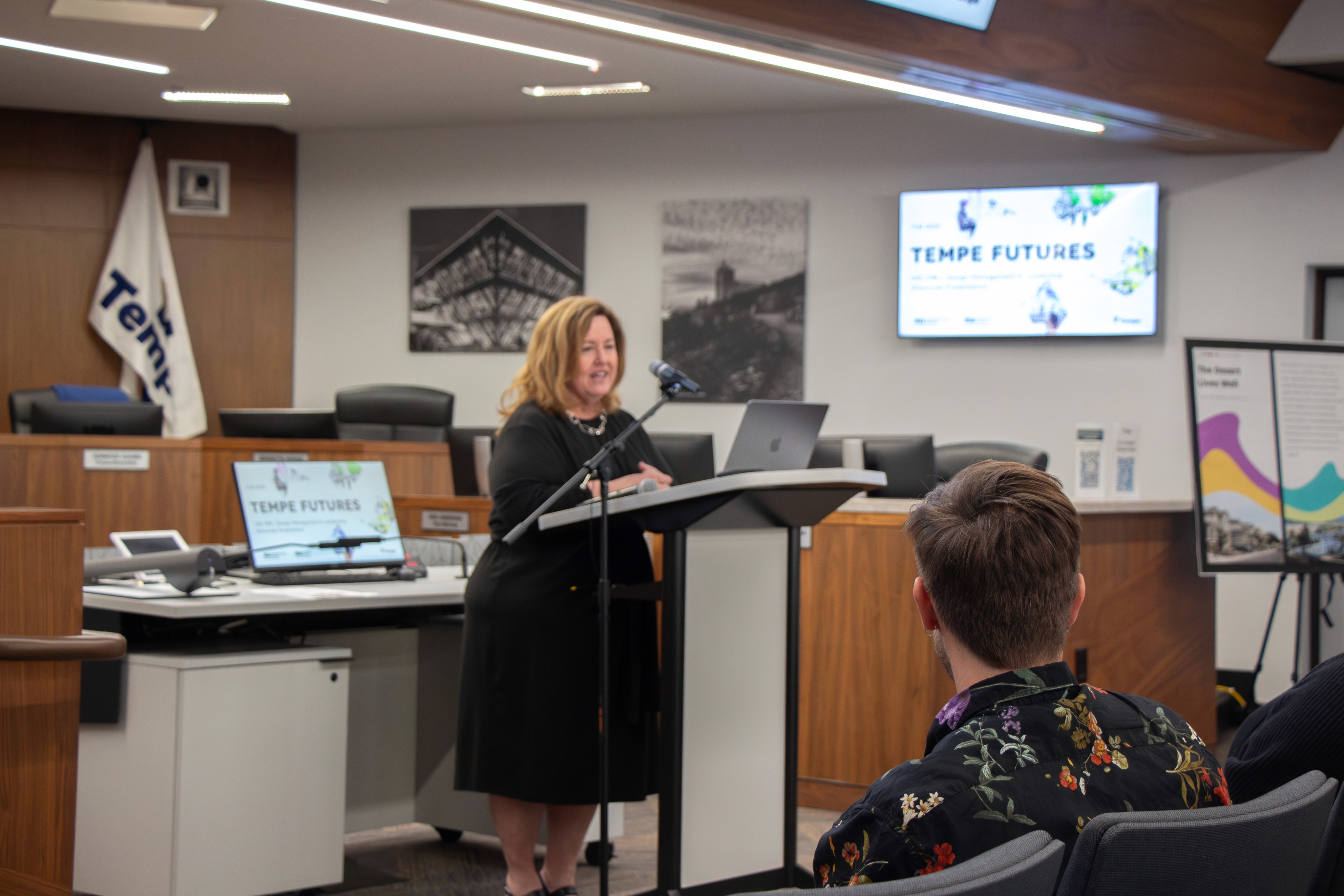
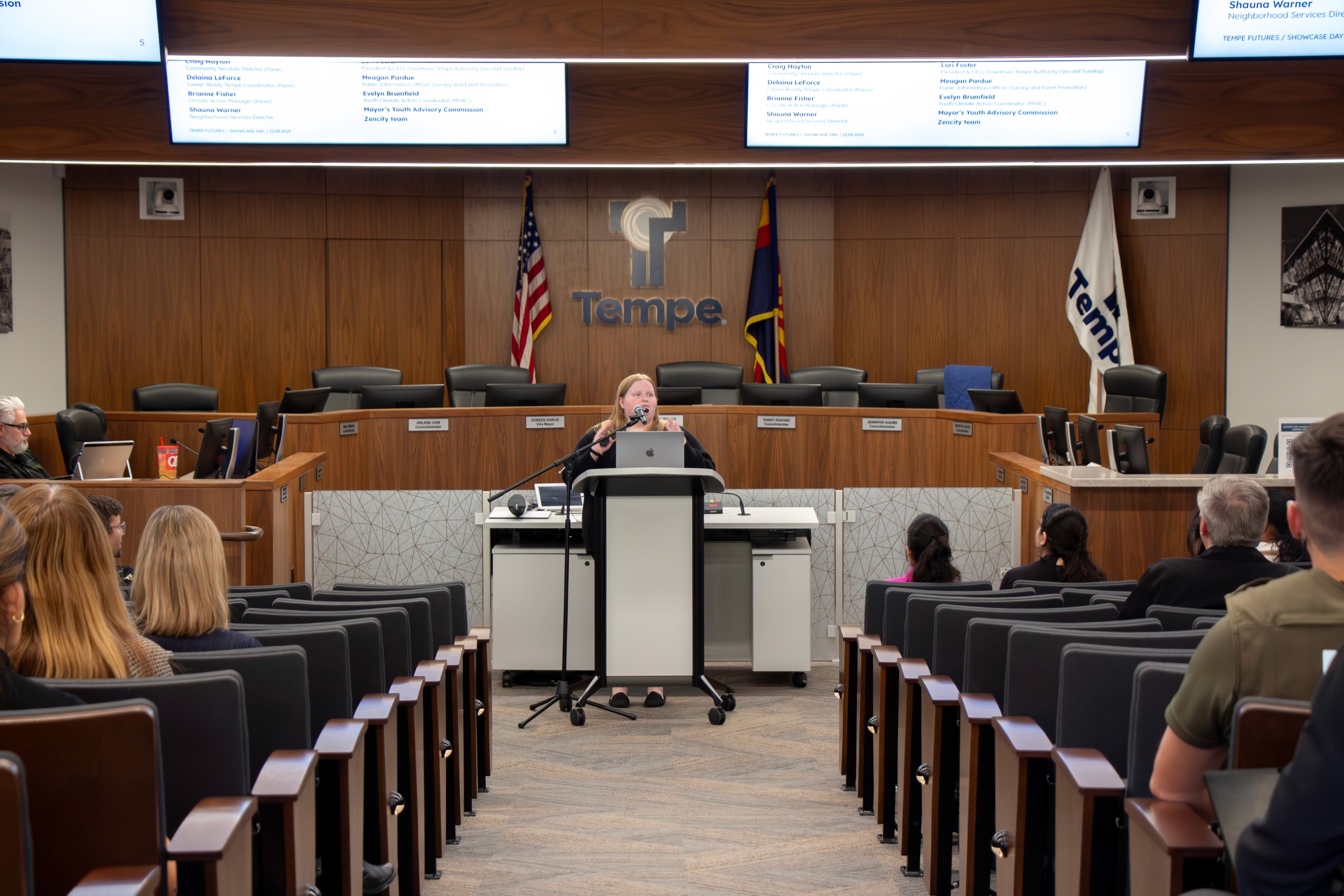
These scenarios were formally presented to the City of Tempe, including city staff, council members, and the Mayor, where we elevated community-identified concerns into actionable narratives to inform policy discussions, investment priorities, and long-term planning. This presentation marked the culmination of our research and design process, demonstrating how community-driven futures work can meaningfully support civic decision-making.
🔗 Final Presentation Document (Presented to Tempe City Council):
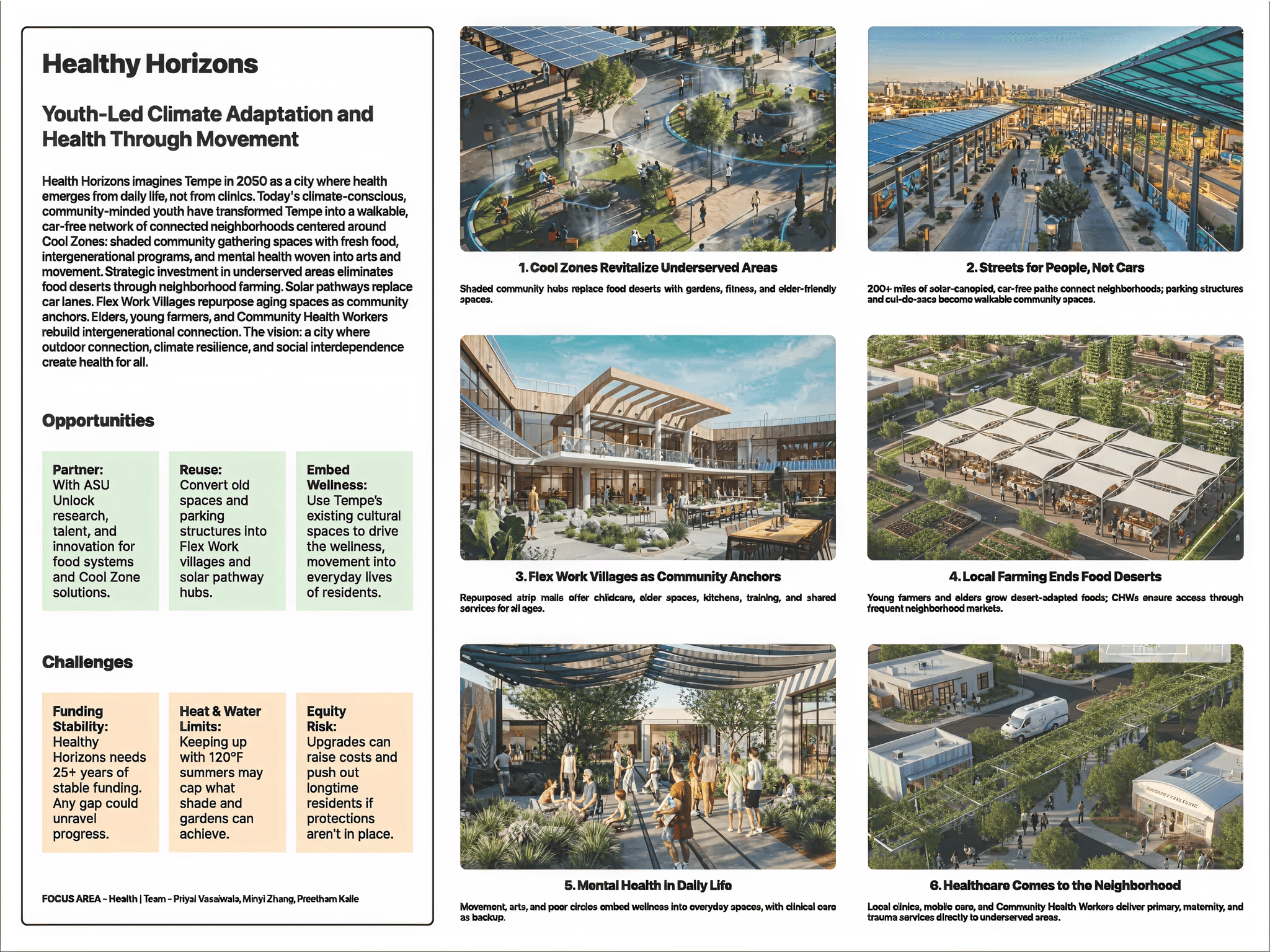
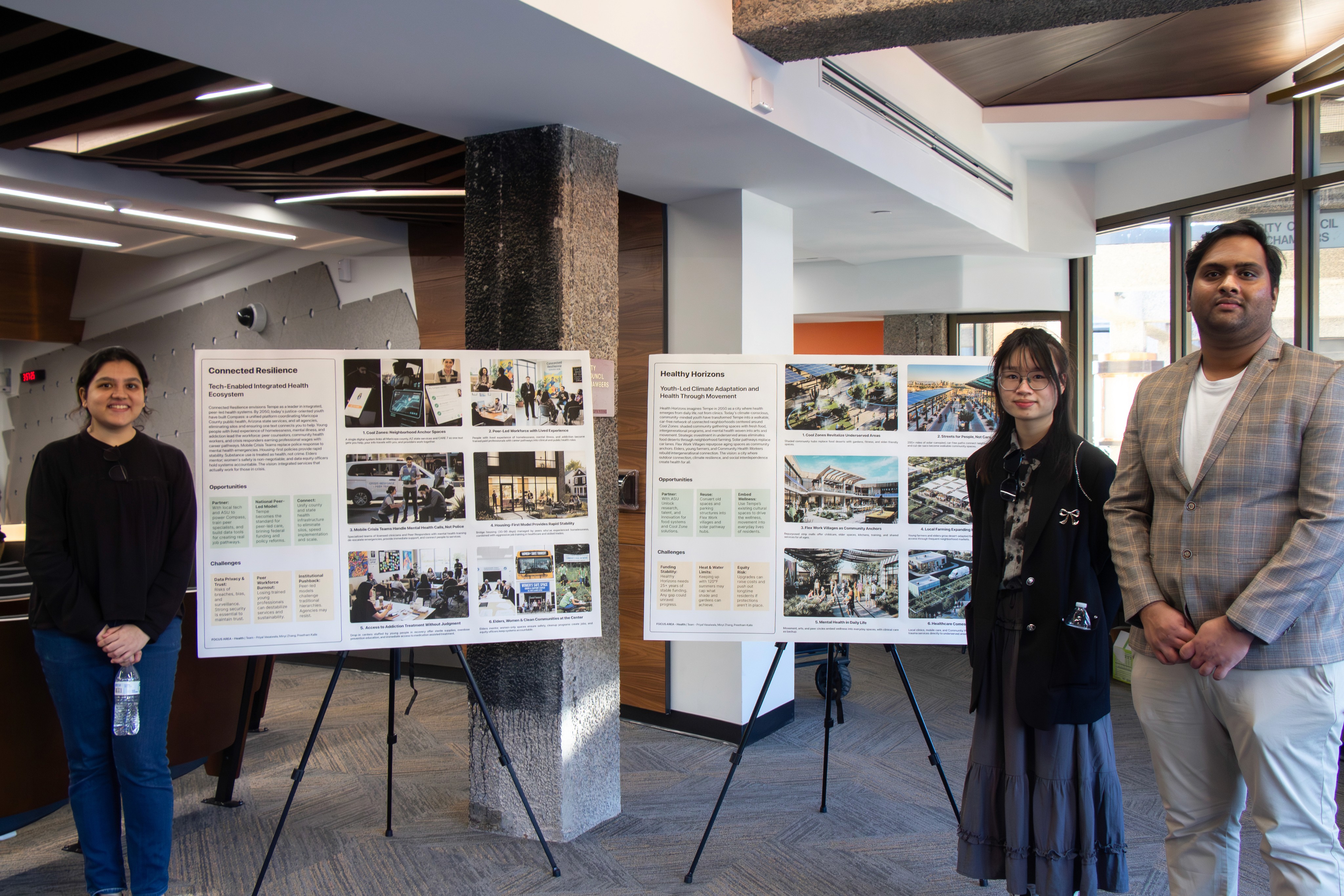
Scenario 1 - Healthy Horizons
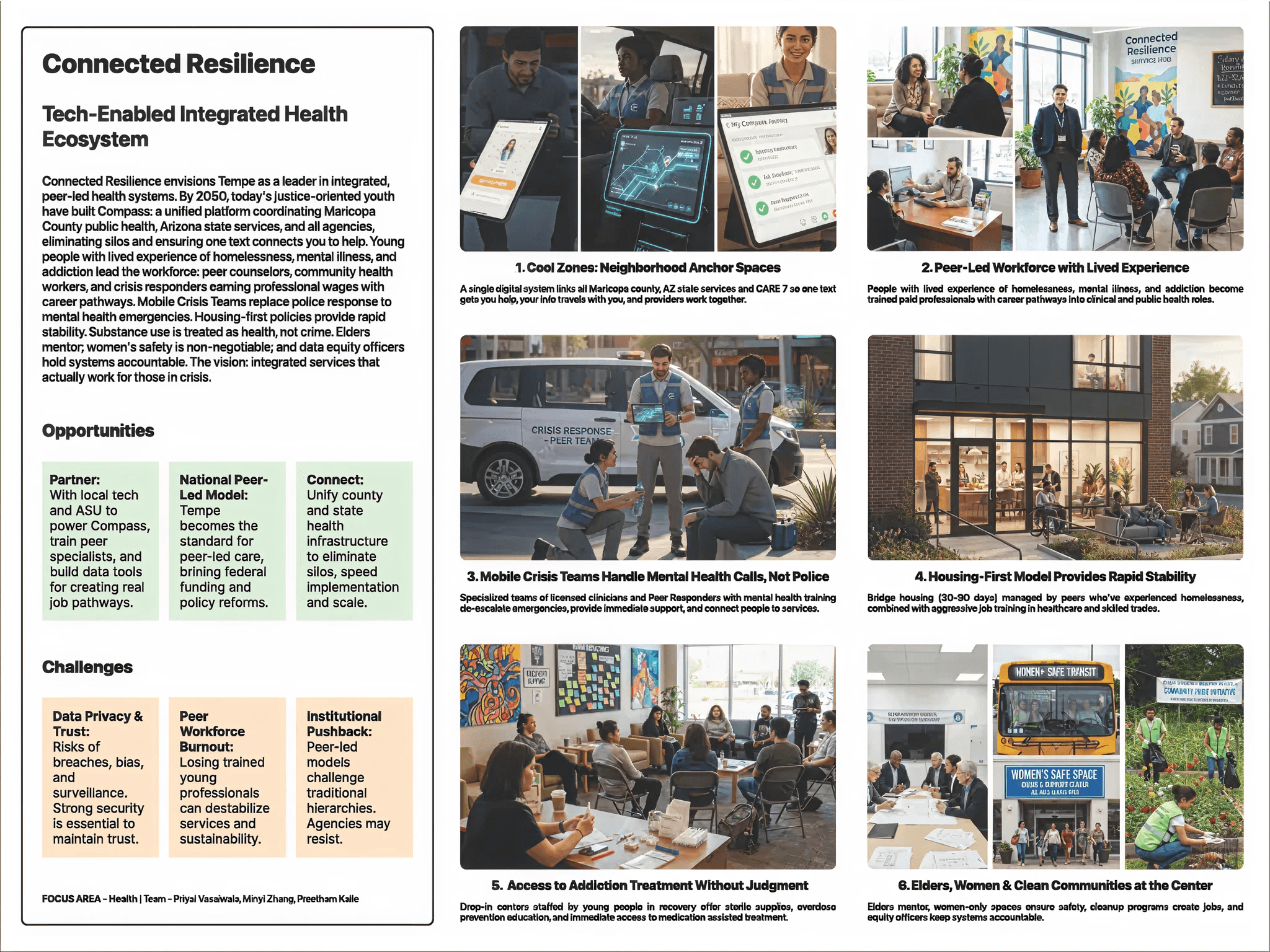
Scenario 2 - Connected Resilience
Final Presentation Highlights at Tempe City Council
Mayor Corey D. Woods
Mayor at City of Tempe
Mayor Corey D. Woods
Mayor at City of Tempe
Mayor Corey D. Woods
Mayor at City of Tempe
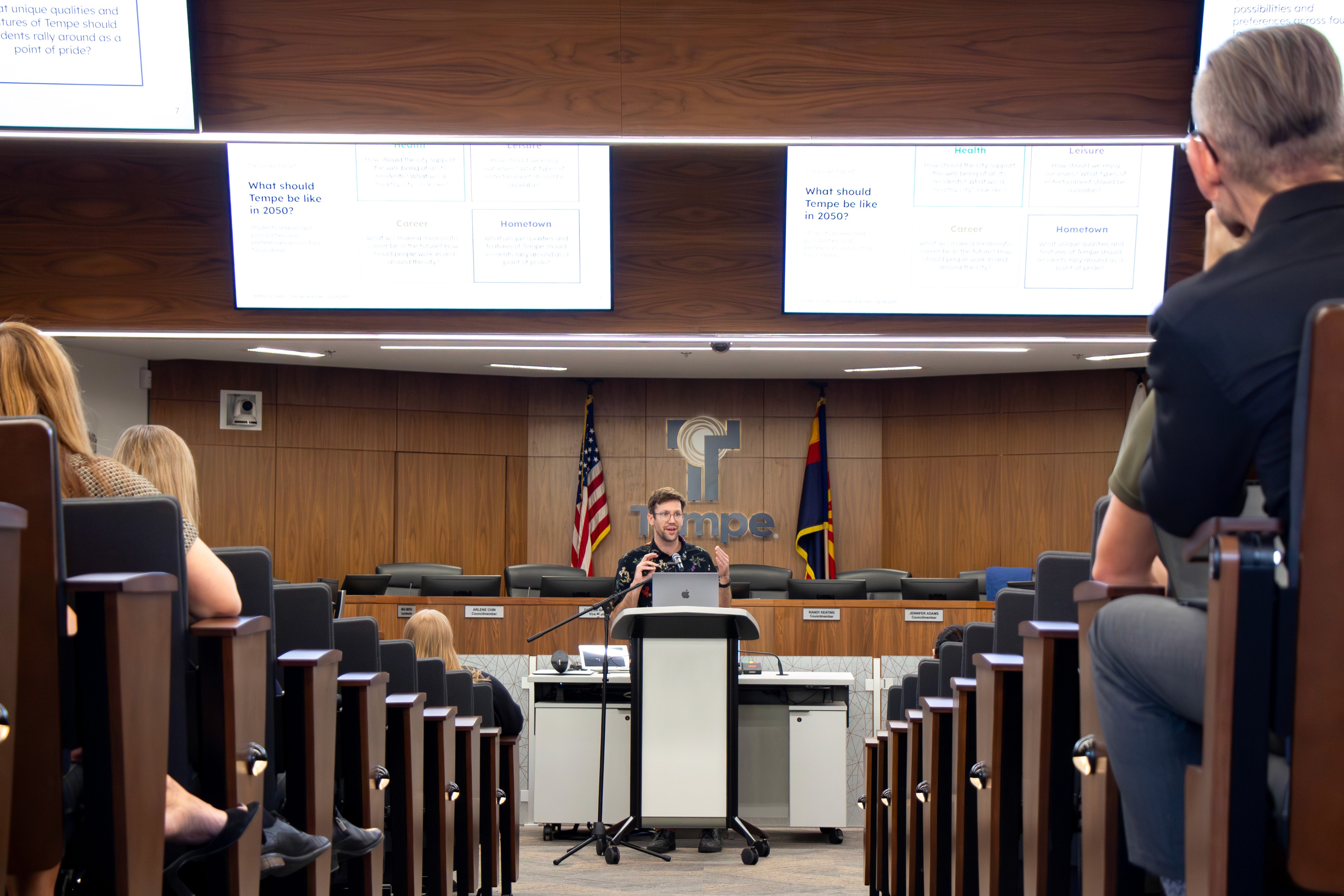
Wydales Holmes
Director, Strategic Management and Innovation Office
Alison Almand
Program Manager, ASU Project Cities
Andrew Whitcomb
Assistant Professor, ASU Design School
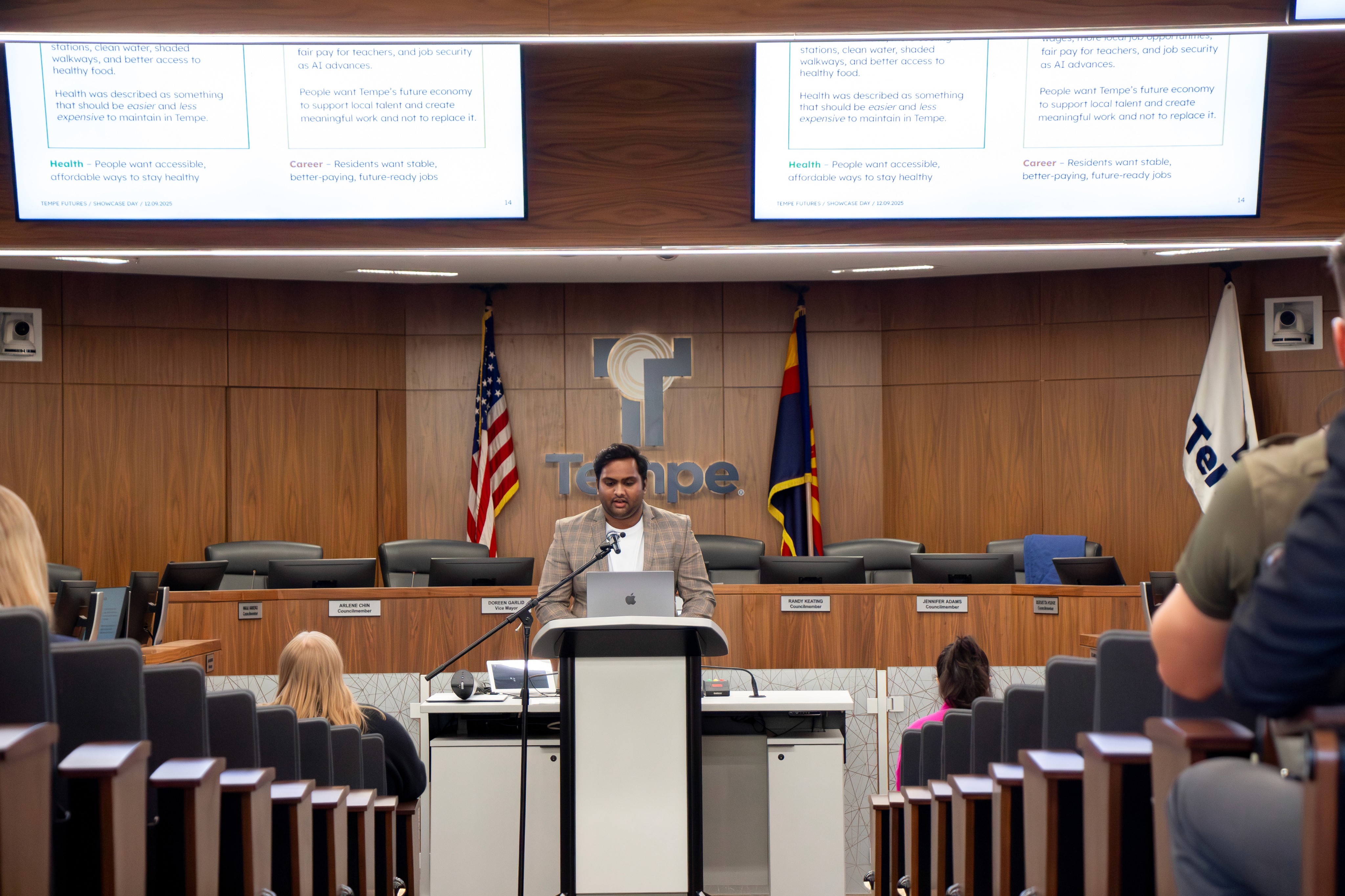
Preetham Kalle
ASU Student MS,UX
Focus Area Team - Health
Focus Area Team
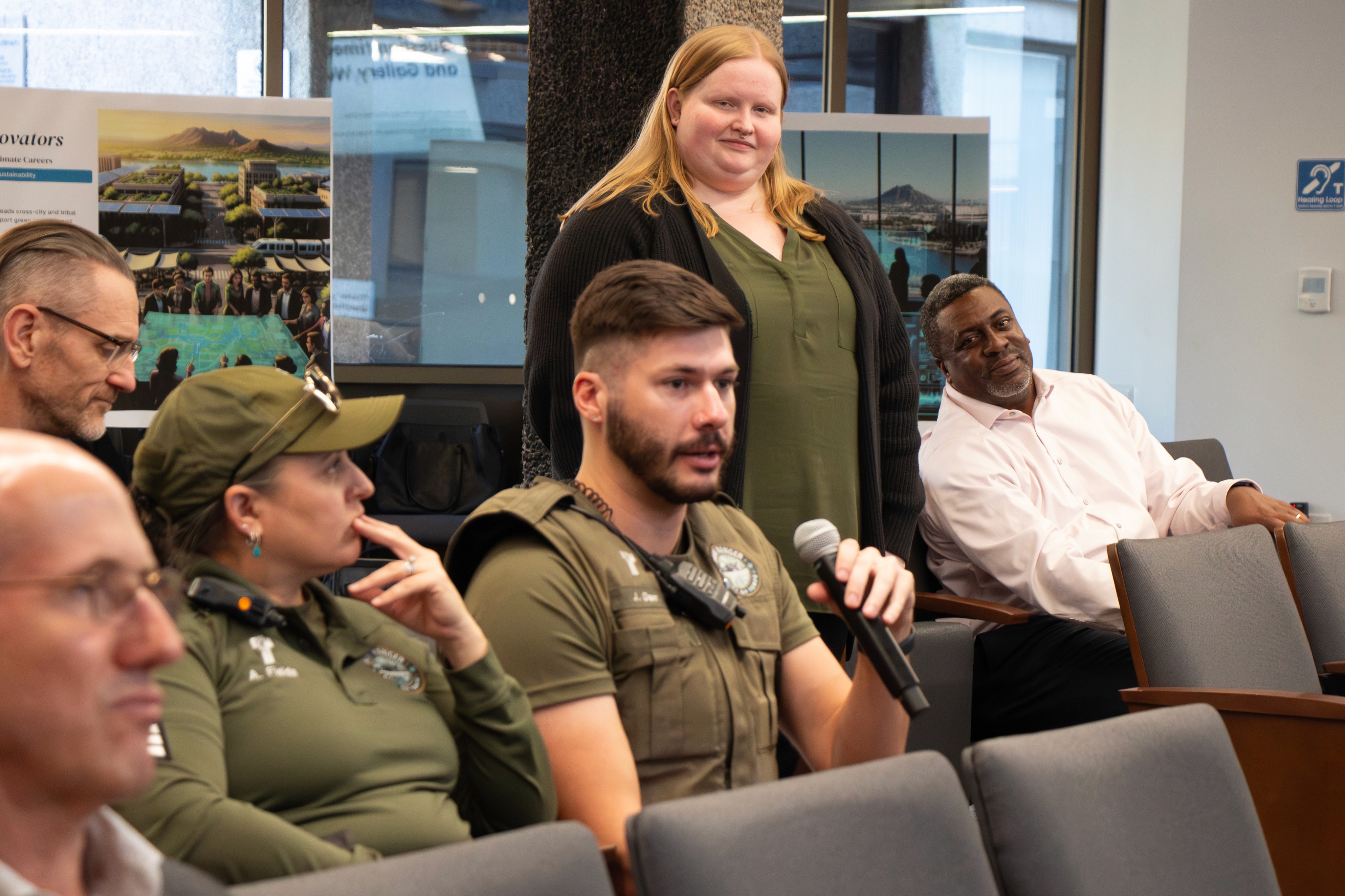
Audience
At Tempe City Council Building
Open House
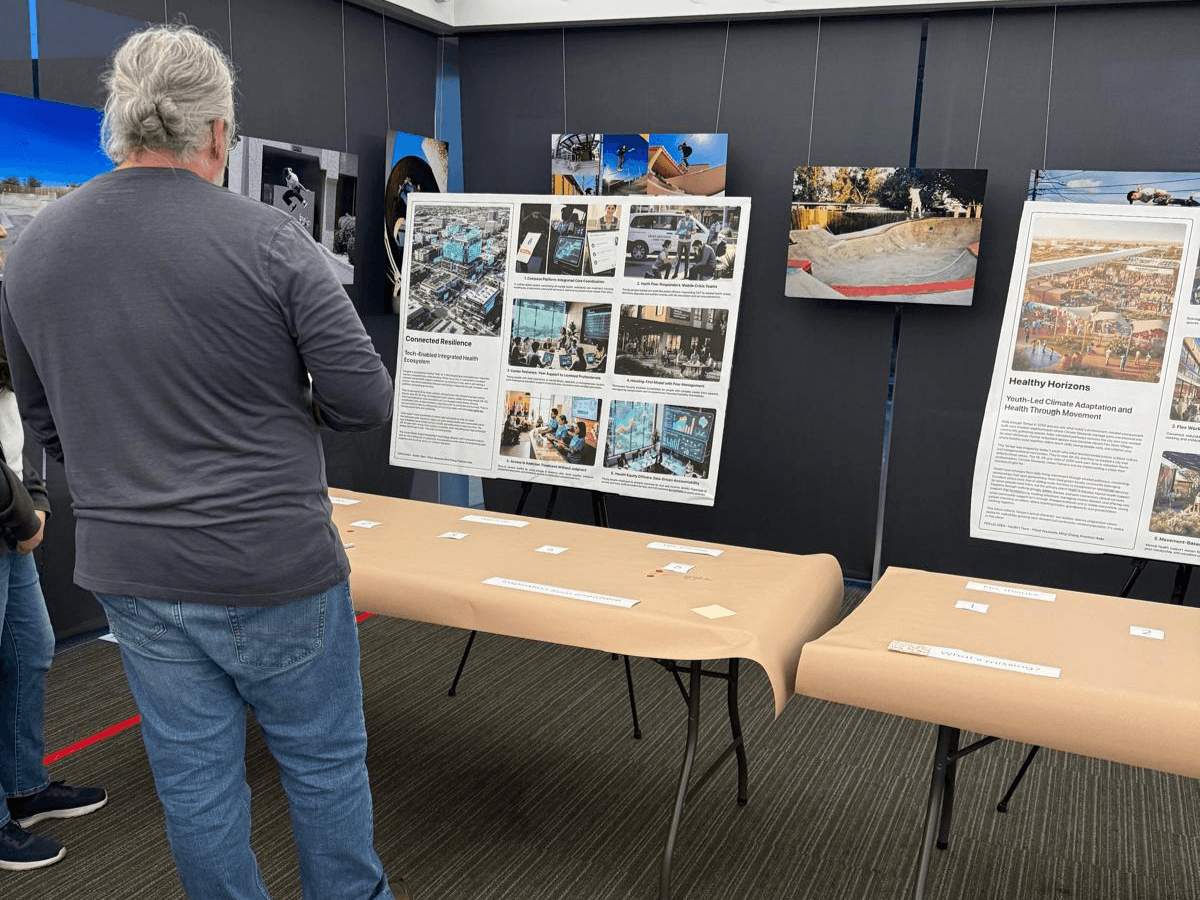
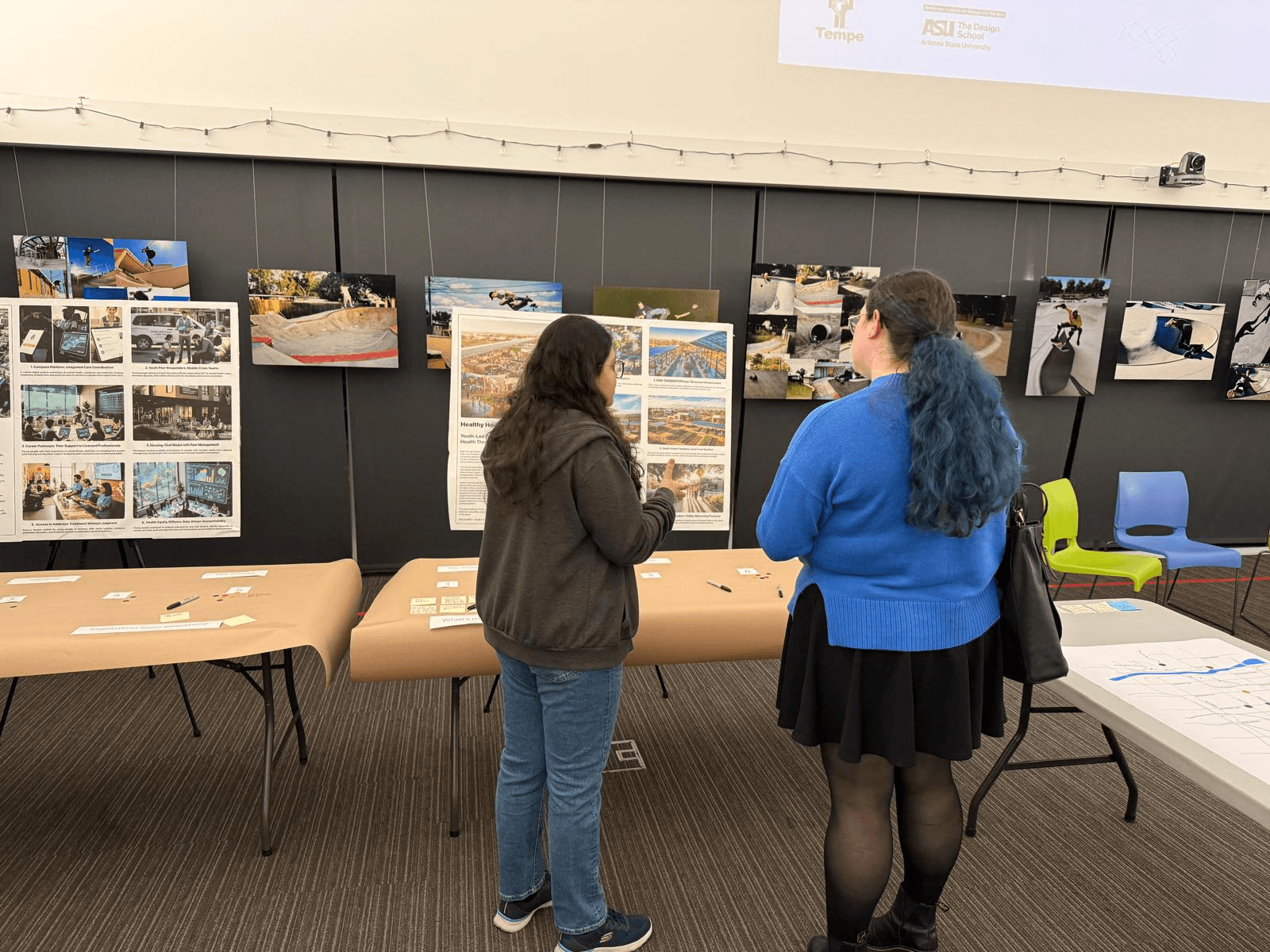
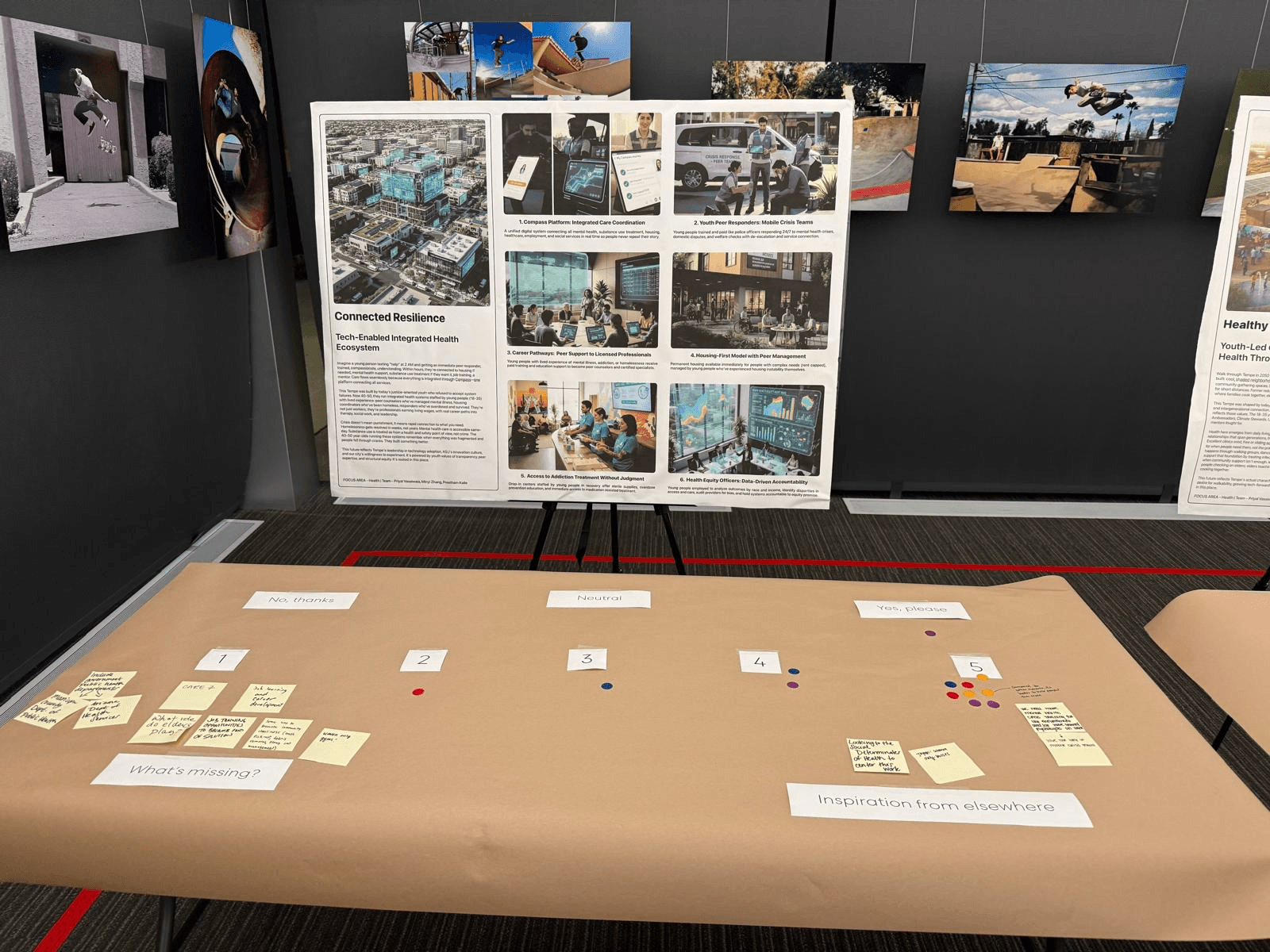
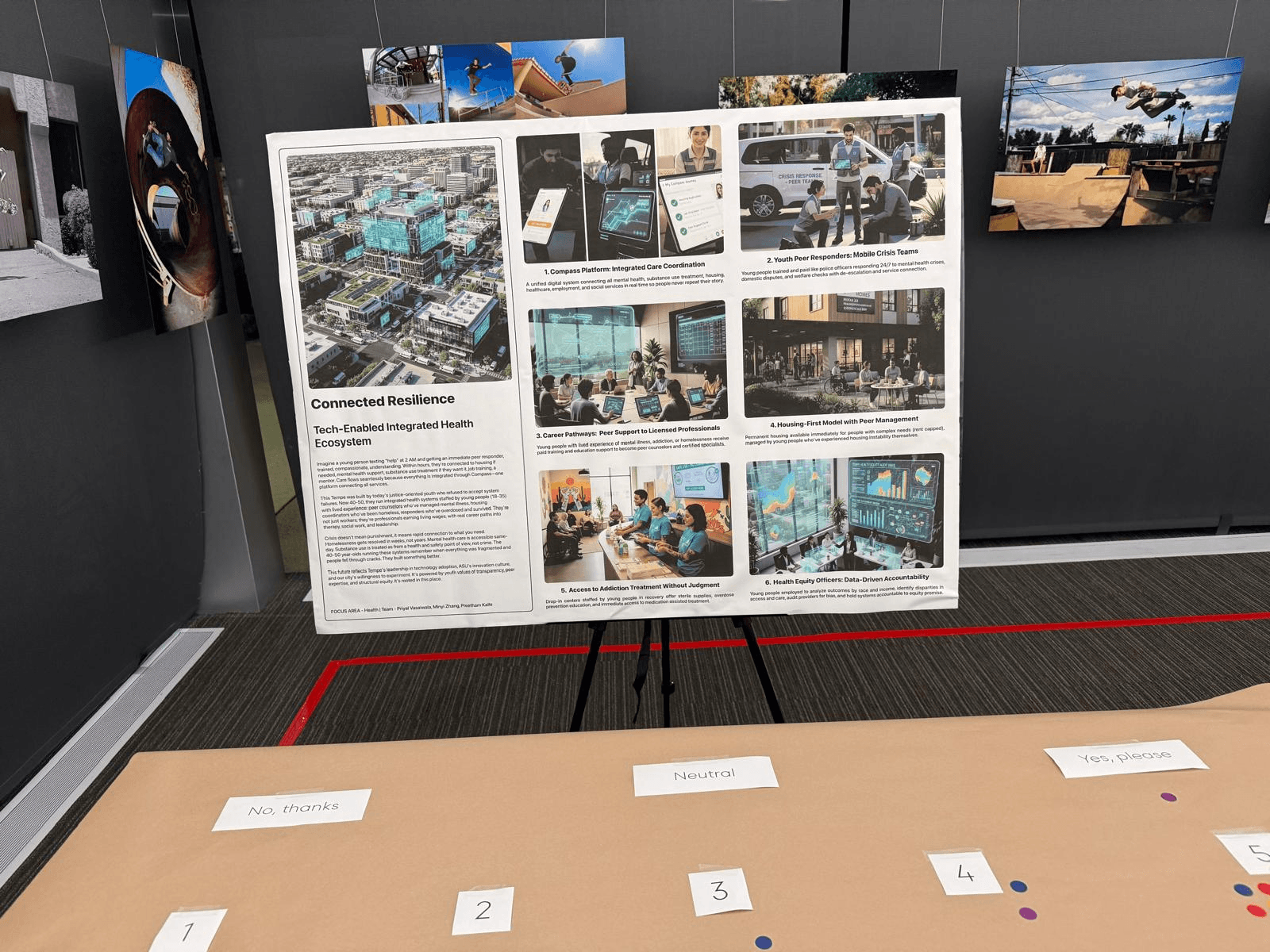
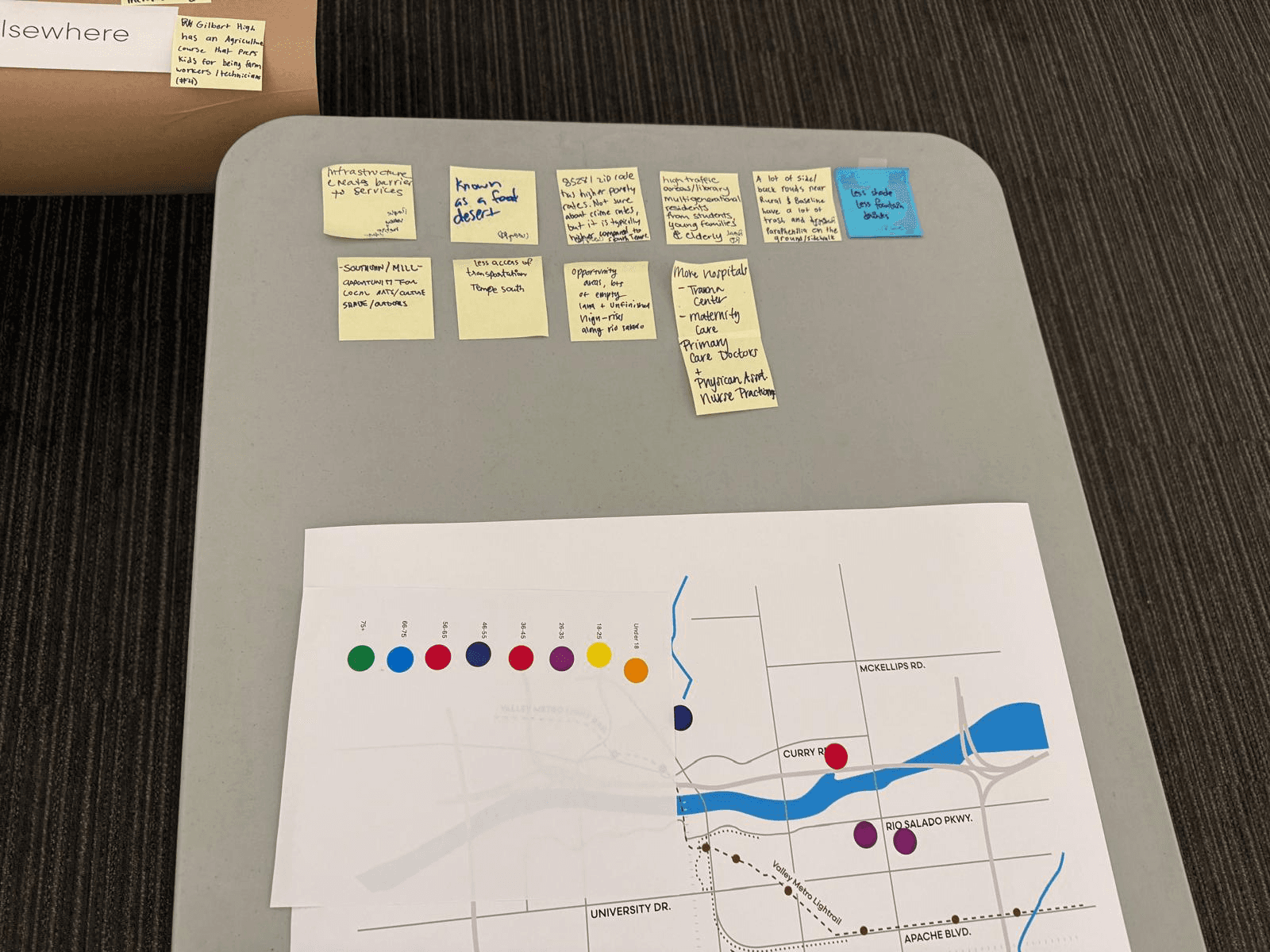
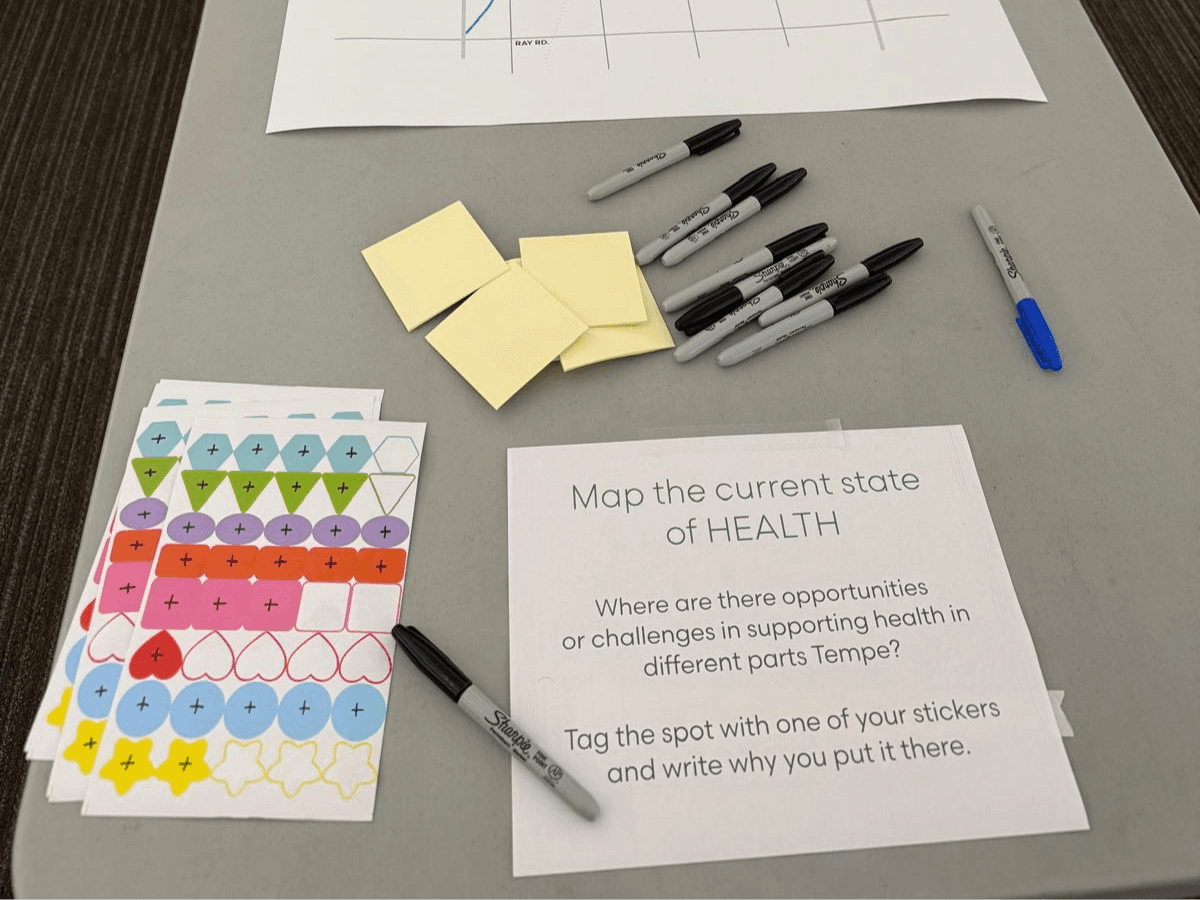
We have designed an interactive open house to gather community feedback on future health scenarios at the Tempe Museum, featuring hands-on activities and visual prompts. These sessions surfaced real needs around shaded public spaces, accessible healthcare, local food systems, and mental health support, helping ground our final scenarios in lived community priorities rather than assumptions.
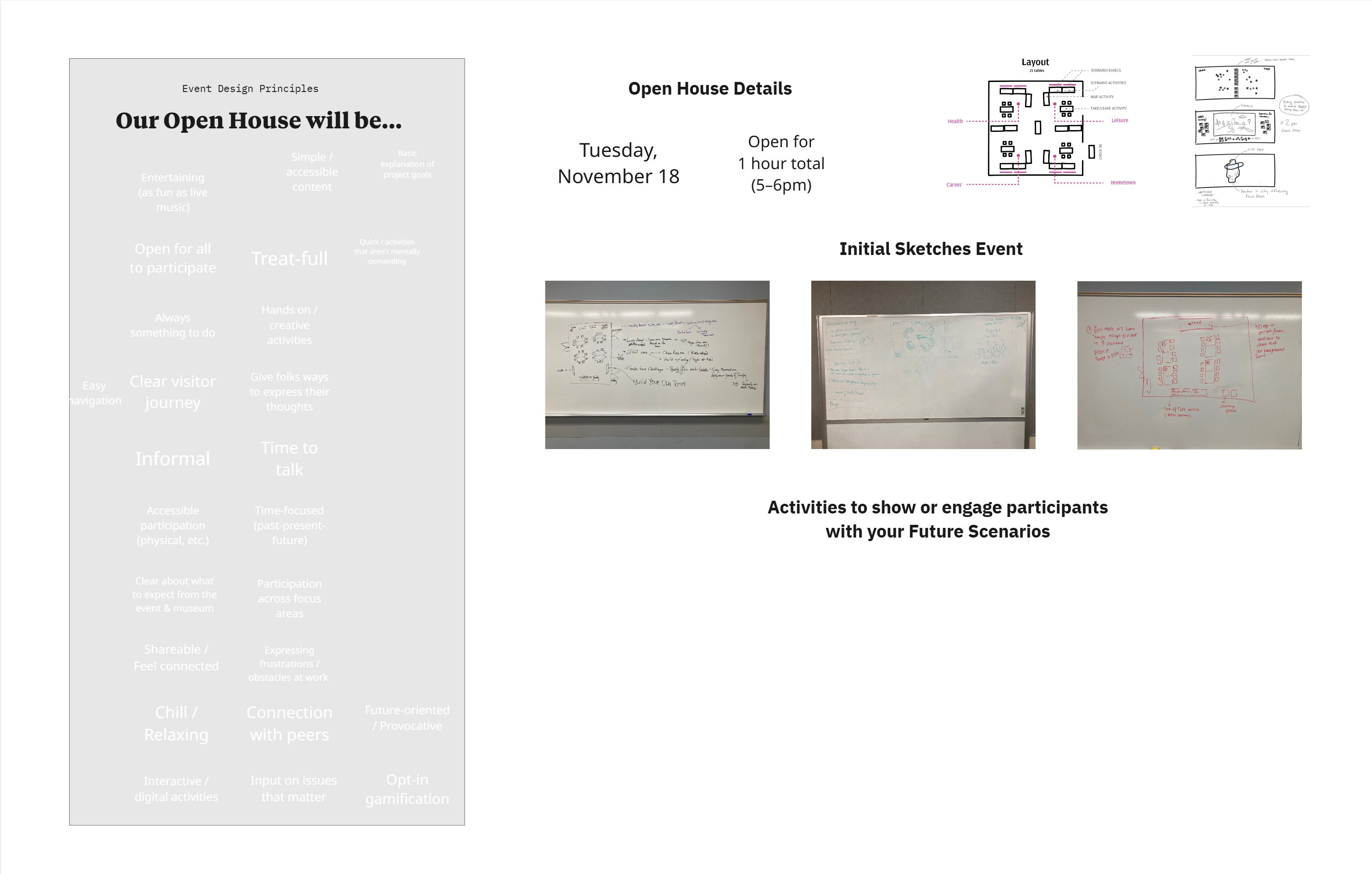
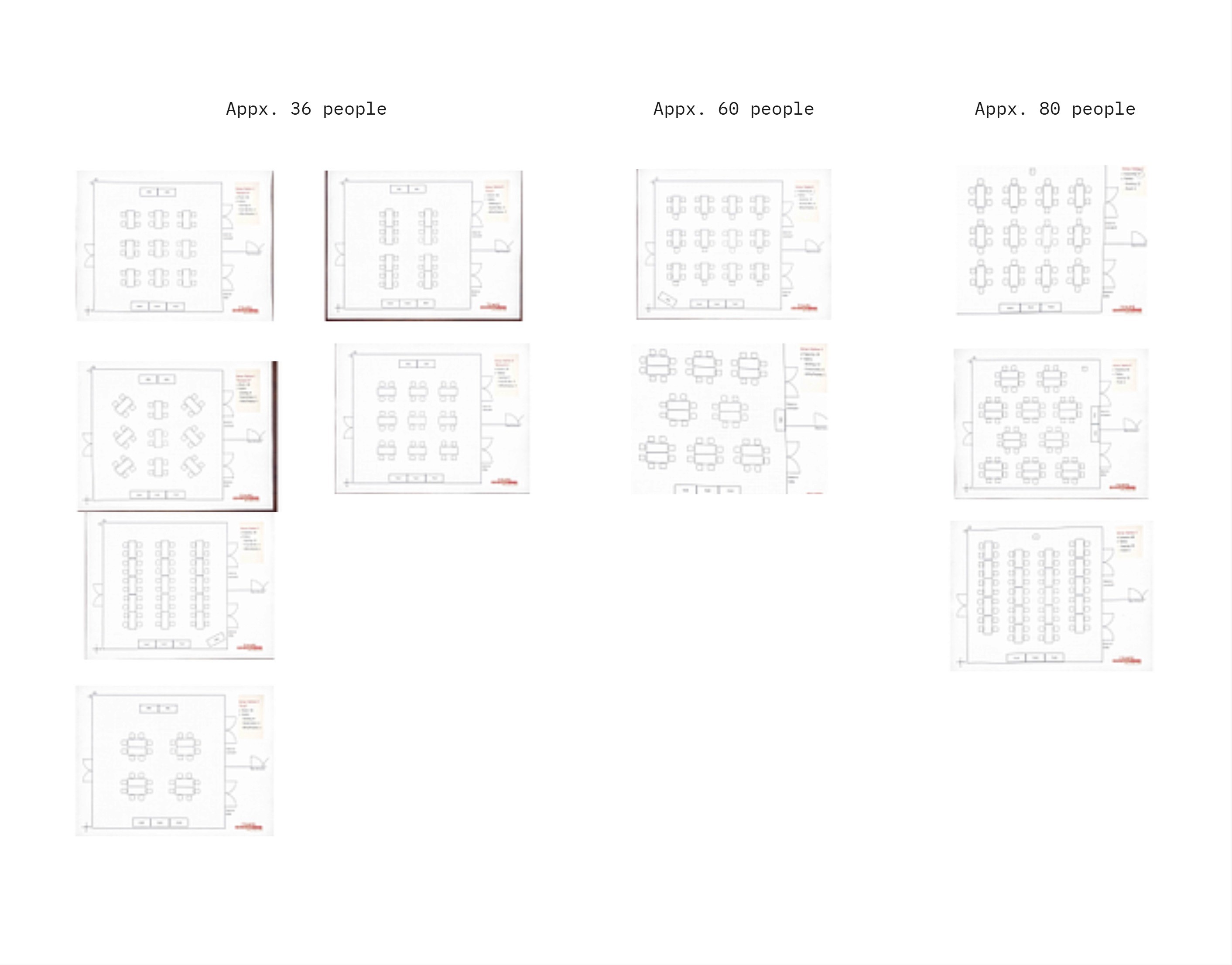
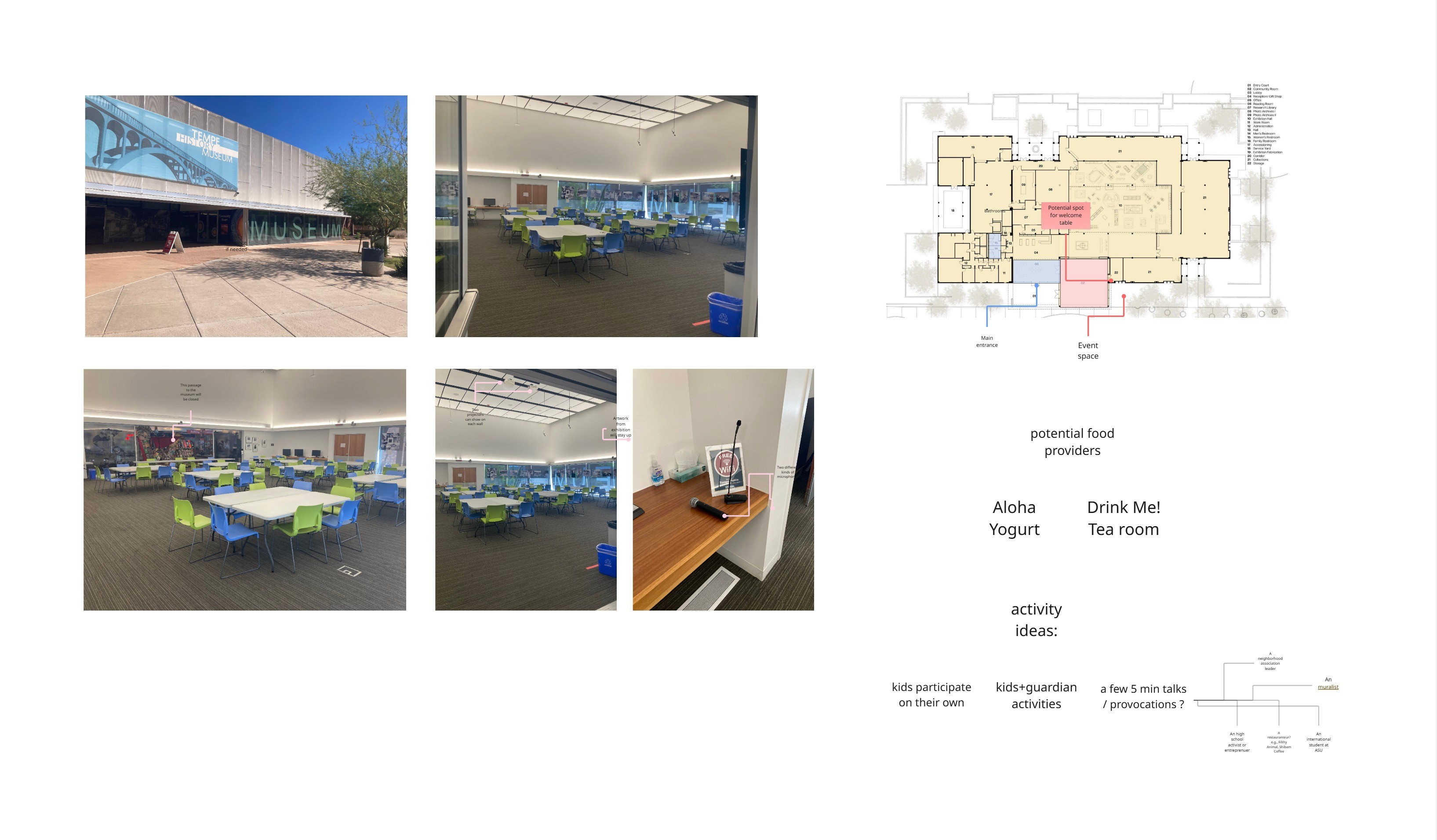
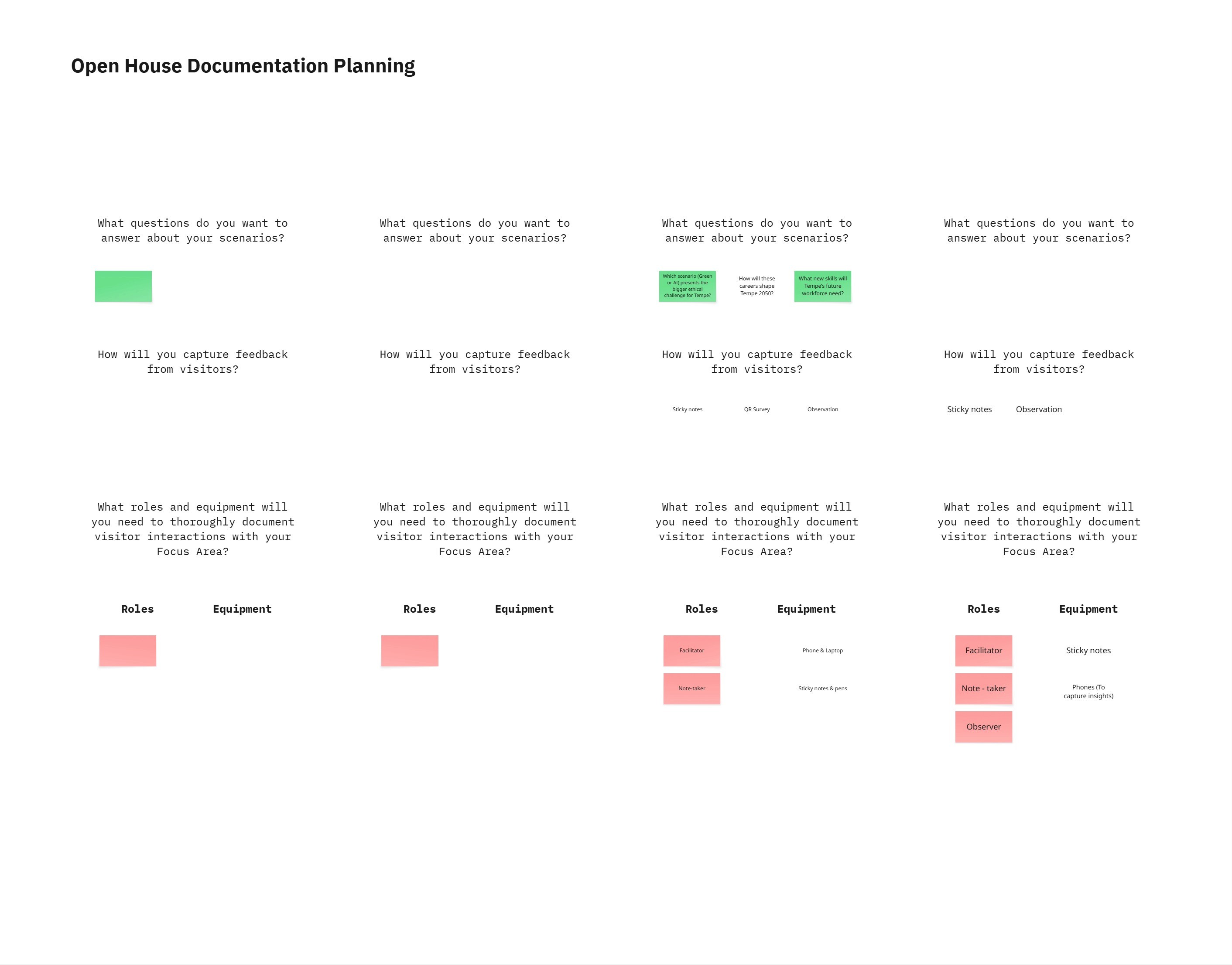
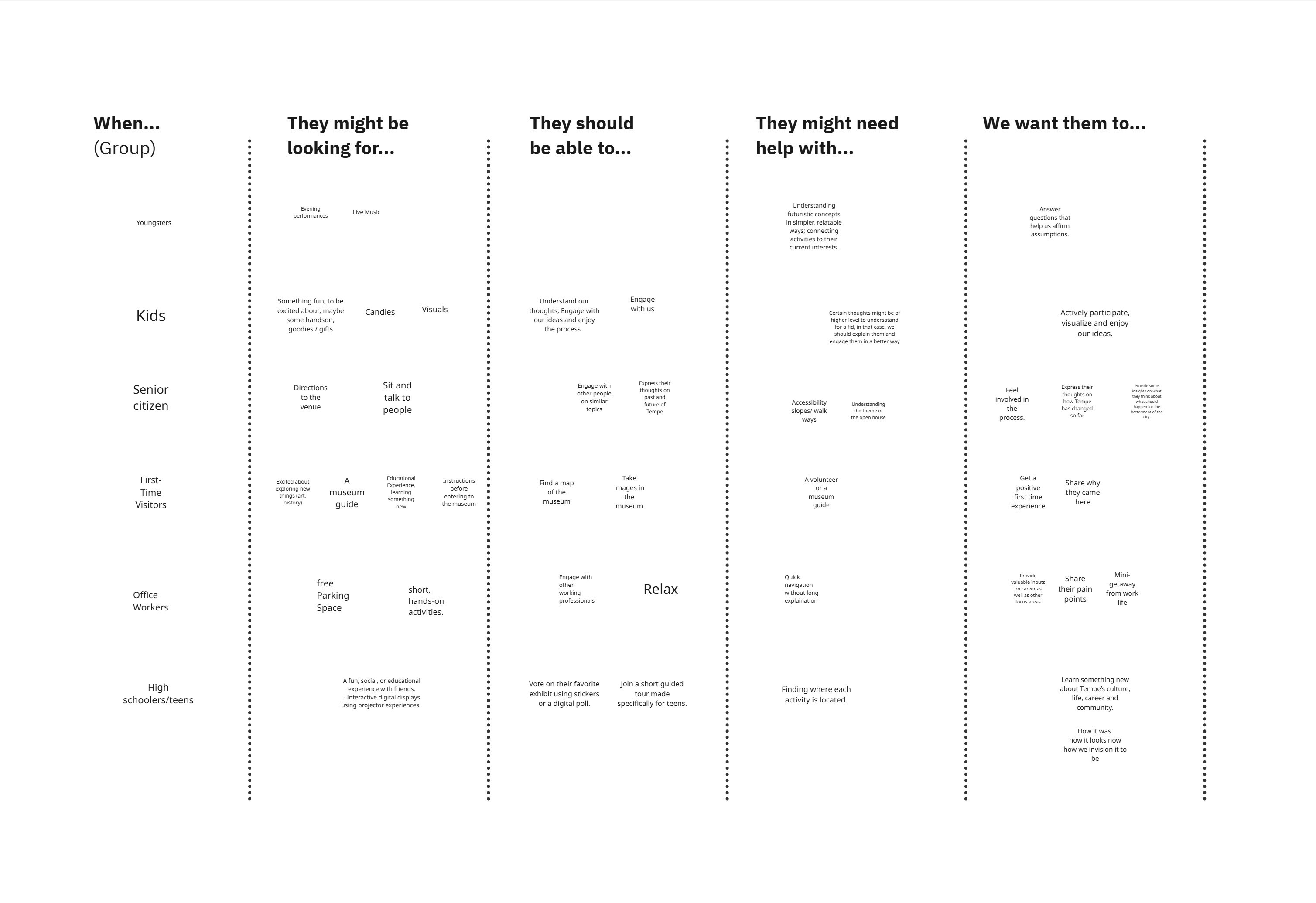
Open House Planning
Insights From Open House
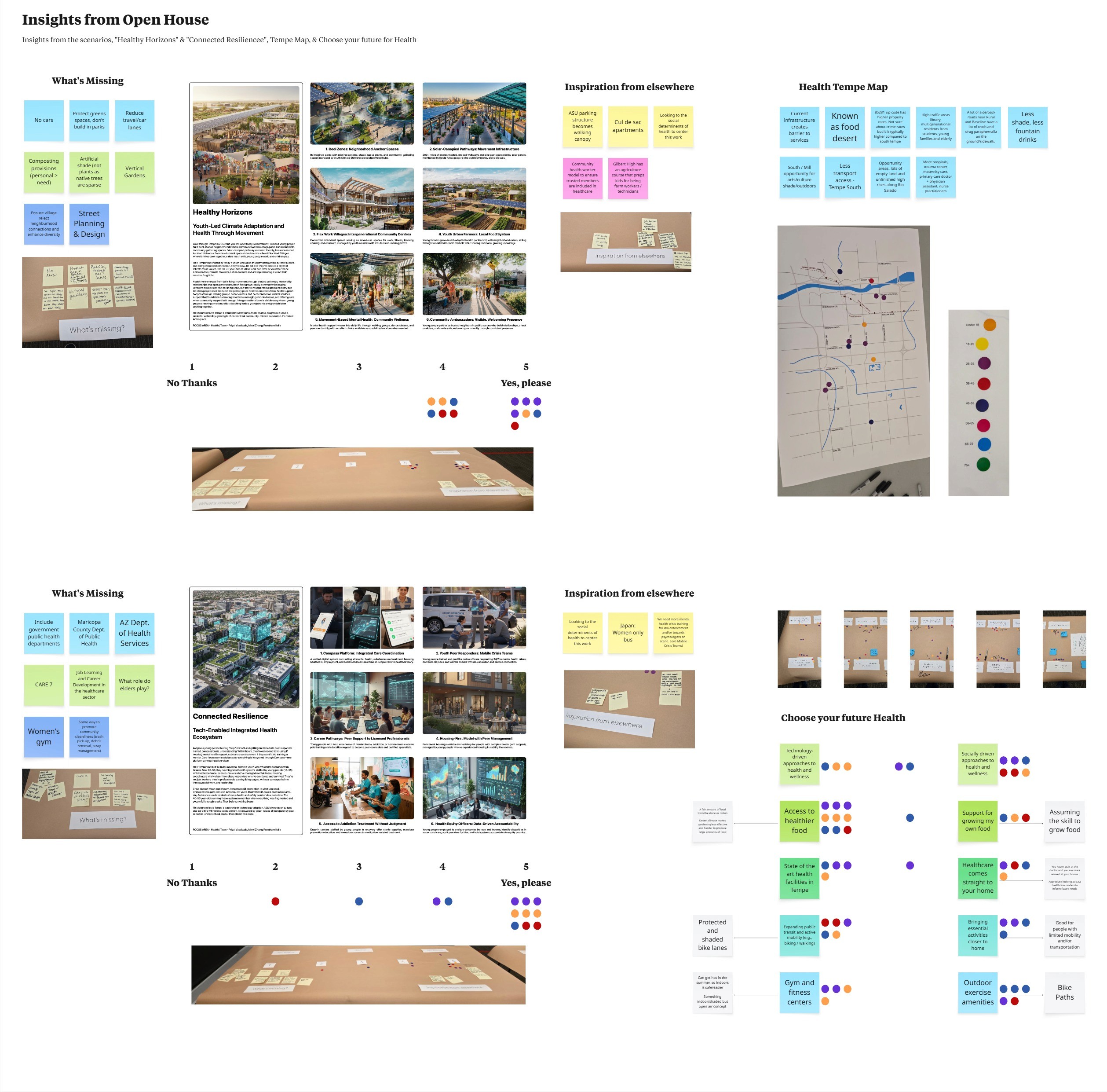
Open House Highlights
Scenarios Development
Initial Scenarios
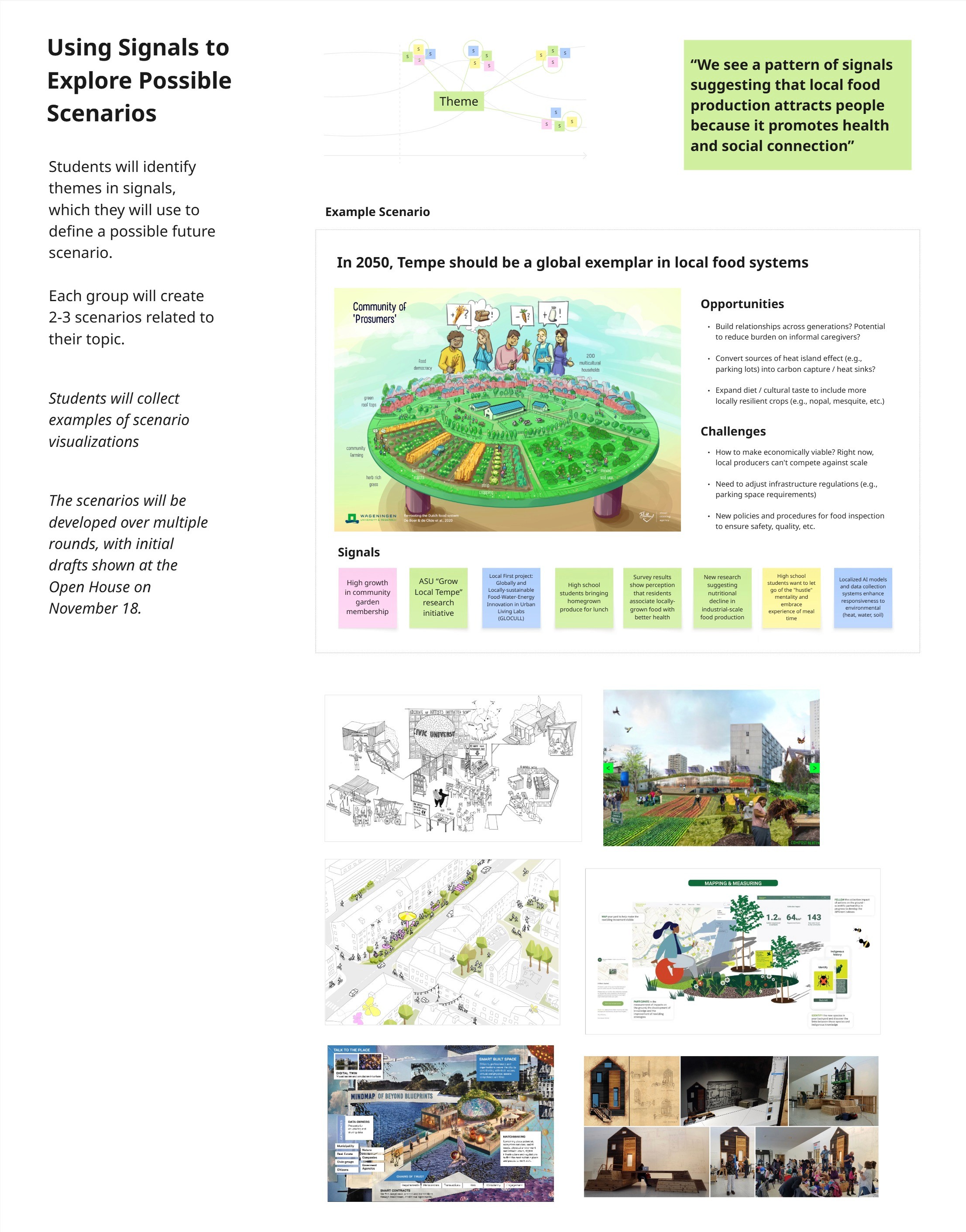
Using all the signals that we have gathered across research, engagement, and city inputs, we clustered health-related patterns to develop early future scenarios for Tempe in 2050. These initial scenarios translated complex insights into clear, plausible narratives that helped frame opportunities, risks, and discussion points before moving into refined scenario development
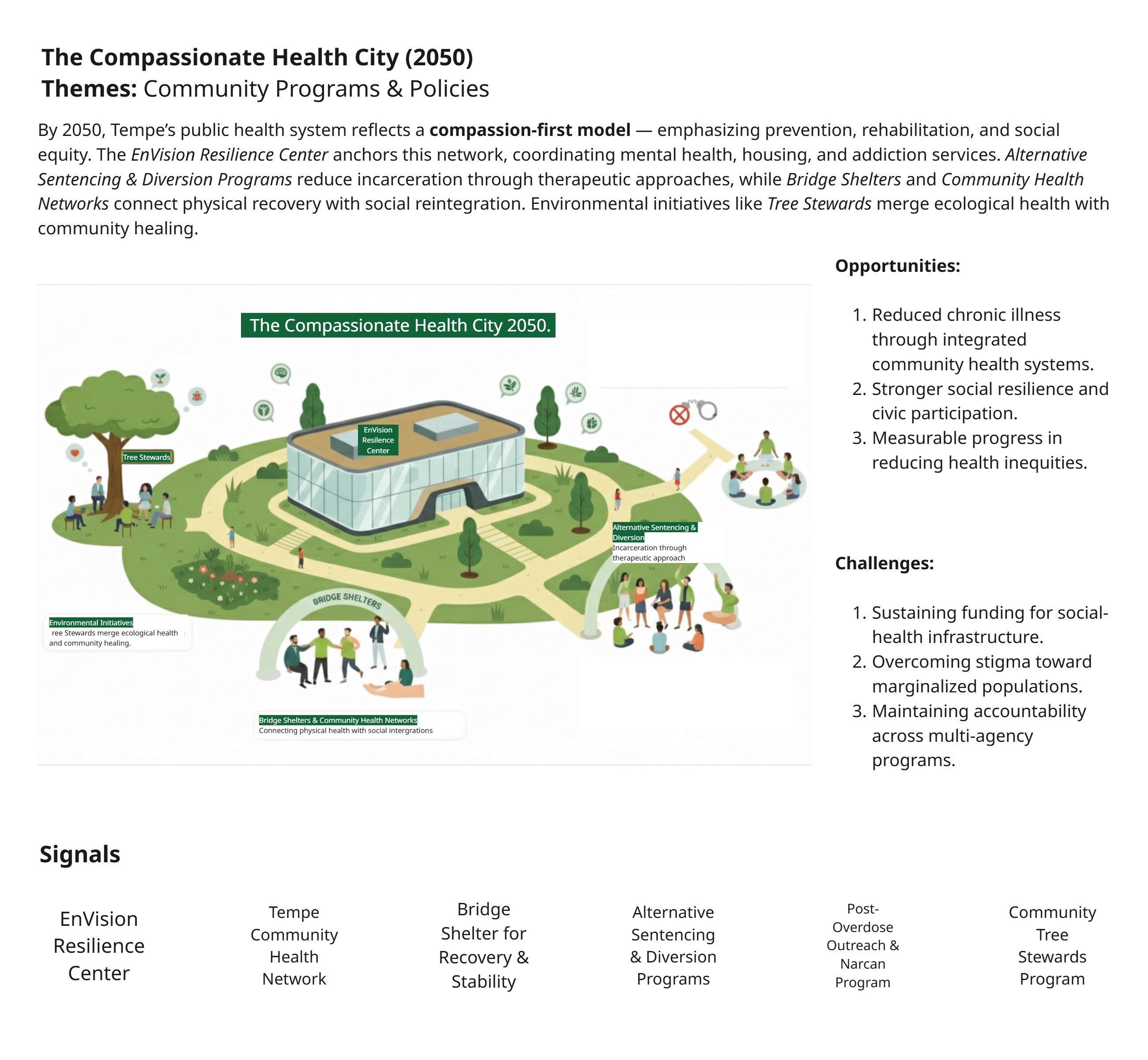
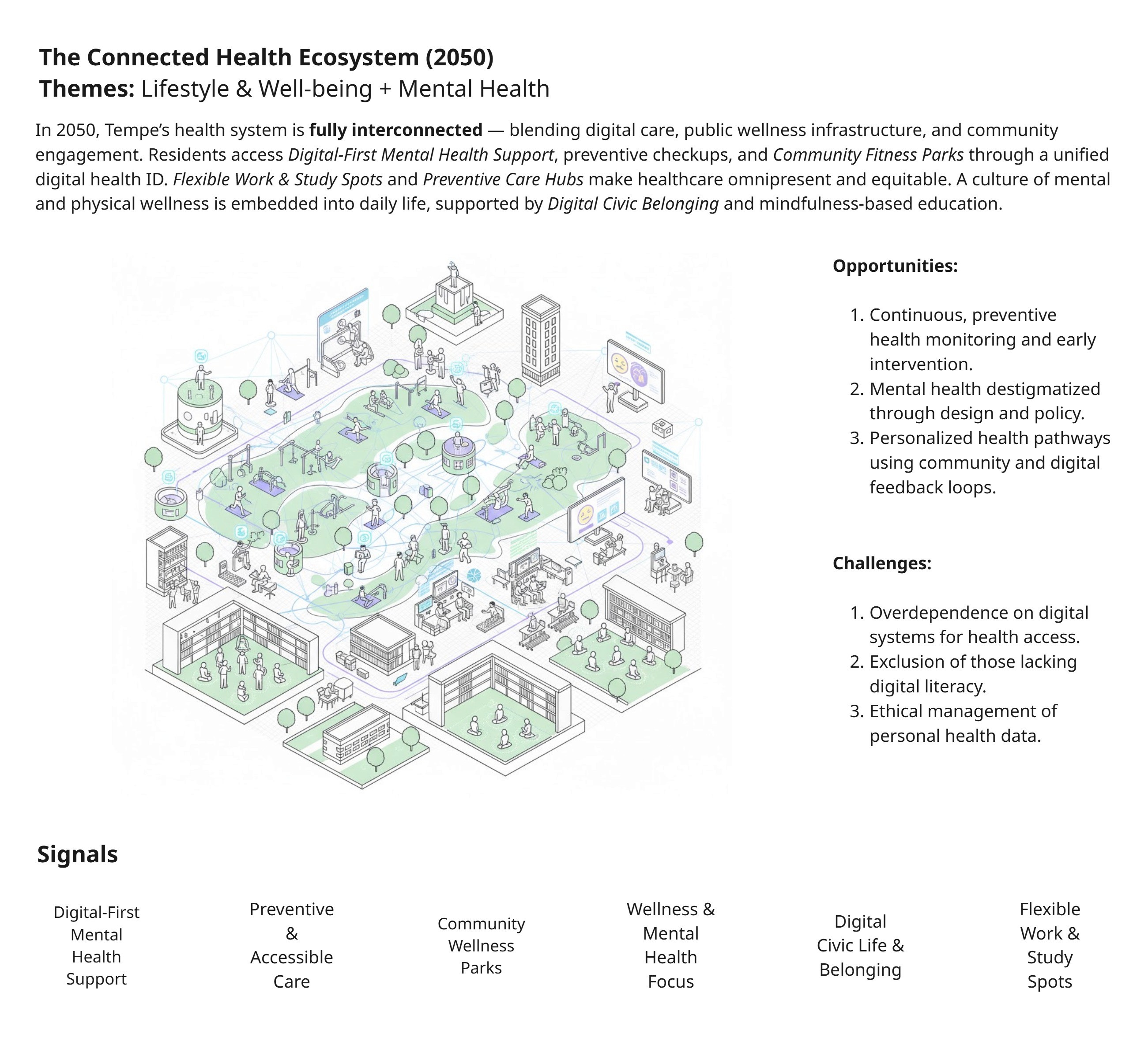
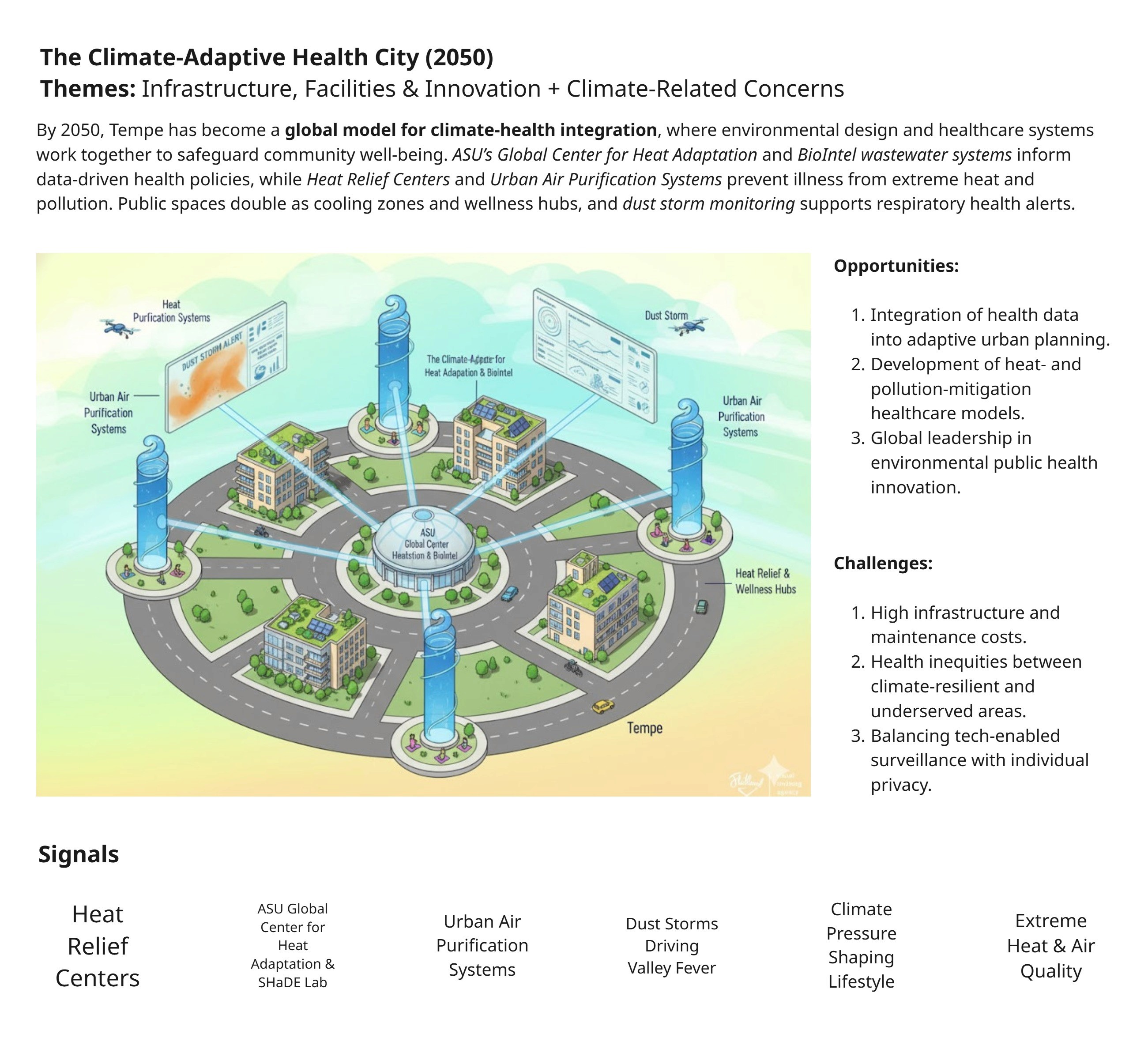
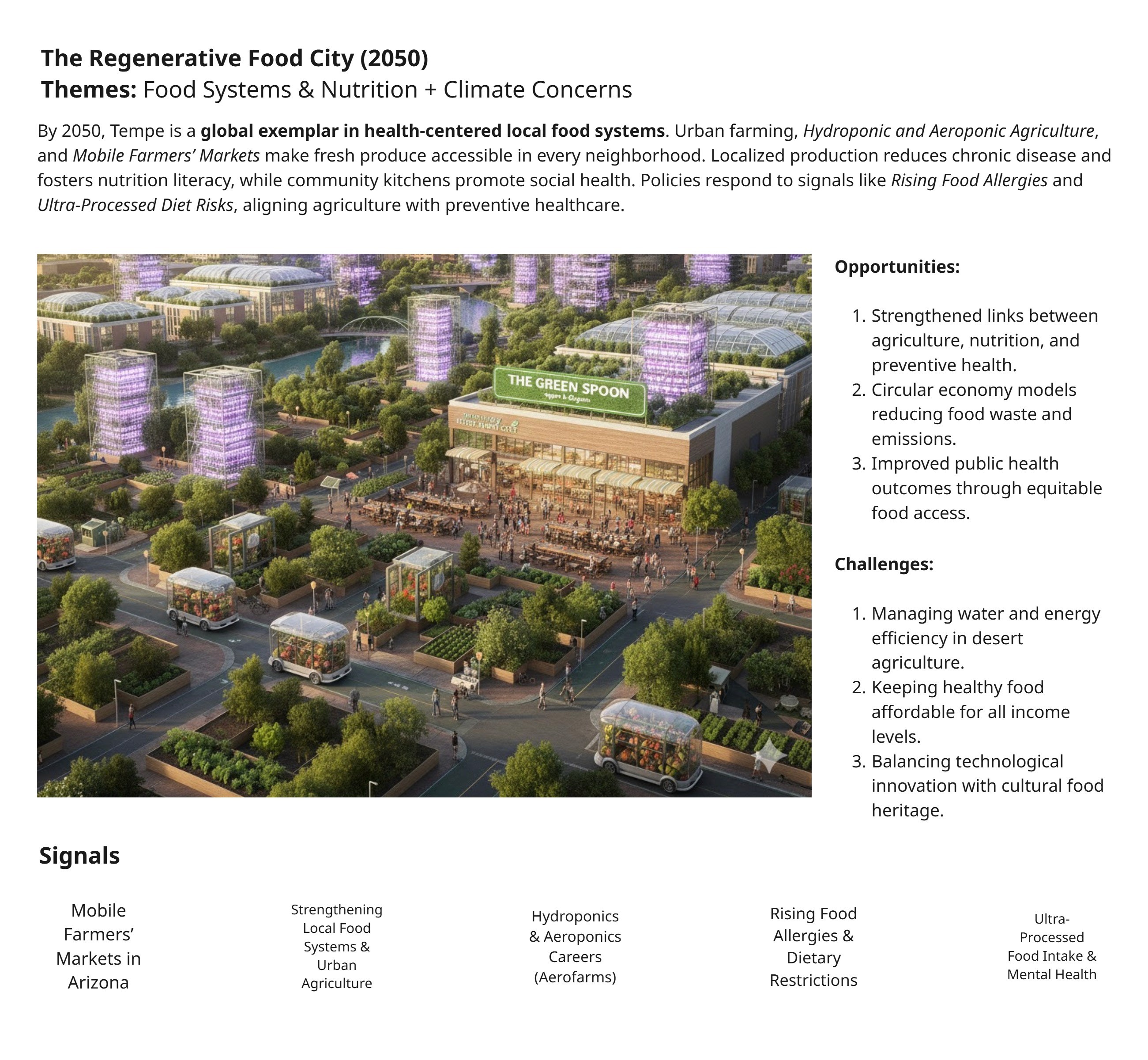
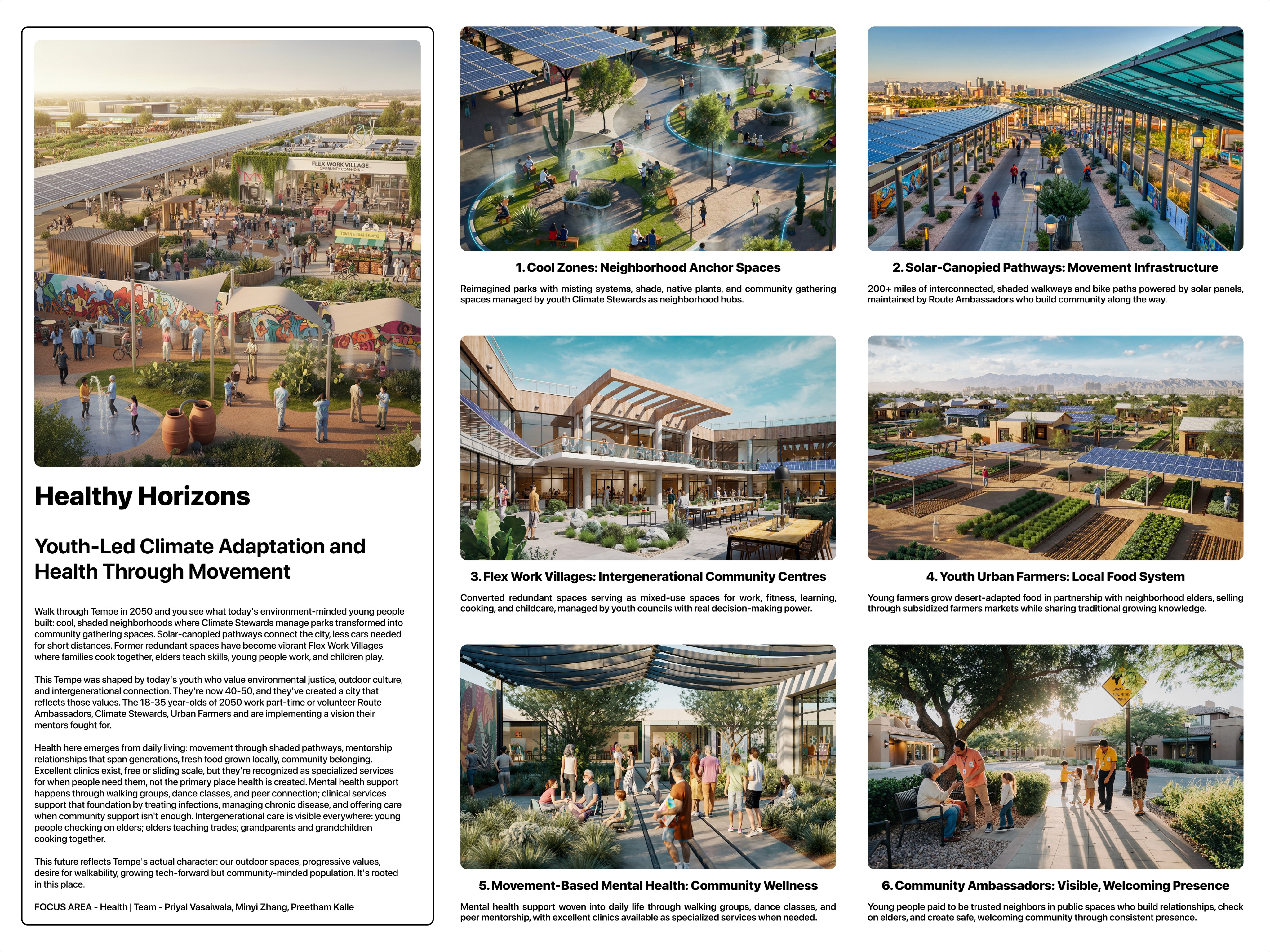
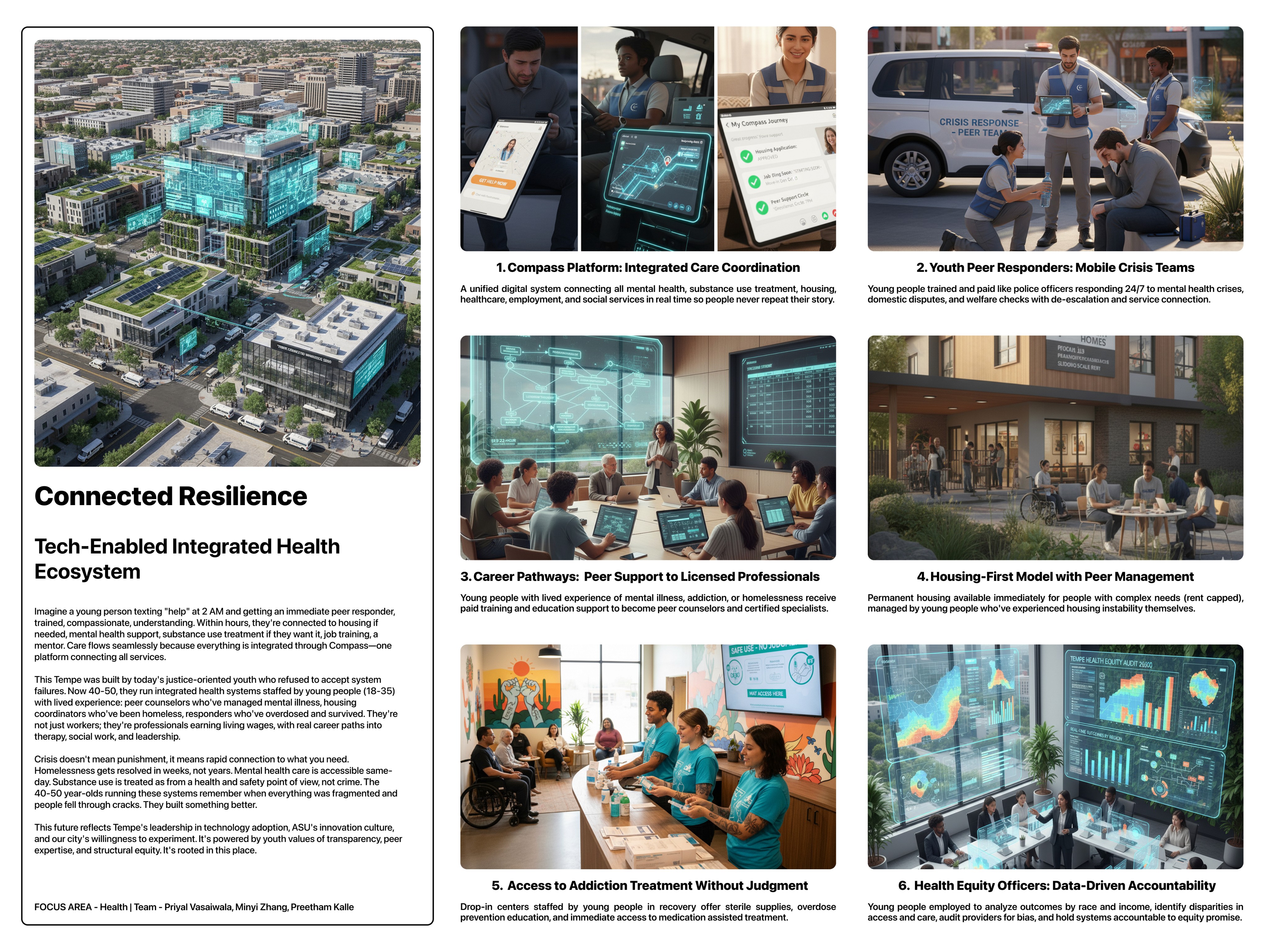
Final Scenarios
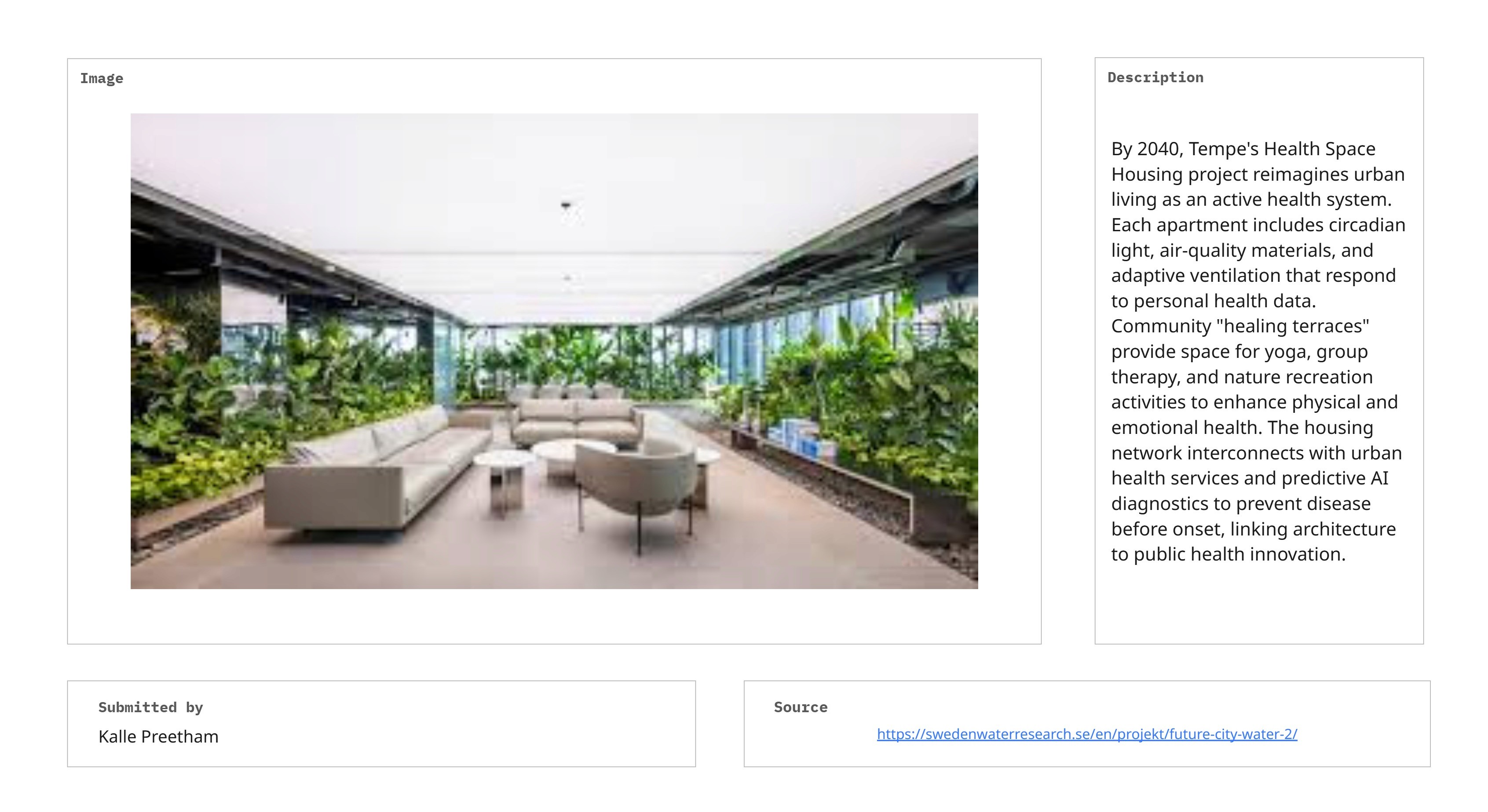
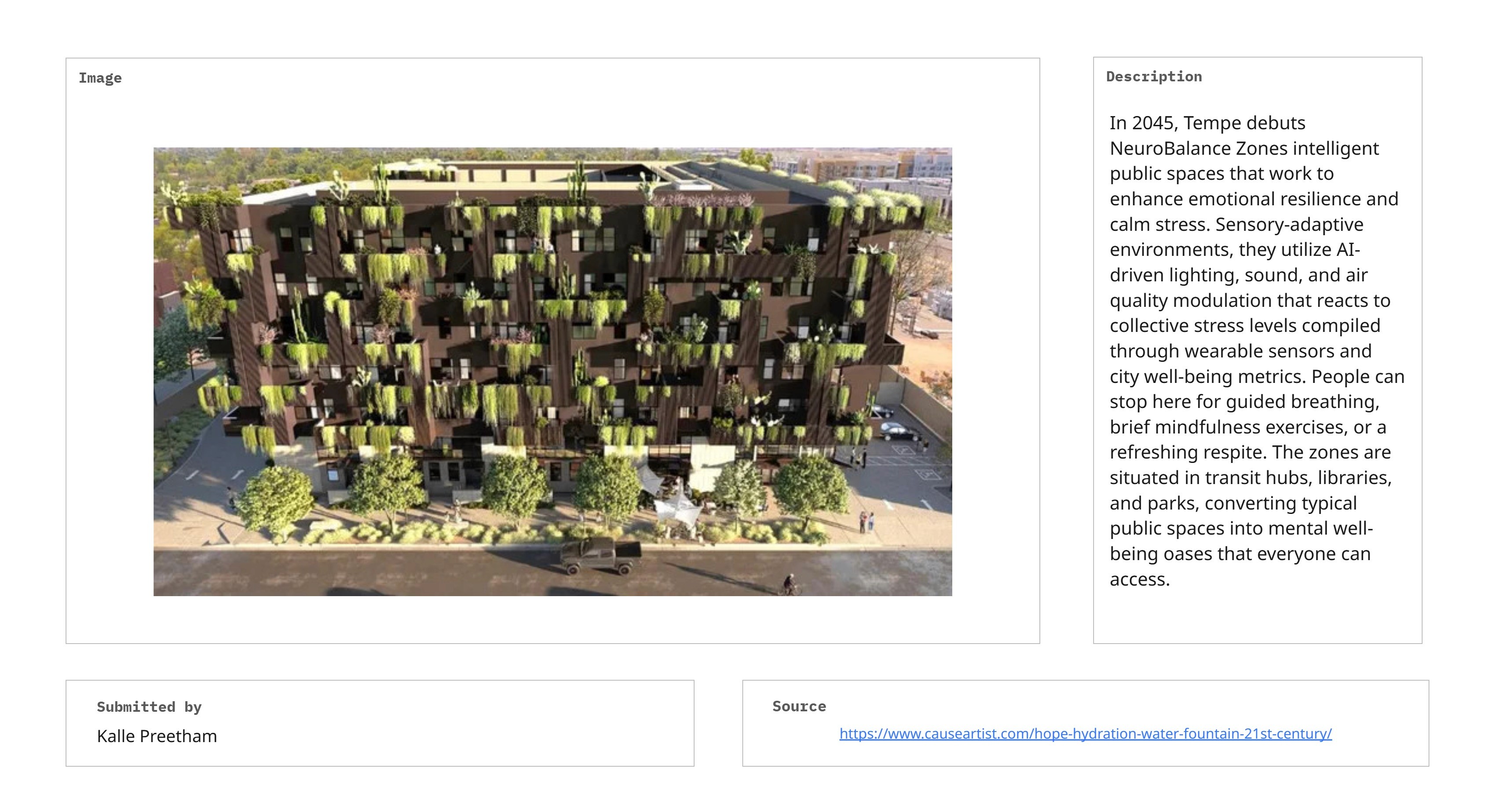
Building on health signals, we refined our early concepts into two final future scenarios that explore plausible directions for Tempe’s health ecosystem in 2050. These scenarios translate community input, city perspectives, and research insights into clear narratives that show how systems, infrastructure, and policy could shape everyday health and well-being at a city scale.
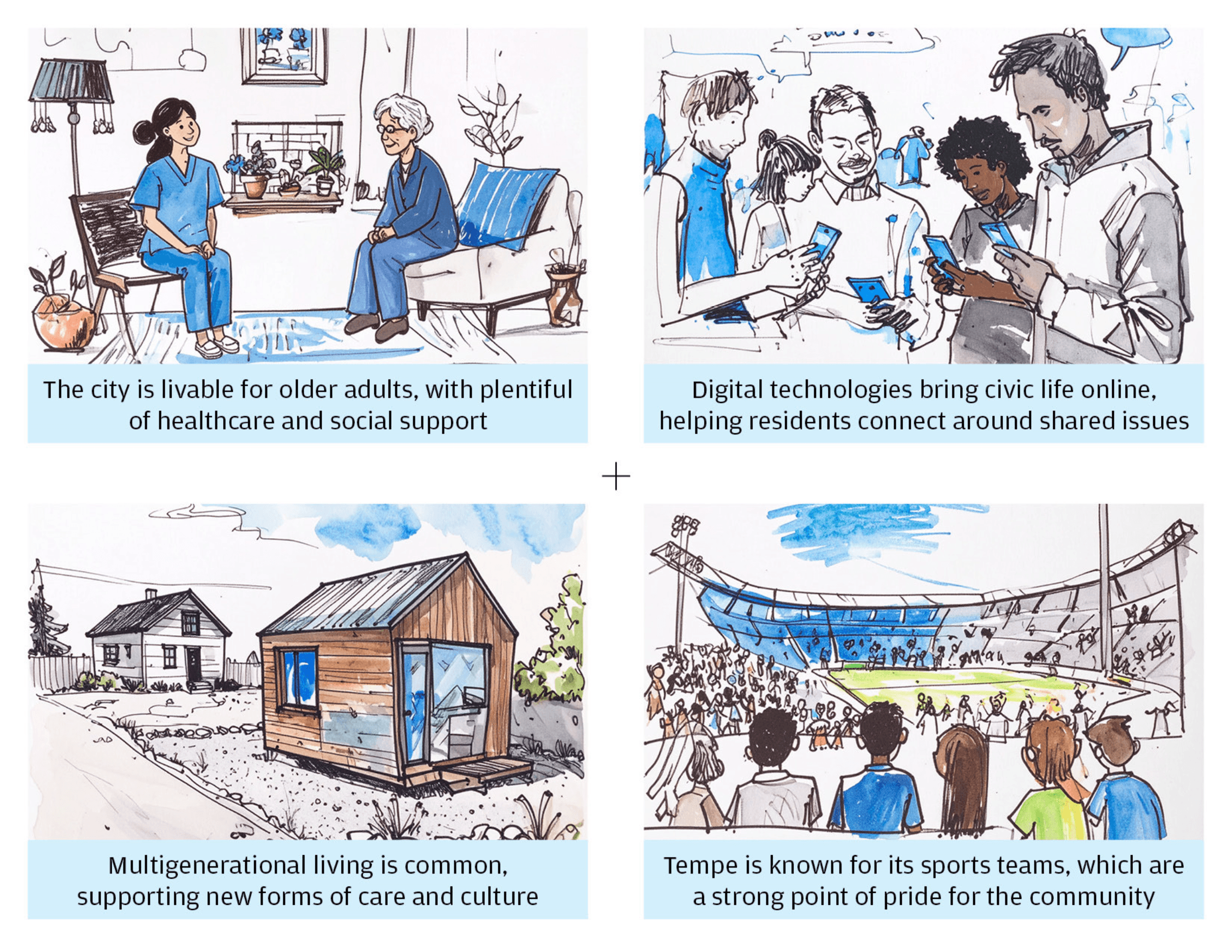
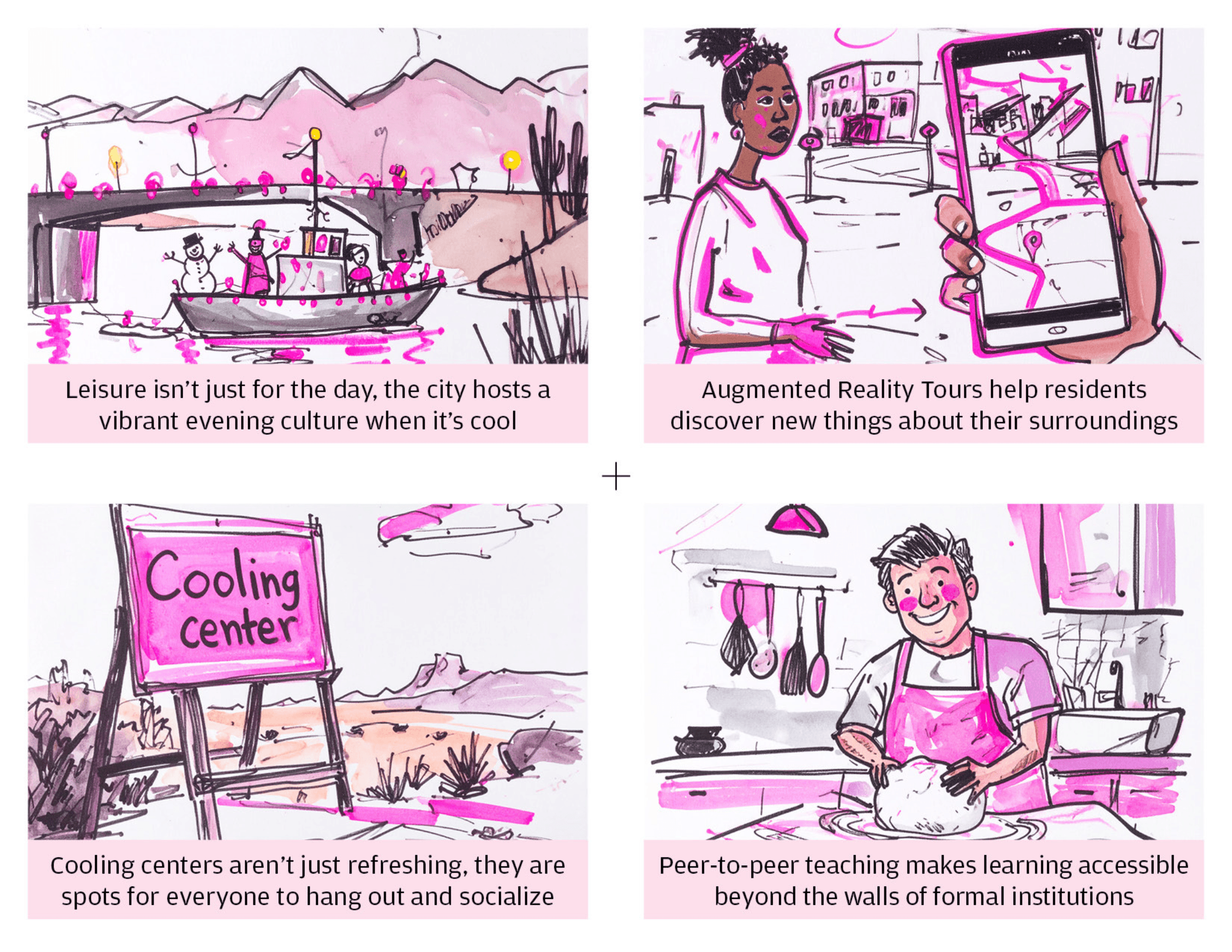
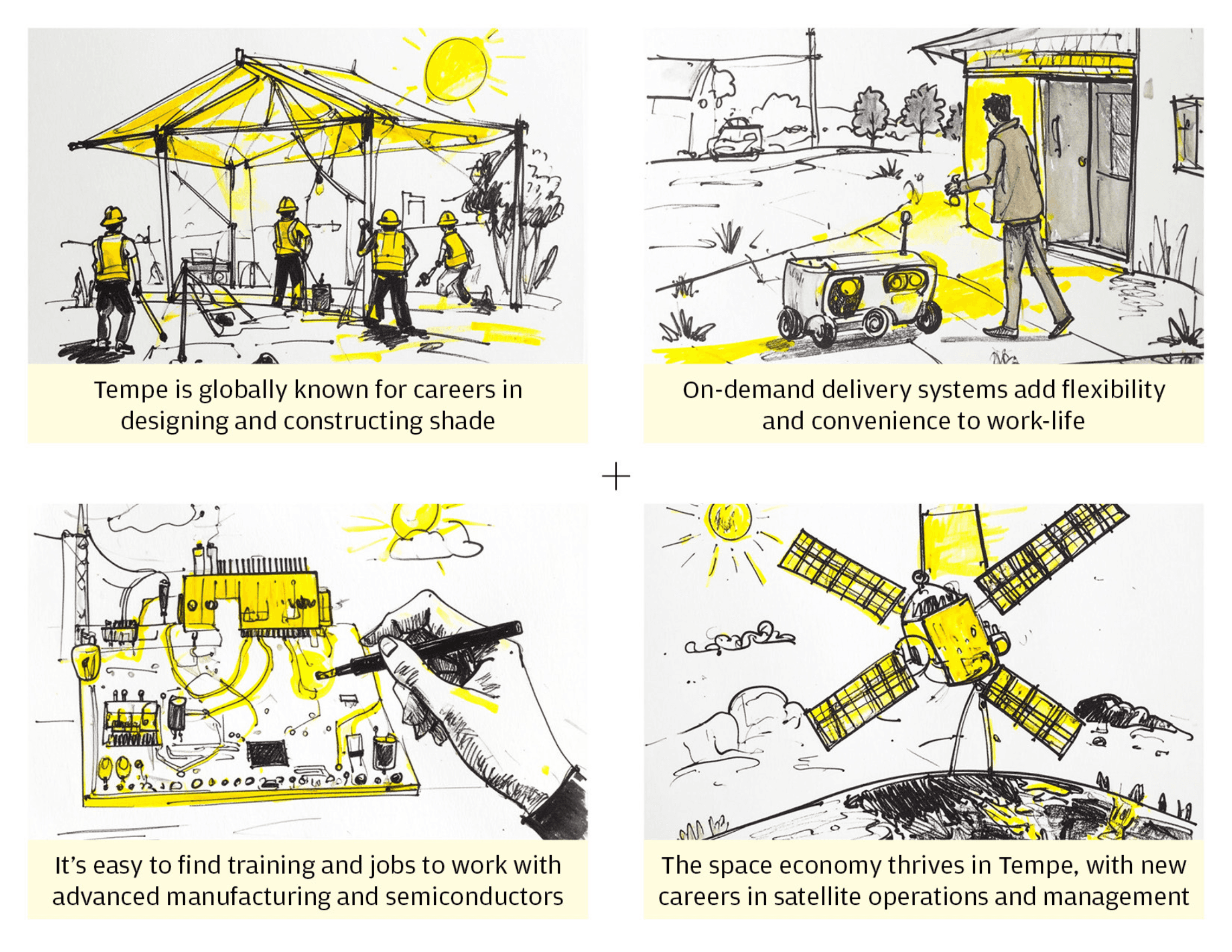
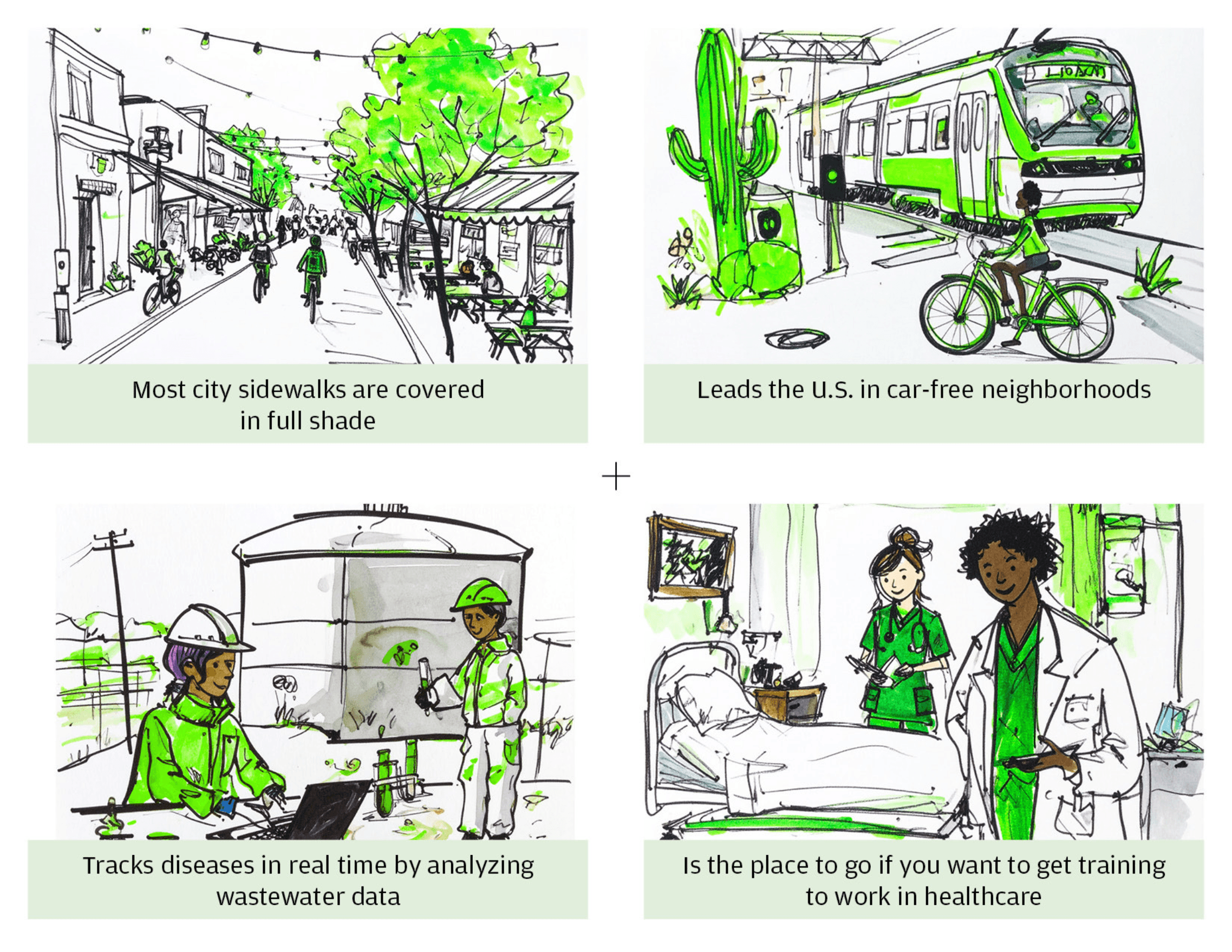
Storyboards and initial ideas for making the possible scenarios
Following research synthesis, we developed initial storyboards to visualize emerging health scenarios and translate abstract signals into everyday moments. This step allowed us to explore how future systems, behaviors, and environments might intersect in real life.
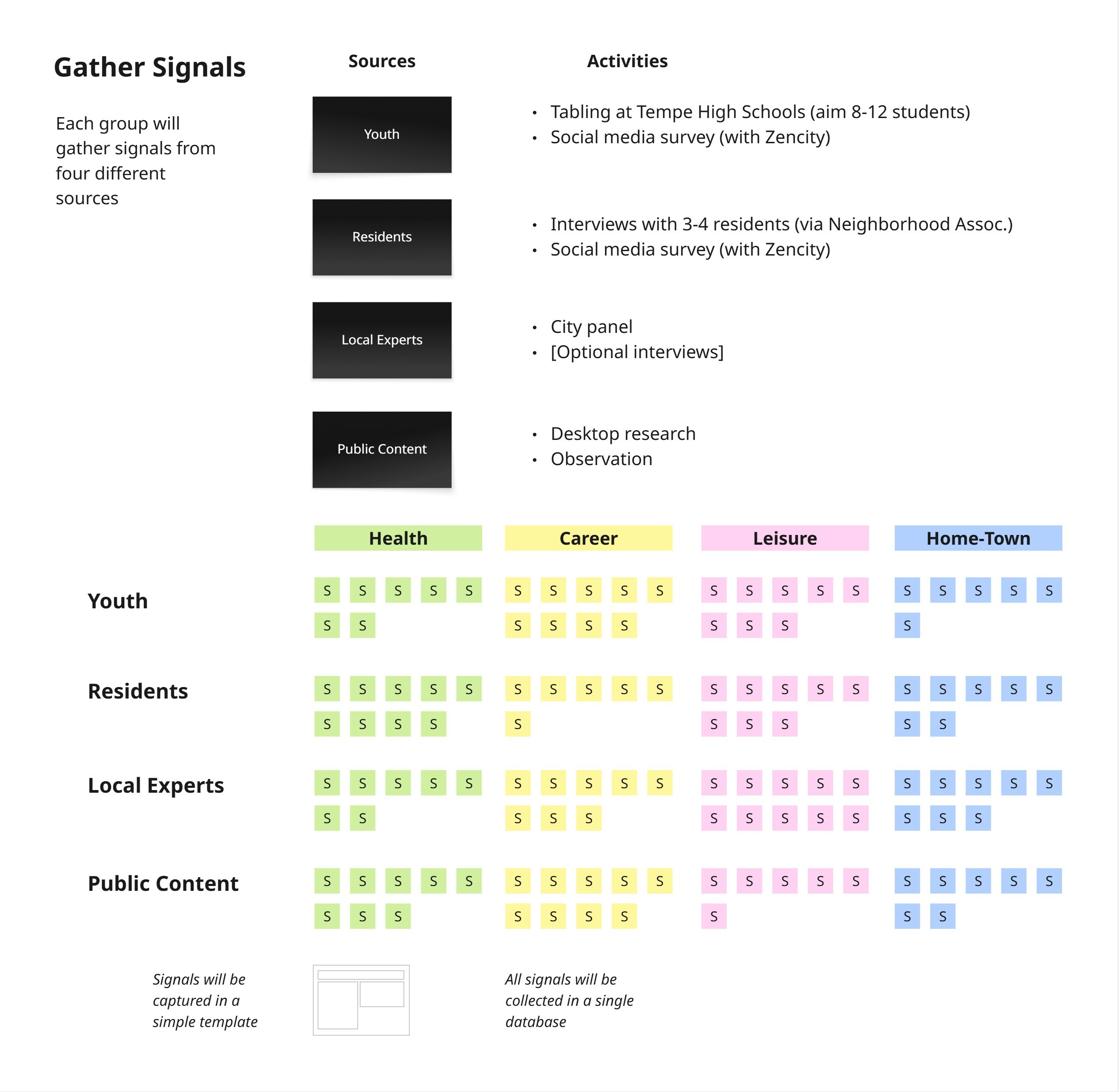
Gathering Signals
We combined signals from research, community engagement, and the City of Tempe panel to identify patterns shaping future health in Tempe. By clustering all these signals form all focus areas, we translated fragmented insights into clear, system-level directions that informed the foundation of our health scenarios.
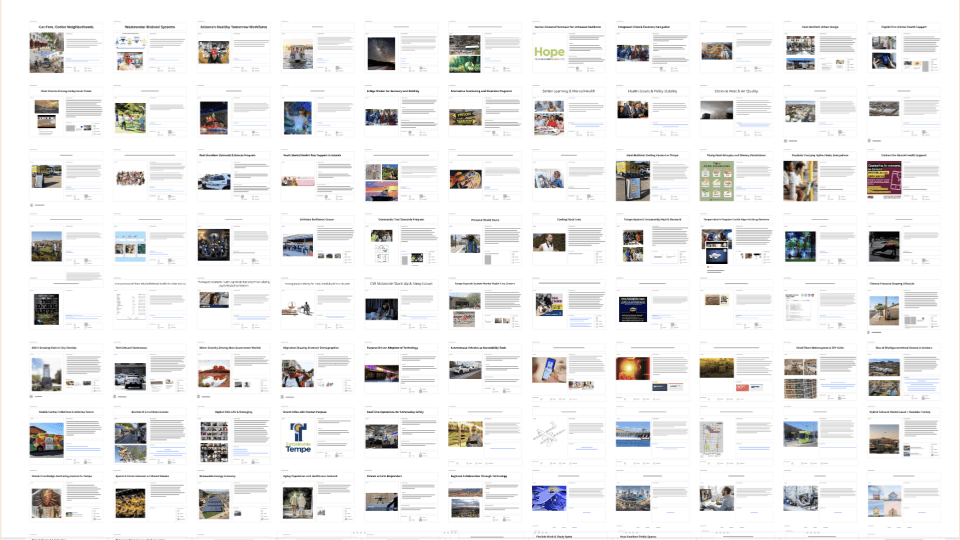
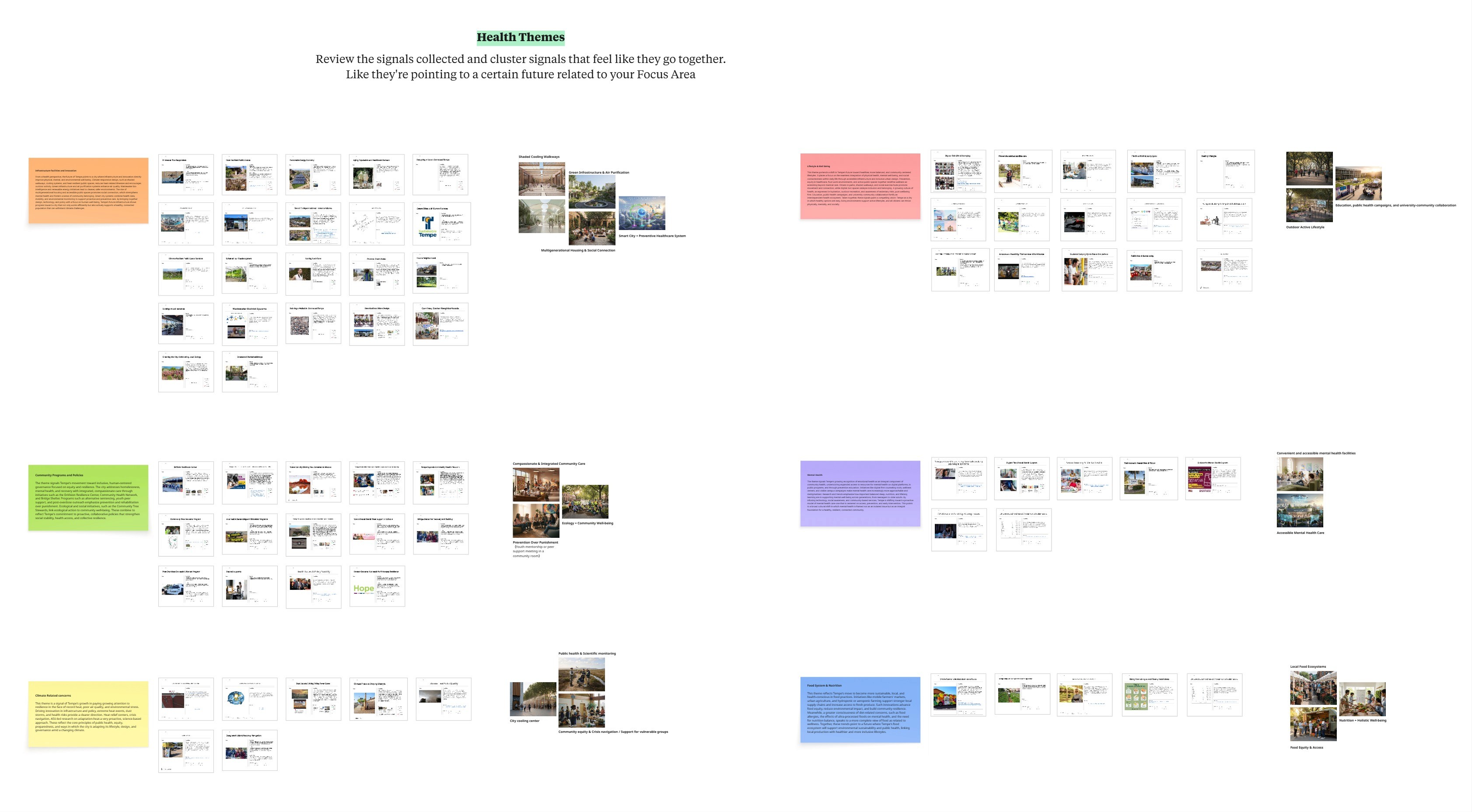
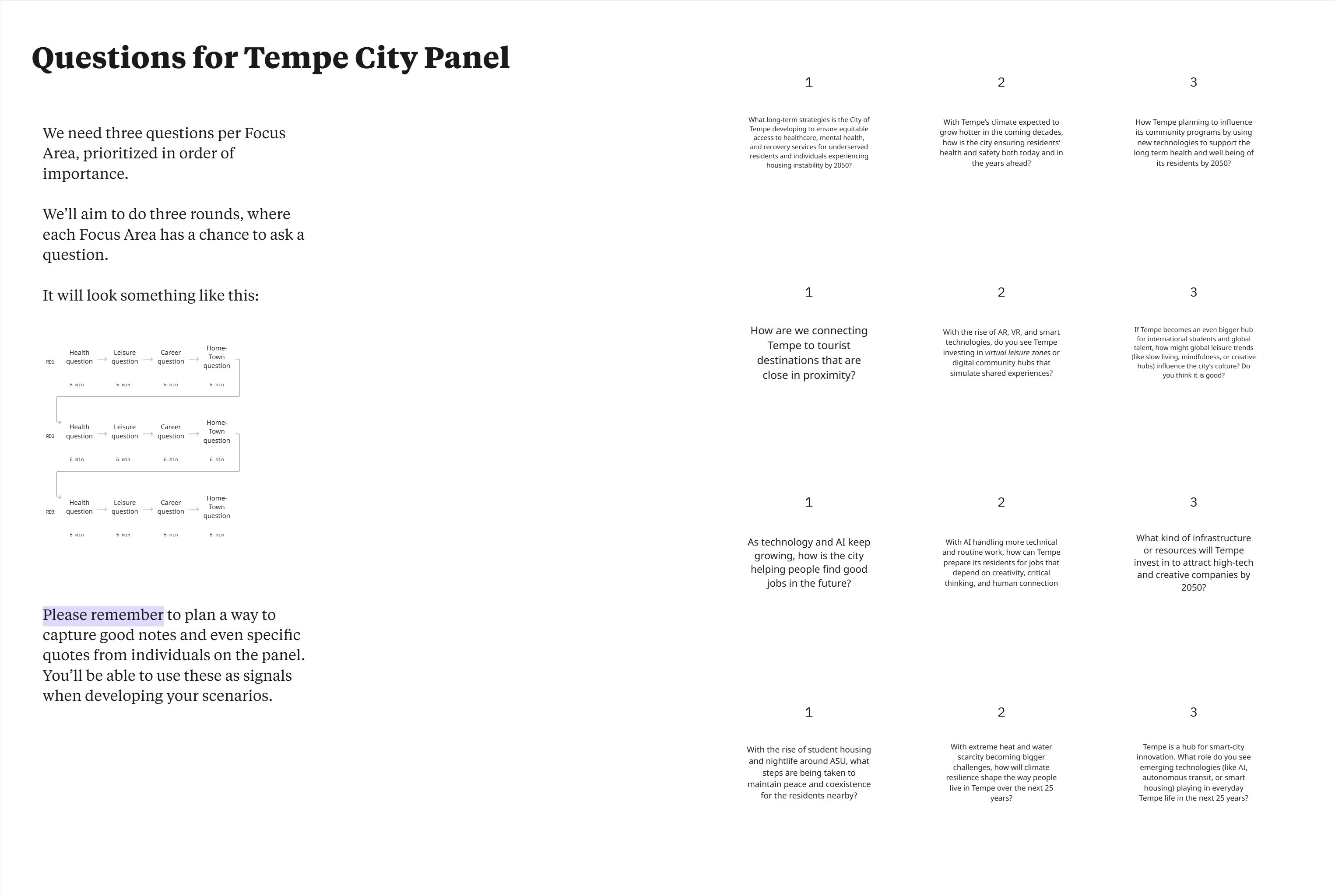
City Panel
We facilitated a City of Tempe panel to ground our health futures work in real policy, infrastructure, and governance constraints. Insights from city leaders and subject-matter experts helped validate assumptions, surface gaps between community needs and institutional capacity, and translate speculative ideas into credible, actionable health scenarios.
City Panel Discussion Highlights
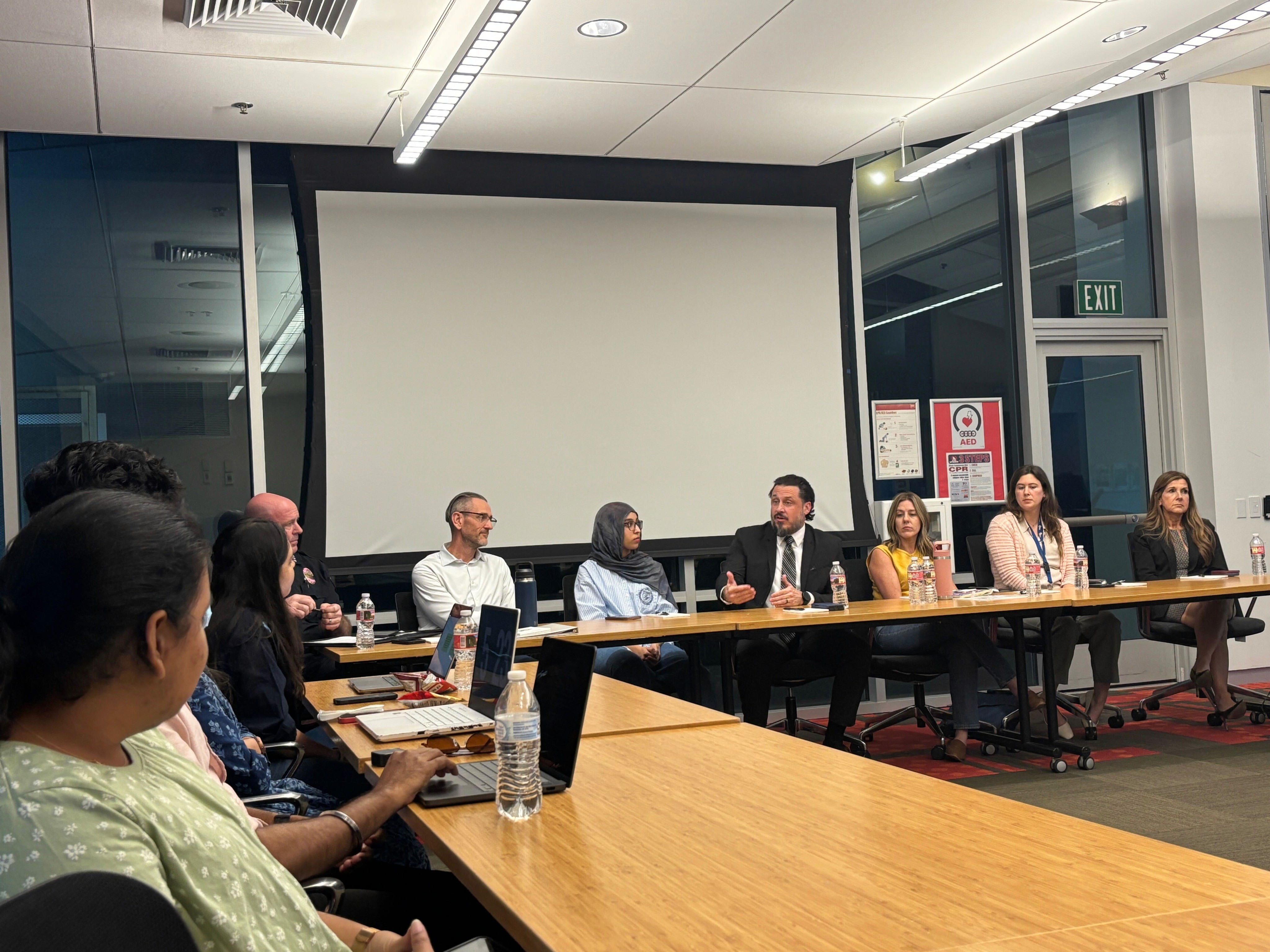
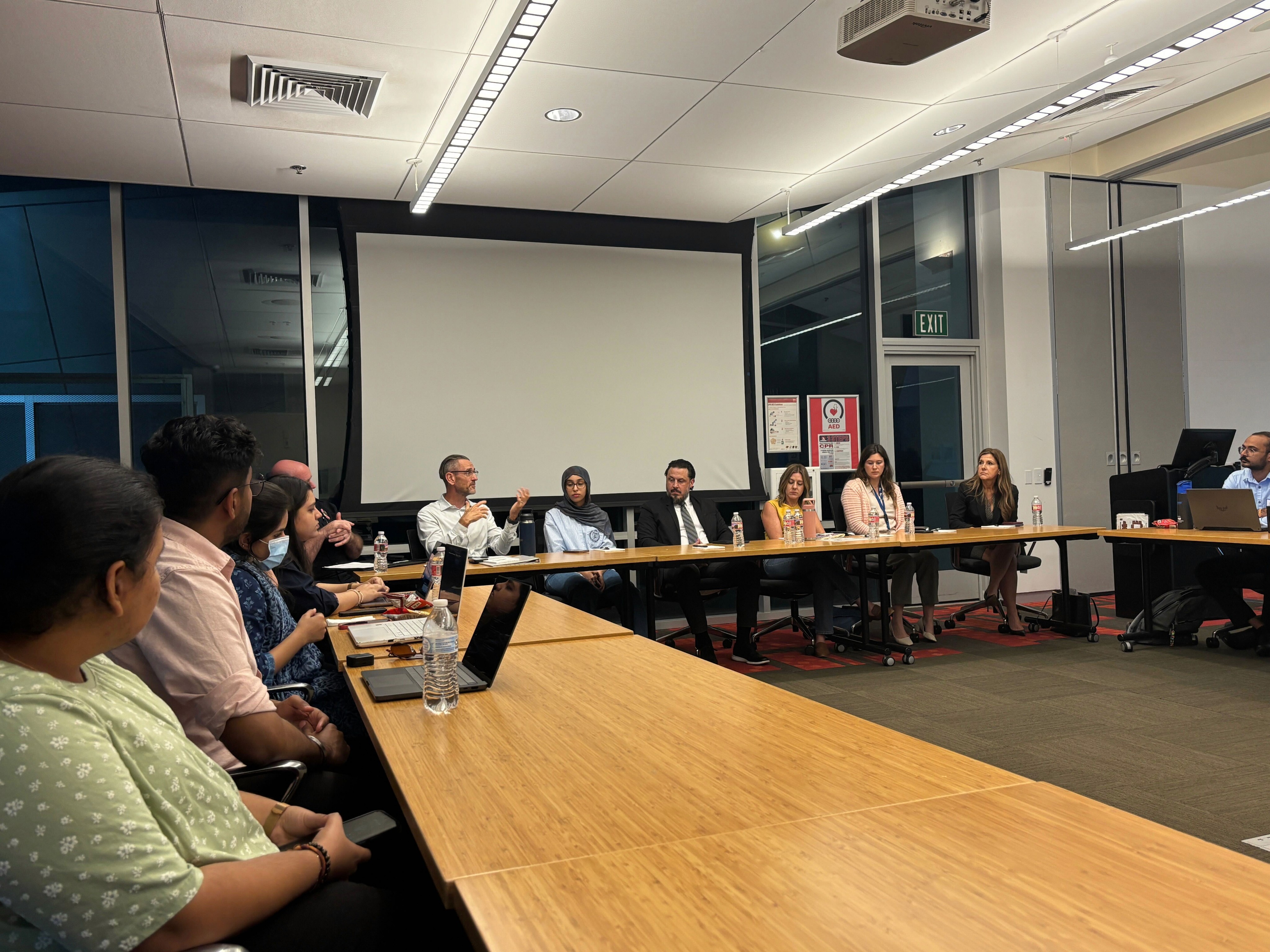
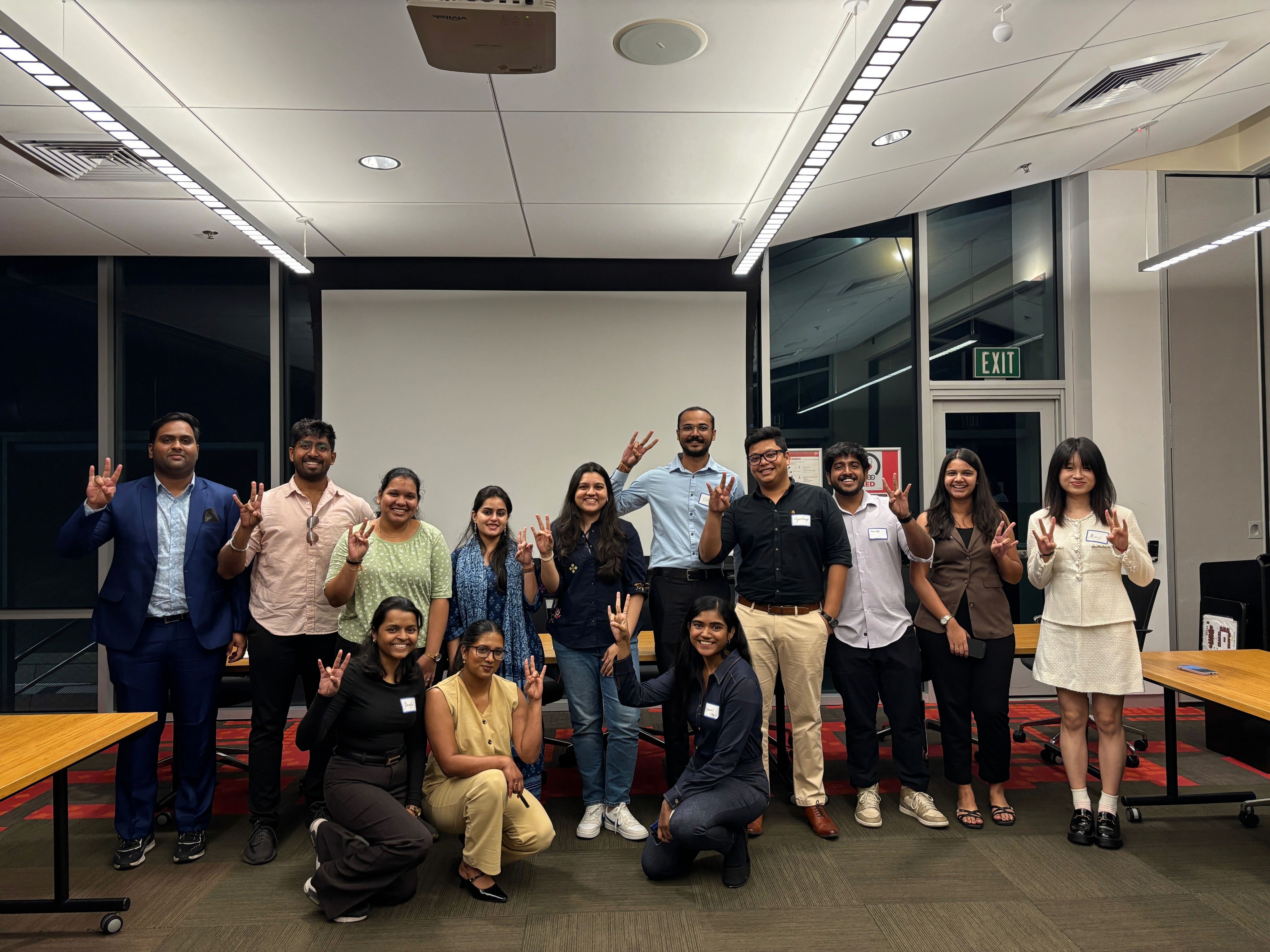
After the city panel discussion, here are some insights we gathered and made the following signals
Synthesized insights from City of Tempe leaders to ground future health scenarios in real policy and governance constraints
Translated expert perspectives into clear system-level signals connecting community needs with institutional action
Strengthened scenario credibility by aligning long-term vision with practical, city-led implementation realities
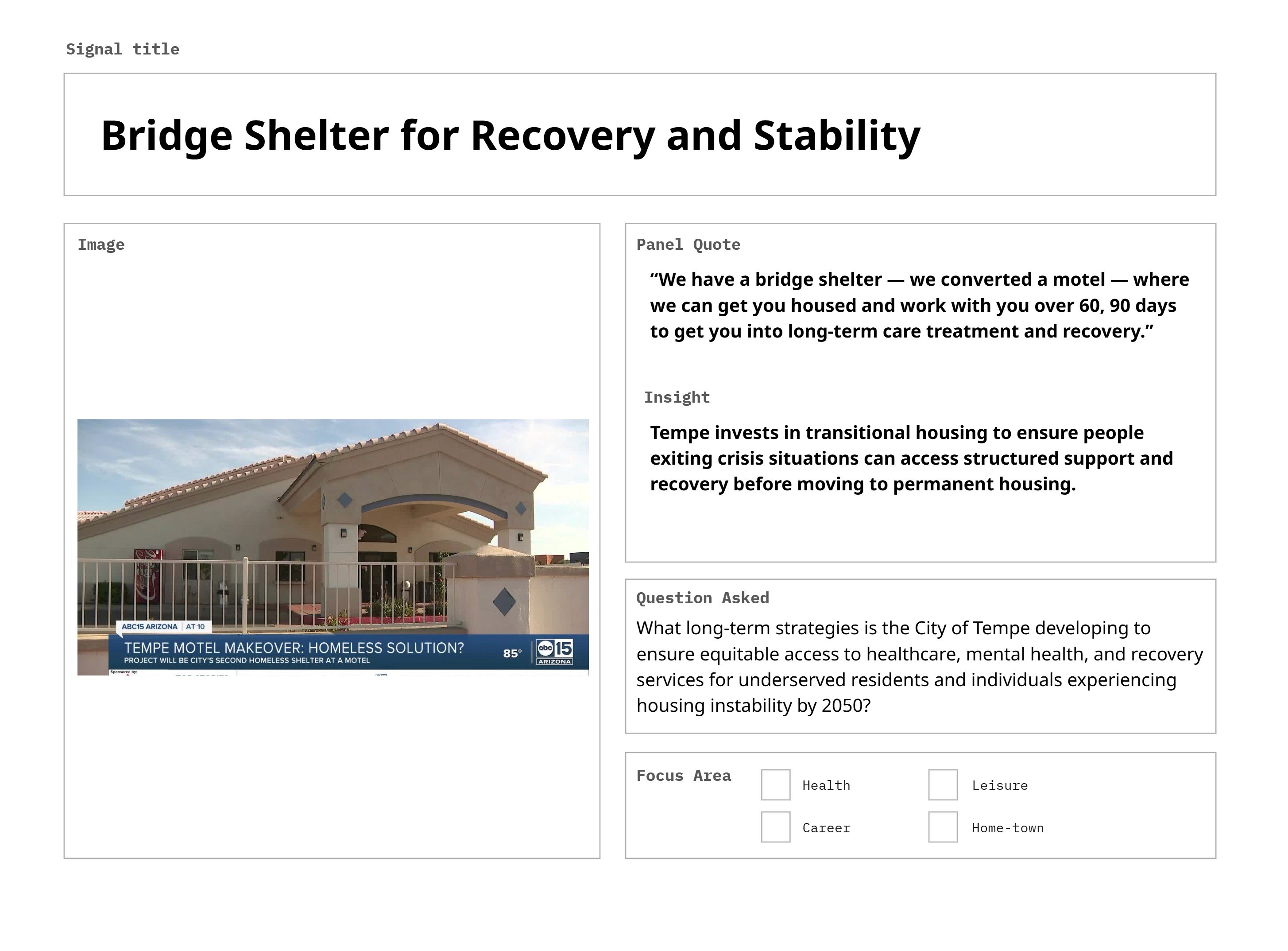
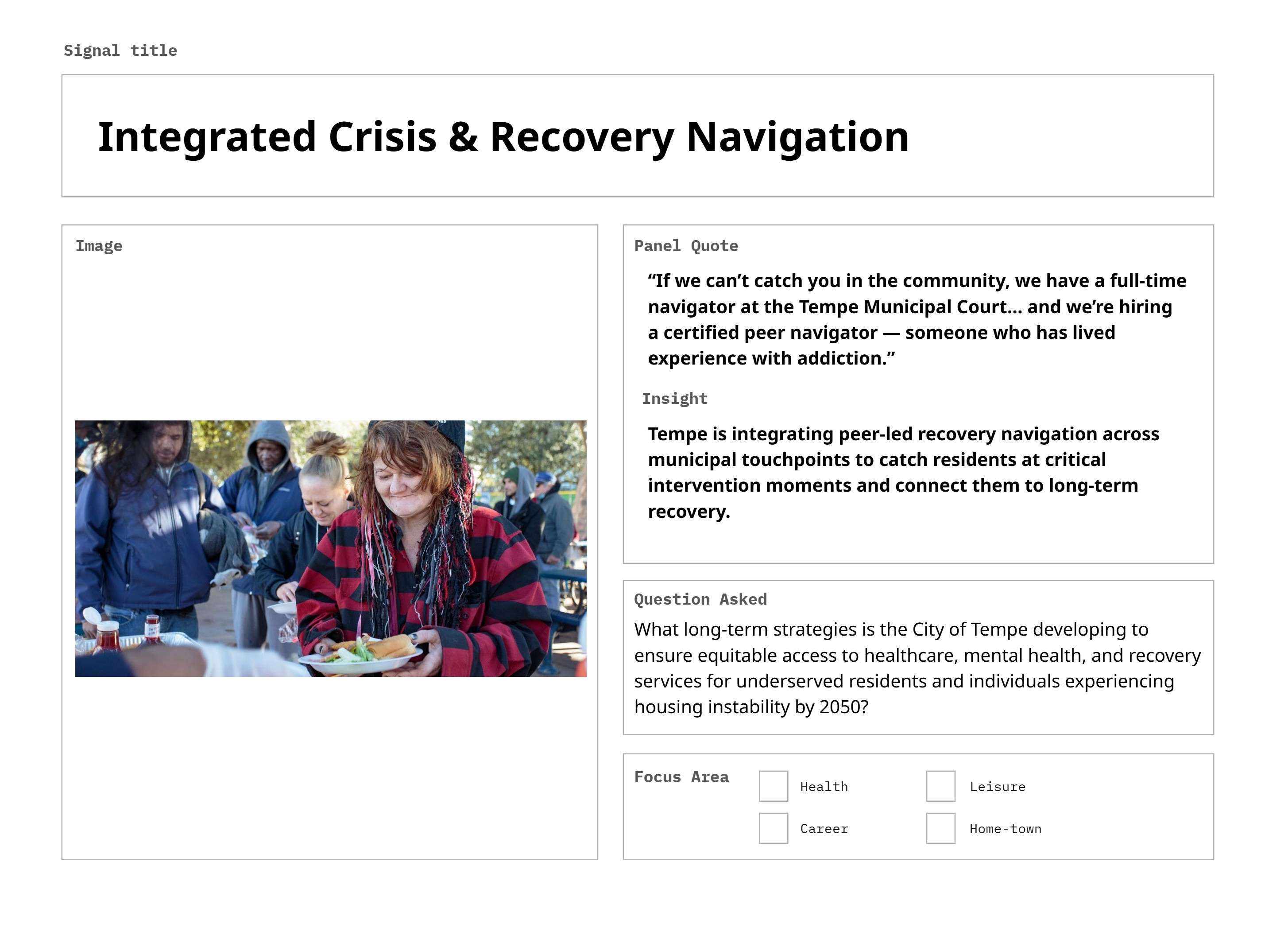
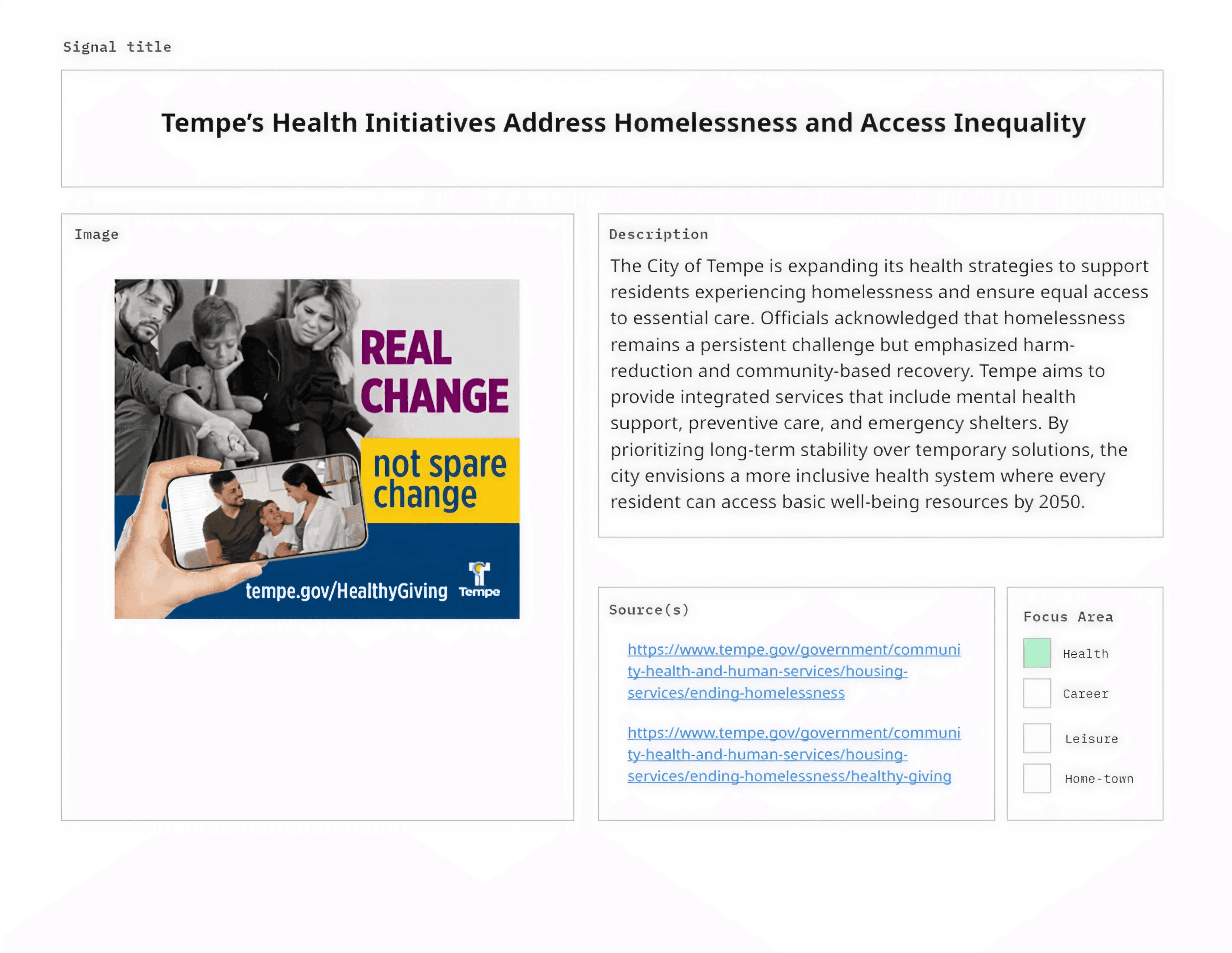
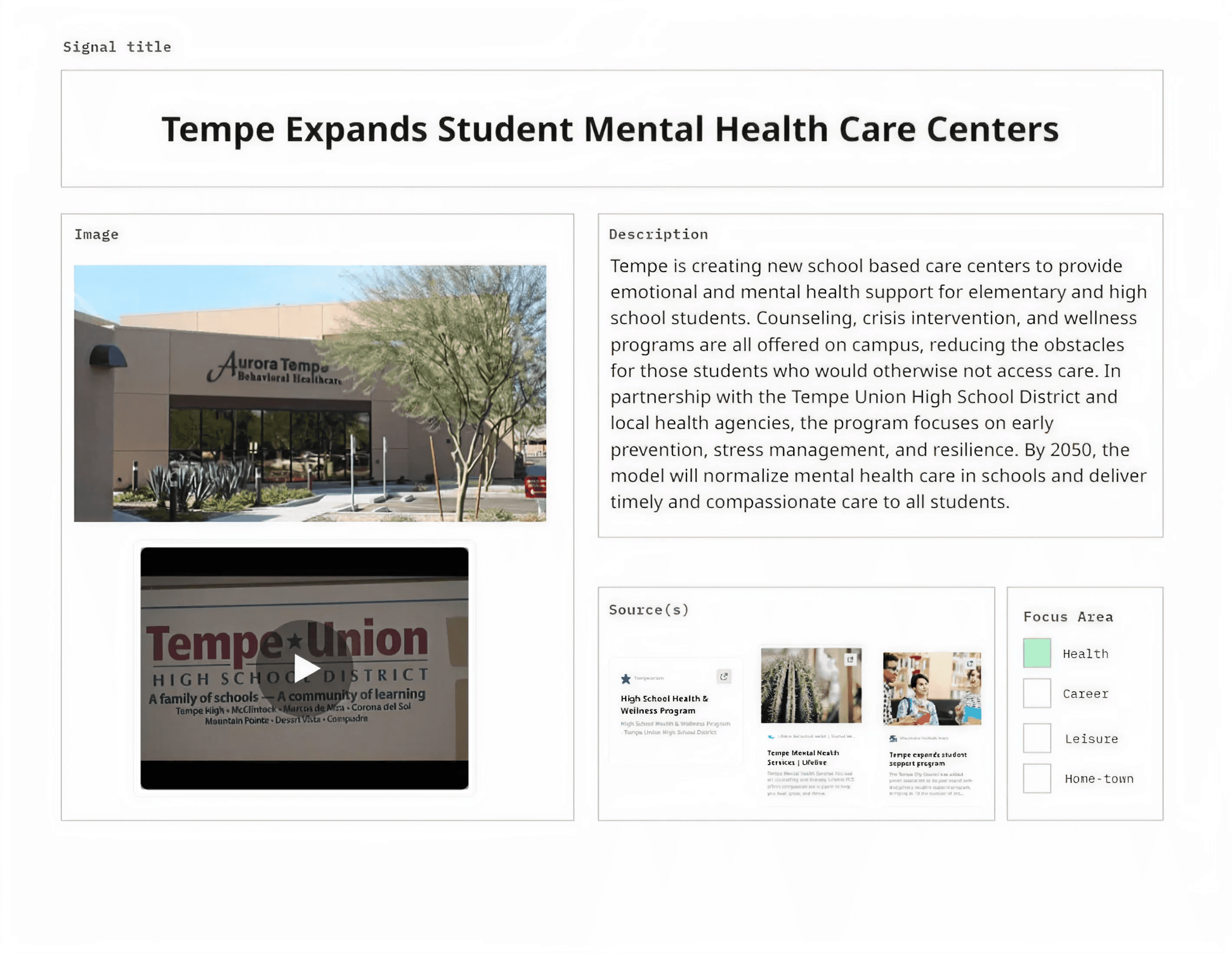
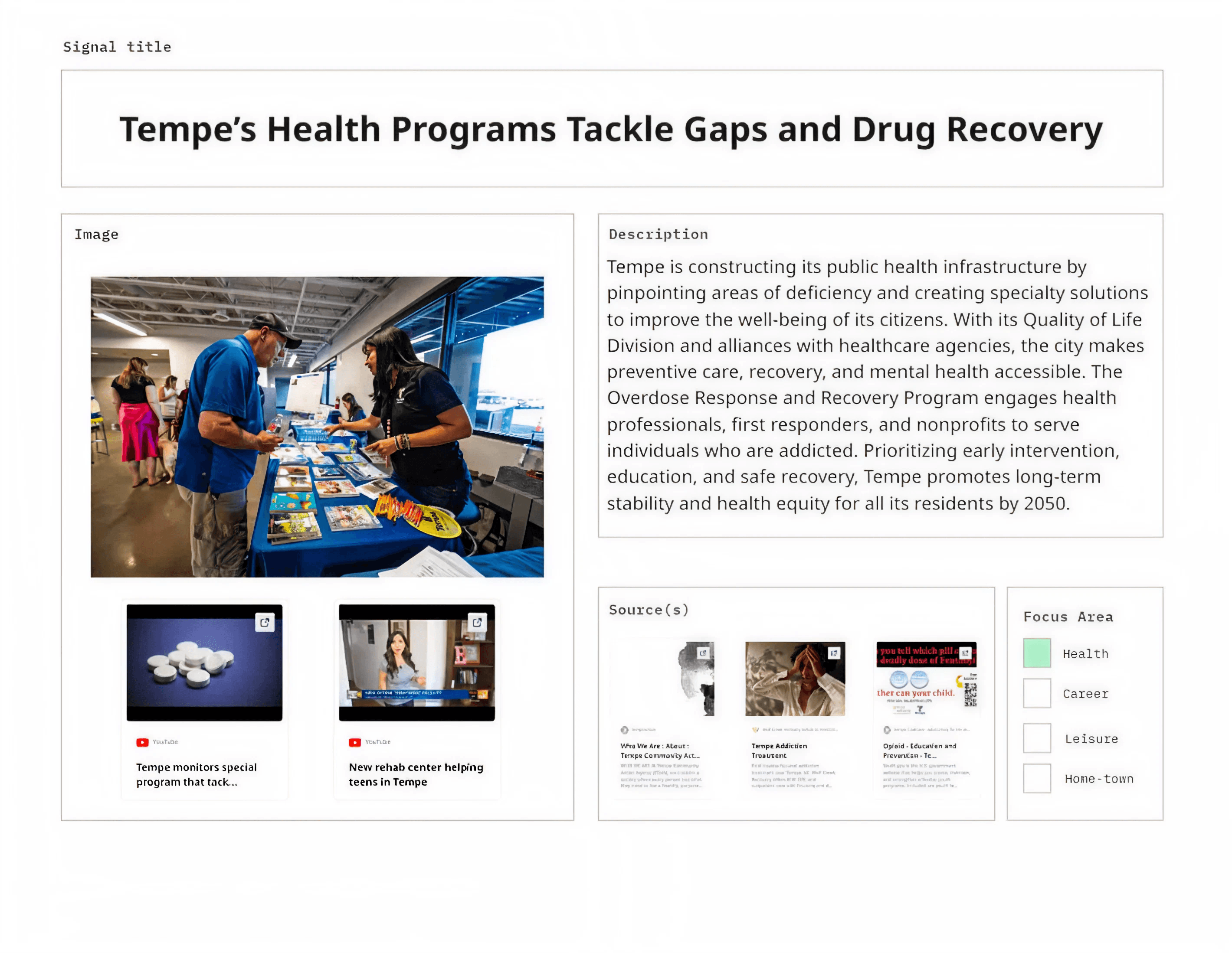
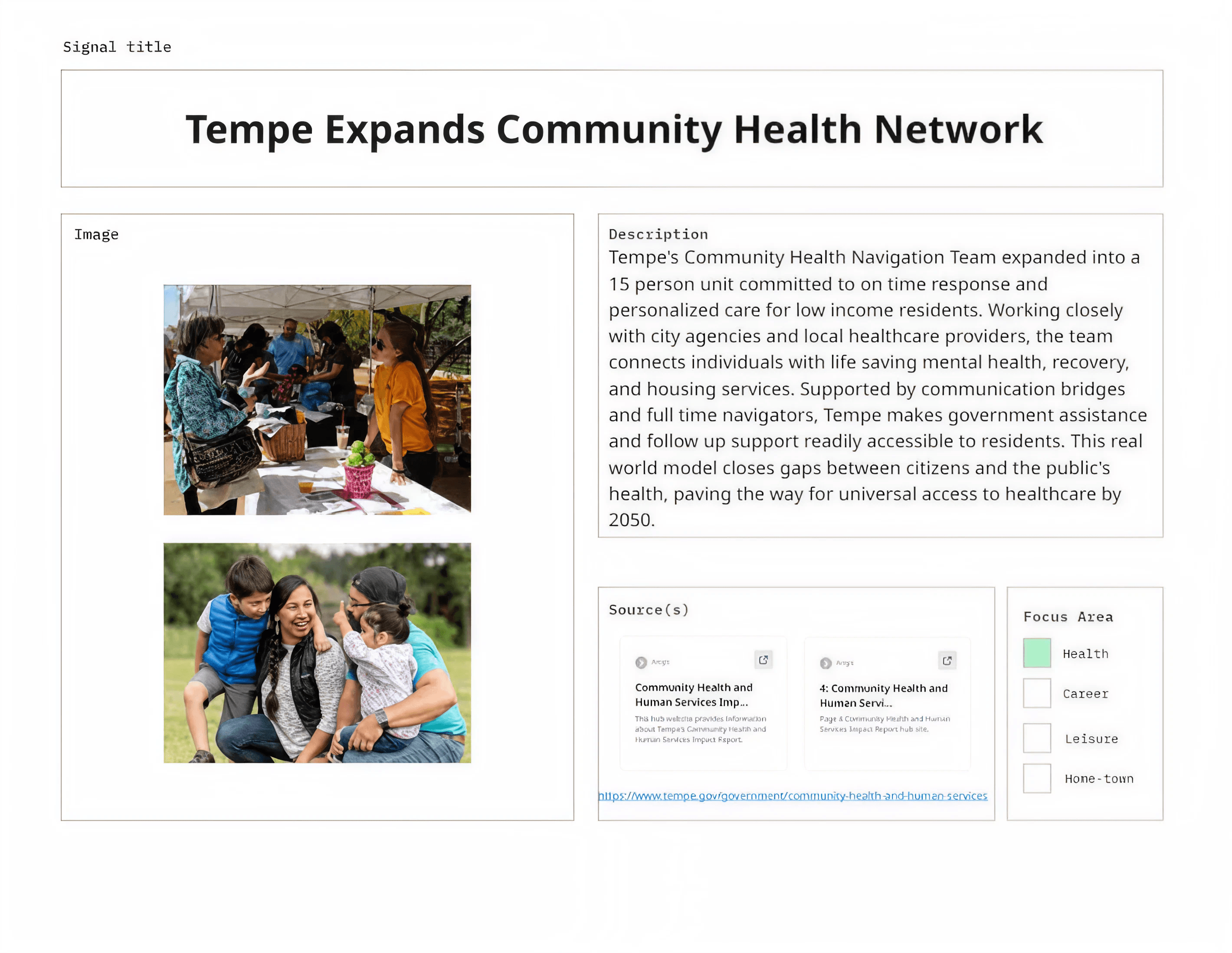
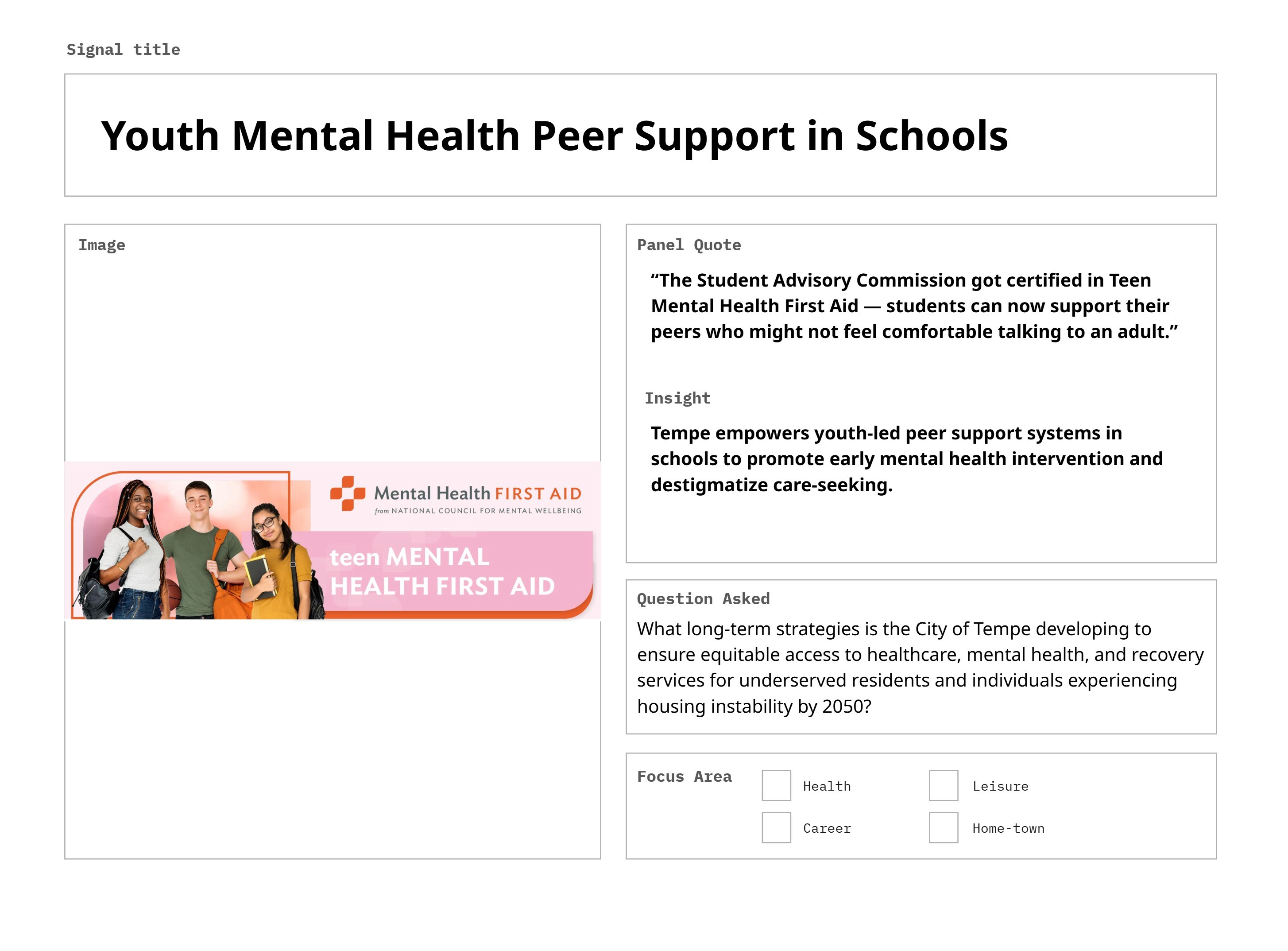
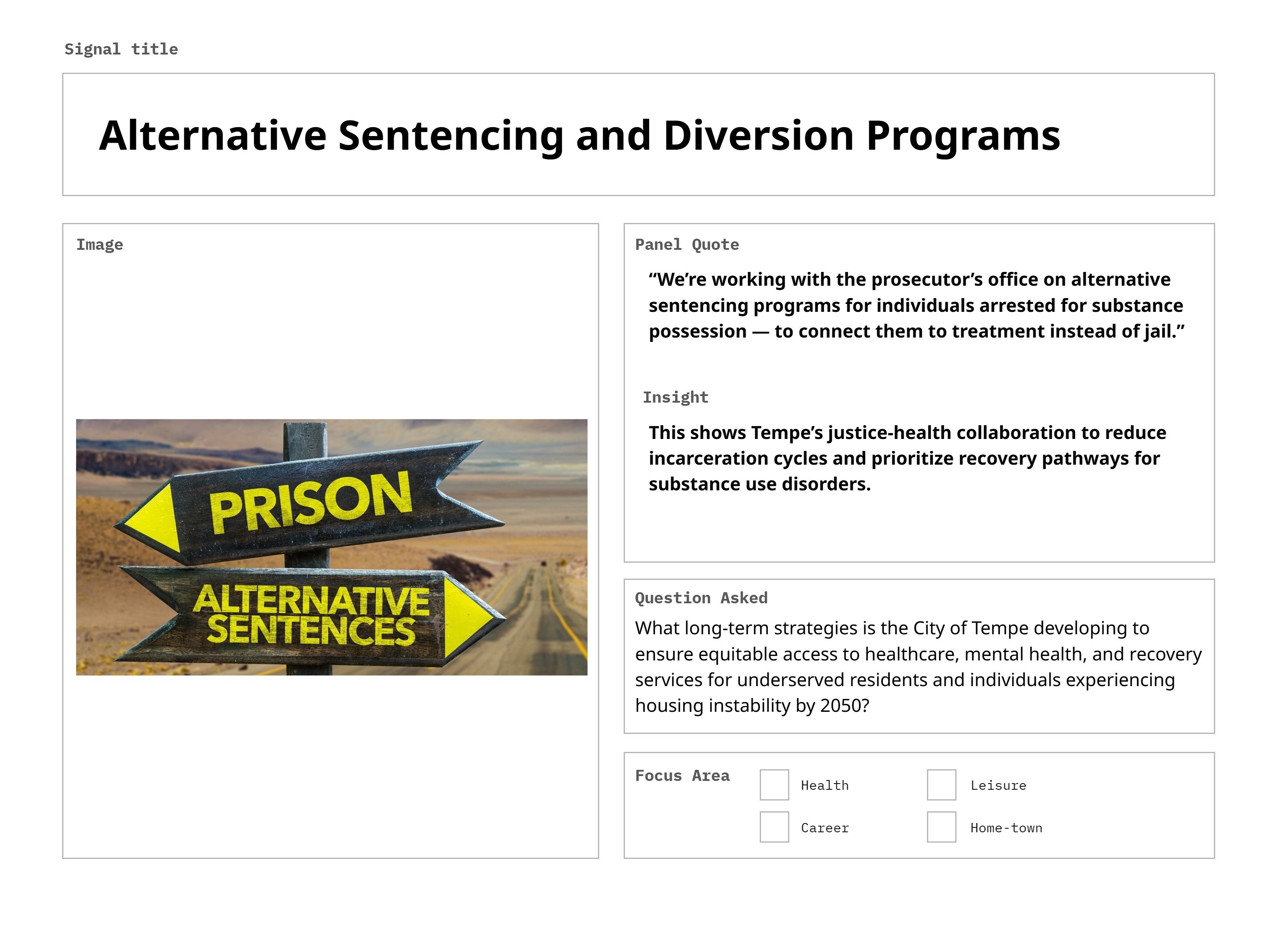
City Panel Signals
Engagement Activities
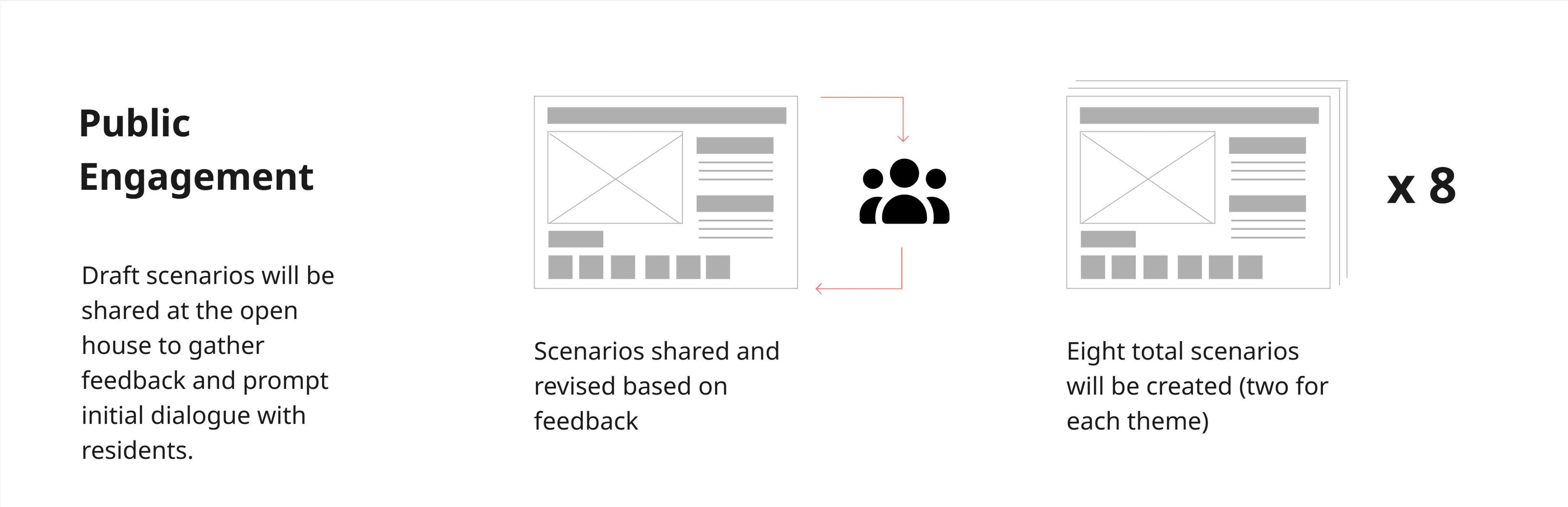
We designed and executed a multi-modal community engagement strategy to ground health futures in lived experiences. Methods included pop-up engagements, surveys, forums, and expert interviews, capturing diverse perspectives across age groups, access levels, and health needs.
As part of the Pop-Up Engagement Team, I helped plan and facilitate on-ground interactions, framed health-focused prompts, and synthesized insights into actionable signals. These conversations surfaced everyday challenges such as coping with extreme heat, access to care, and trust in public health systems that may not emerge through surveys alone. The insights were integrated with broader research to strengthen the credibility and human grounding of our final health scenarios.
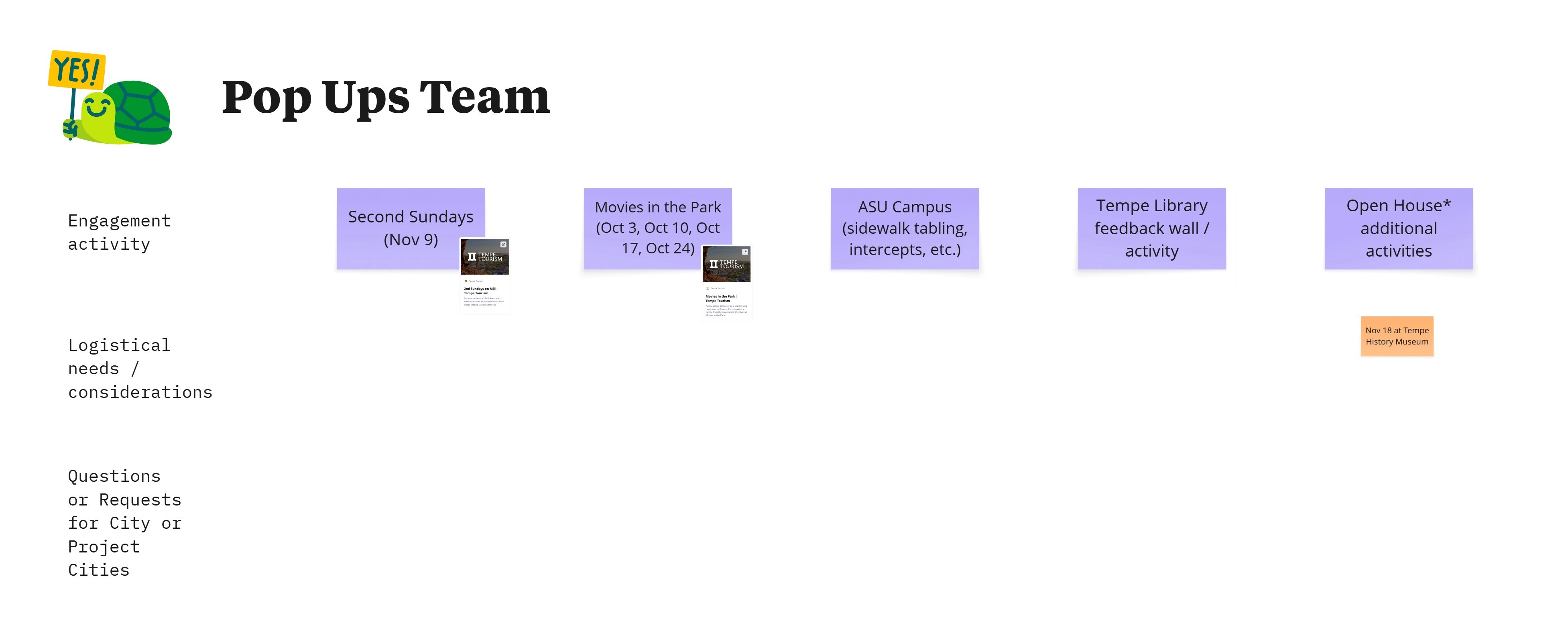
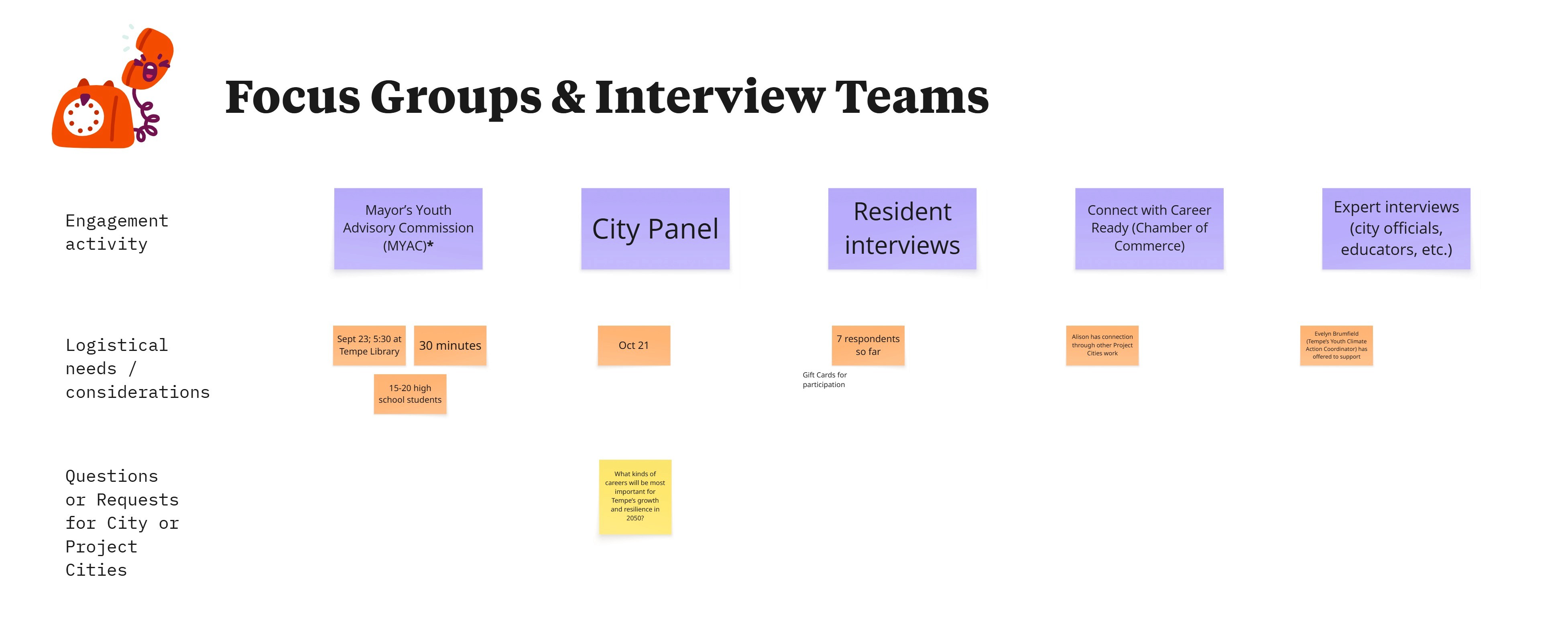
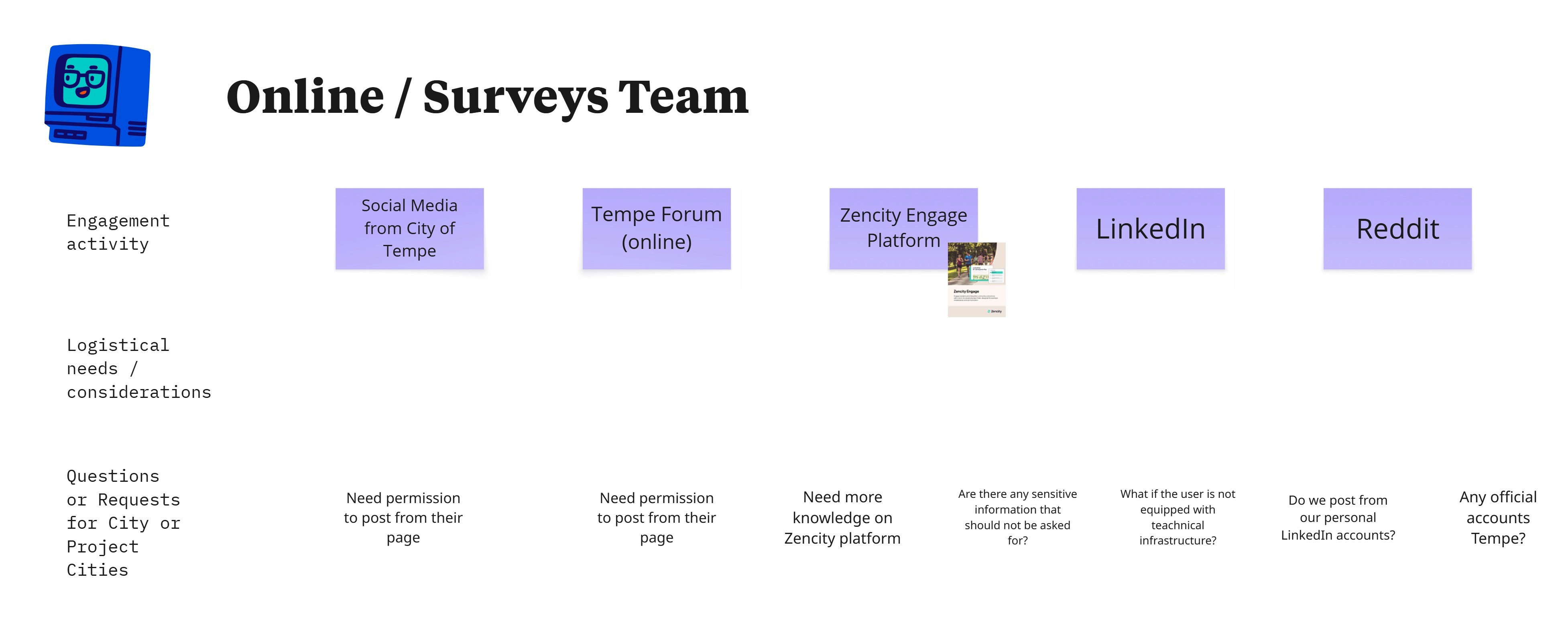
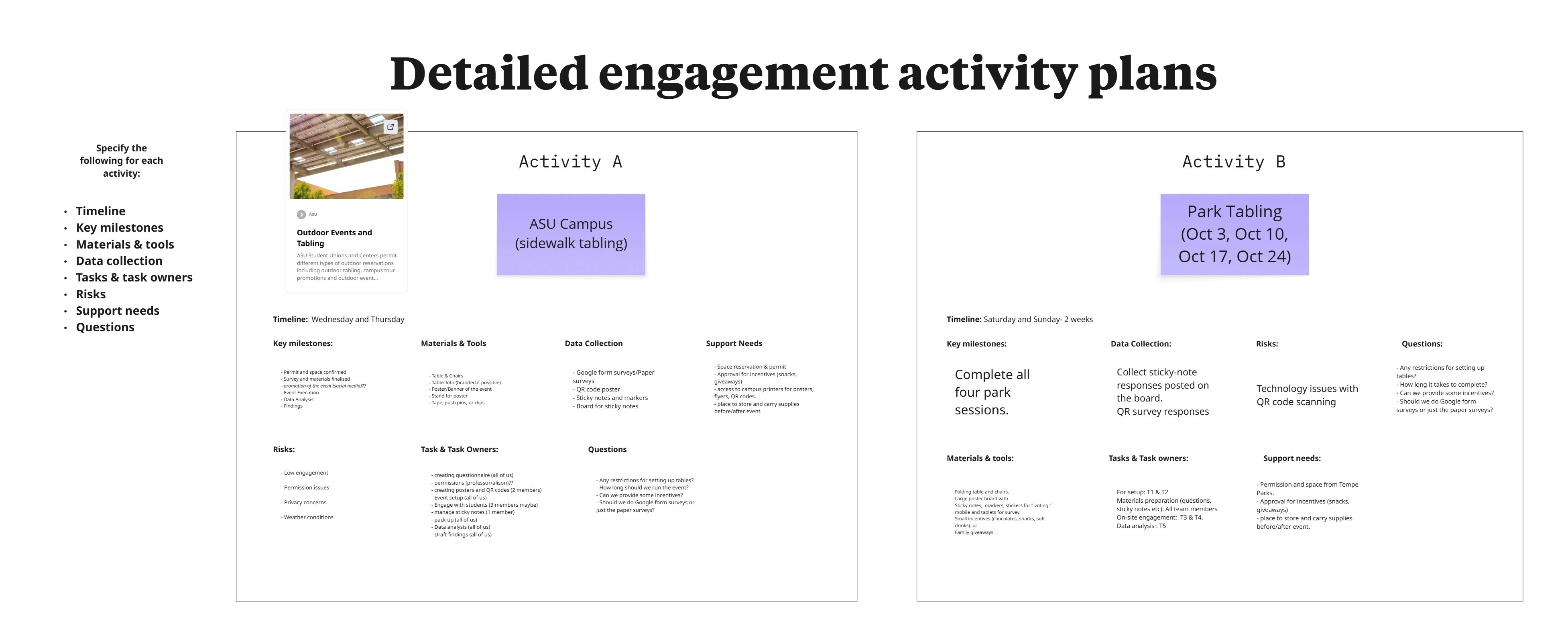
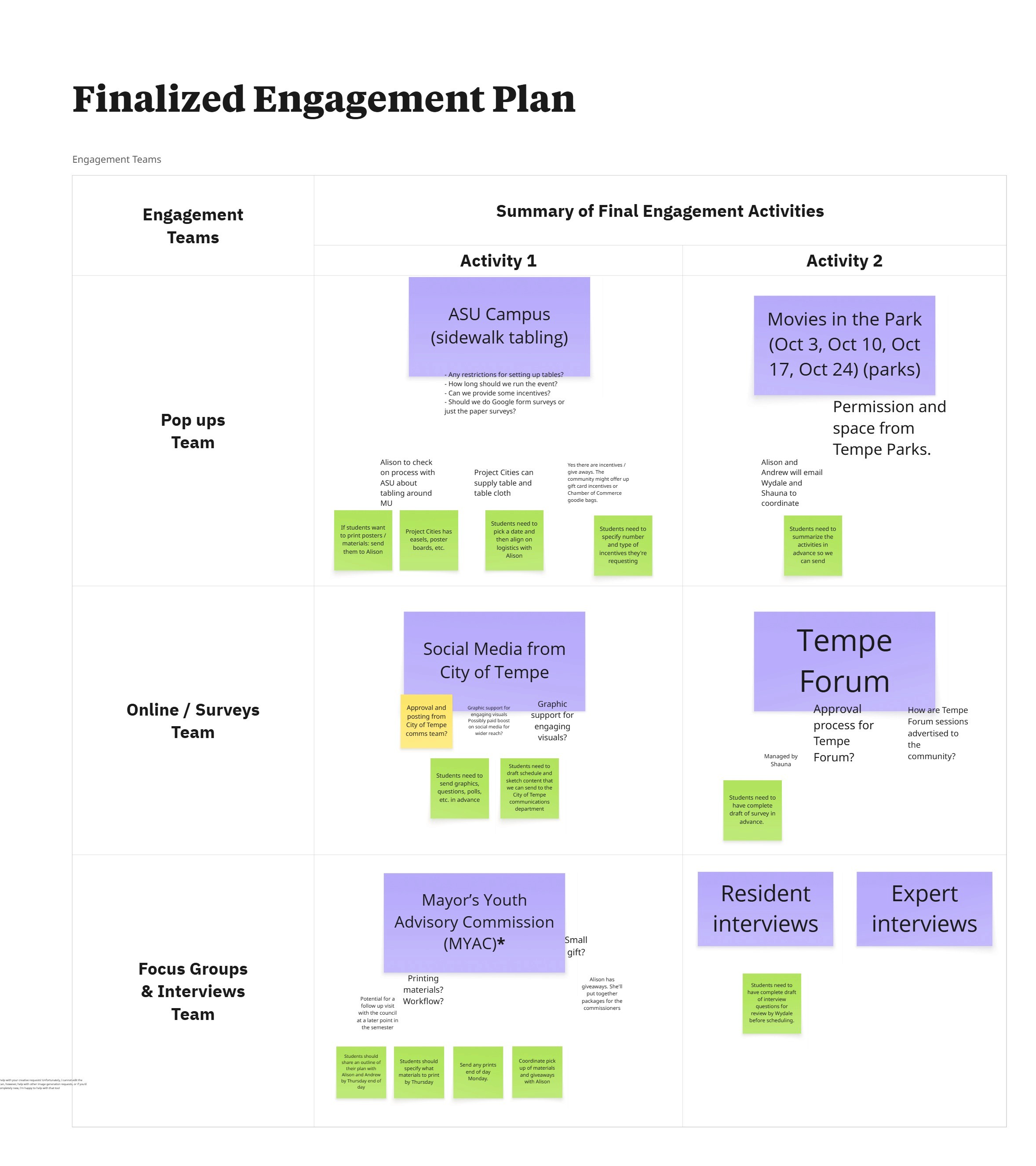
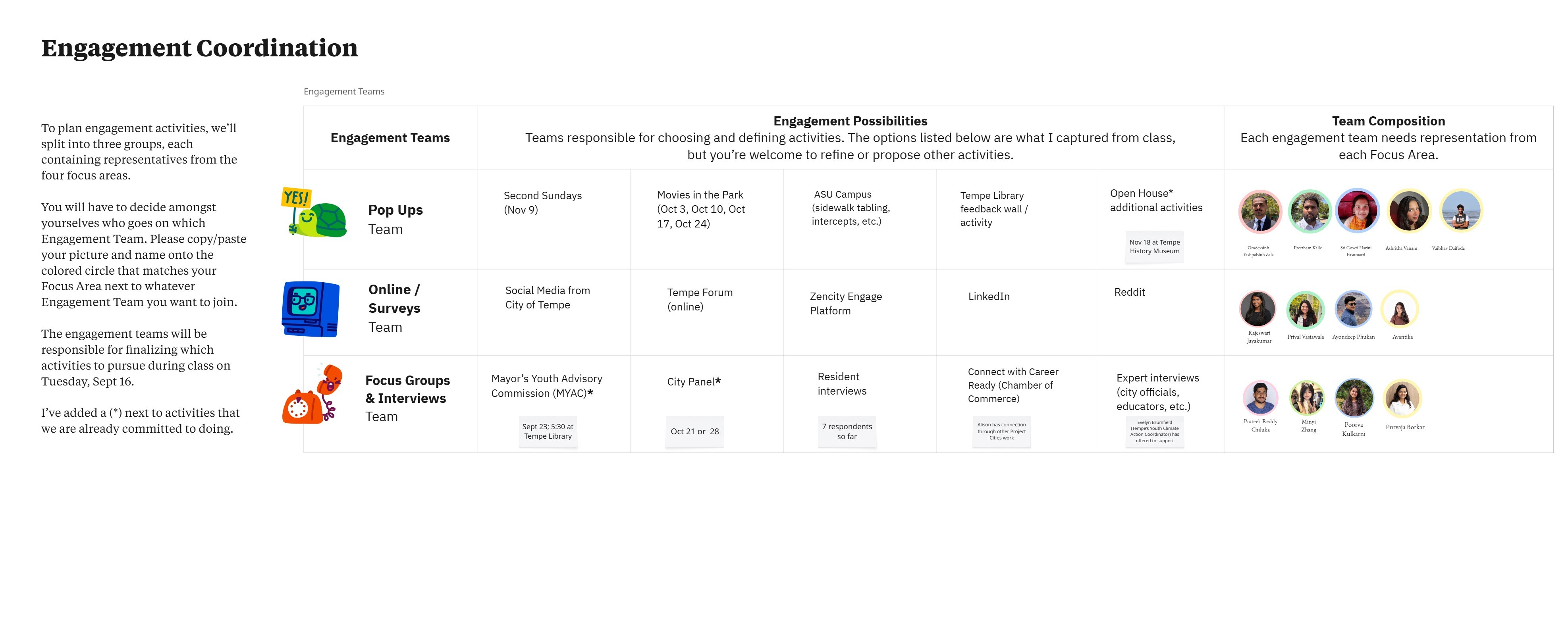
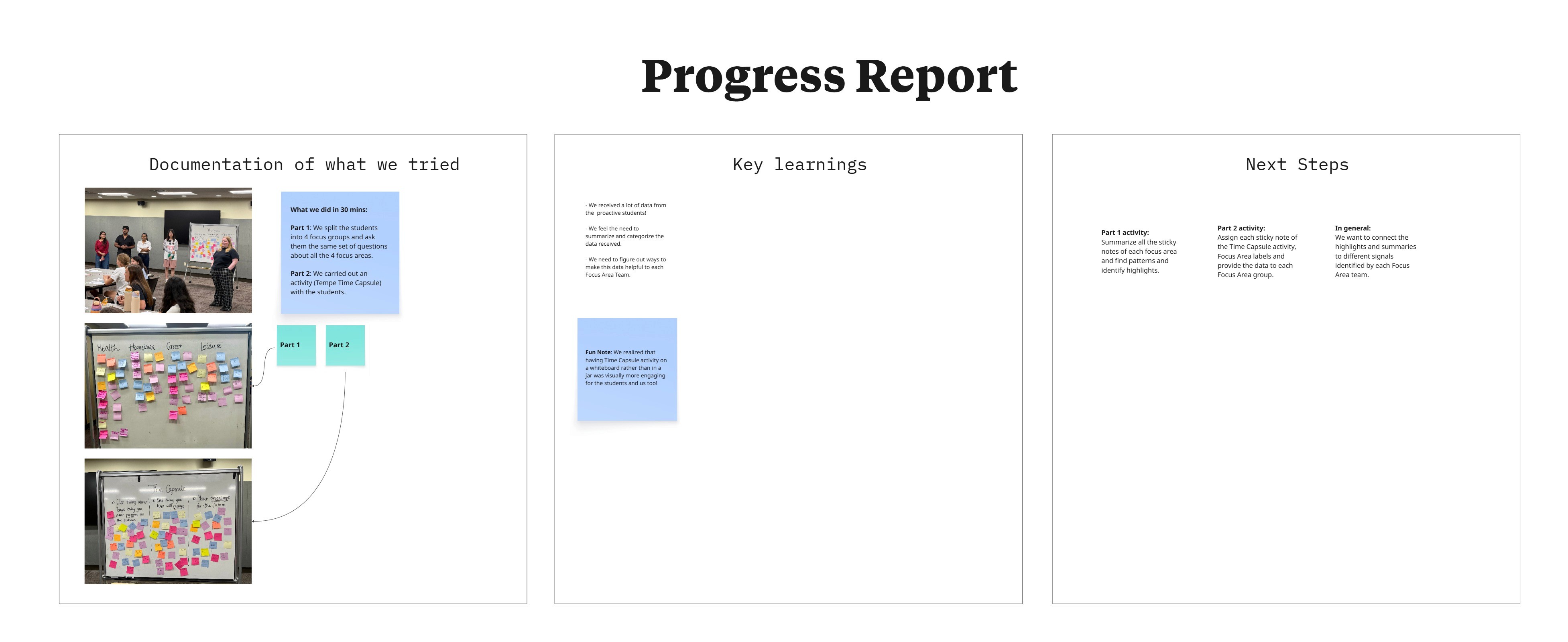
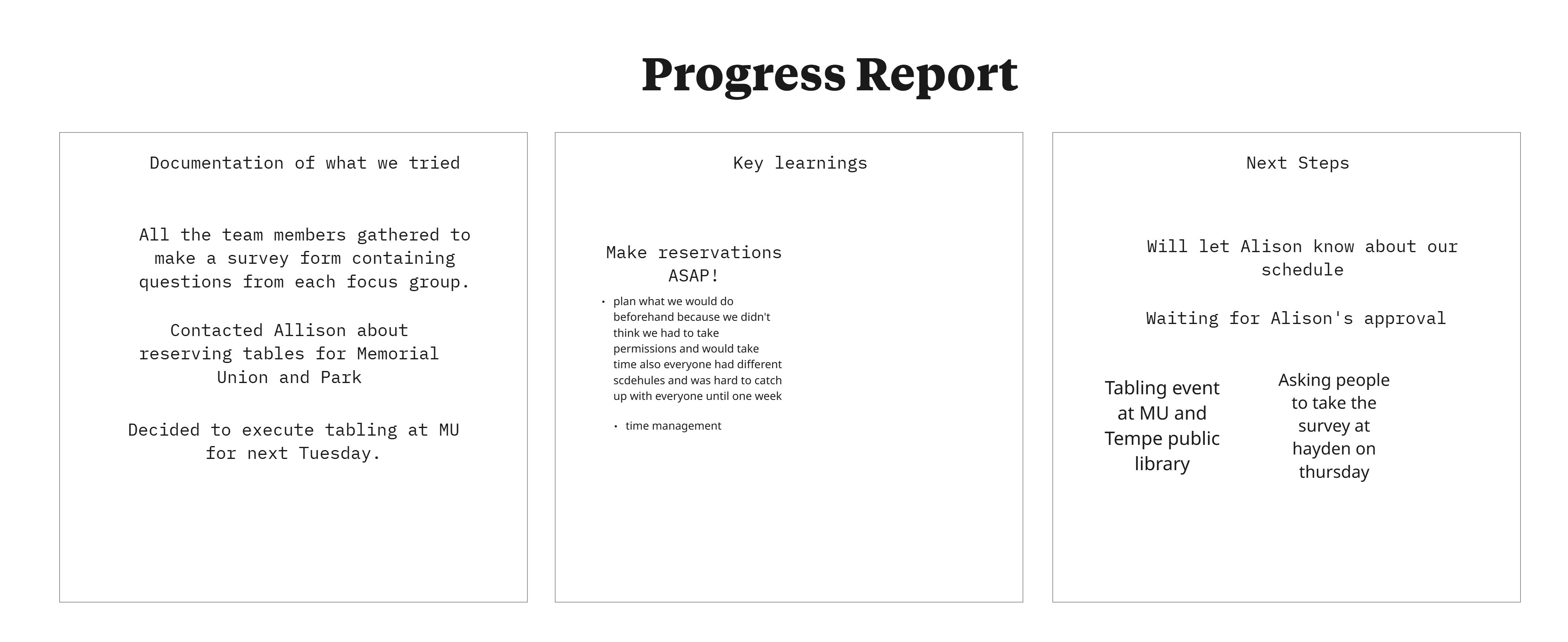
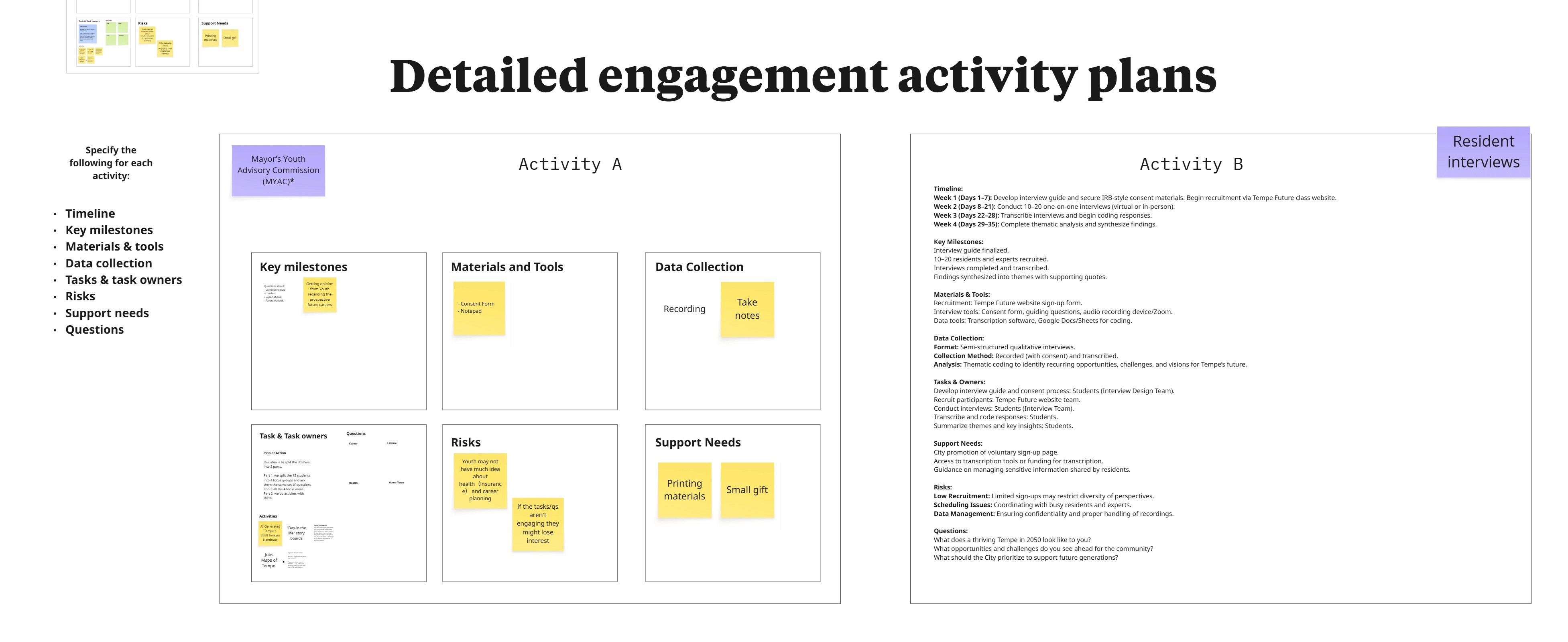
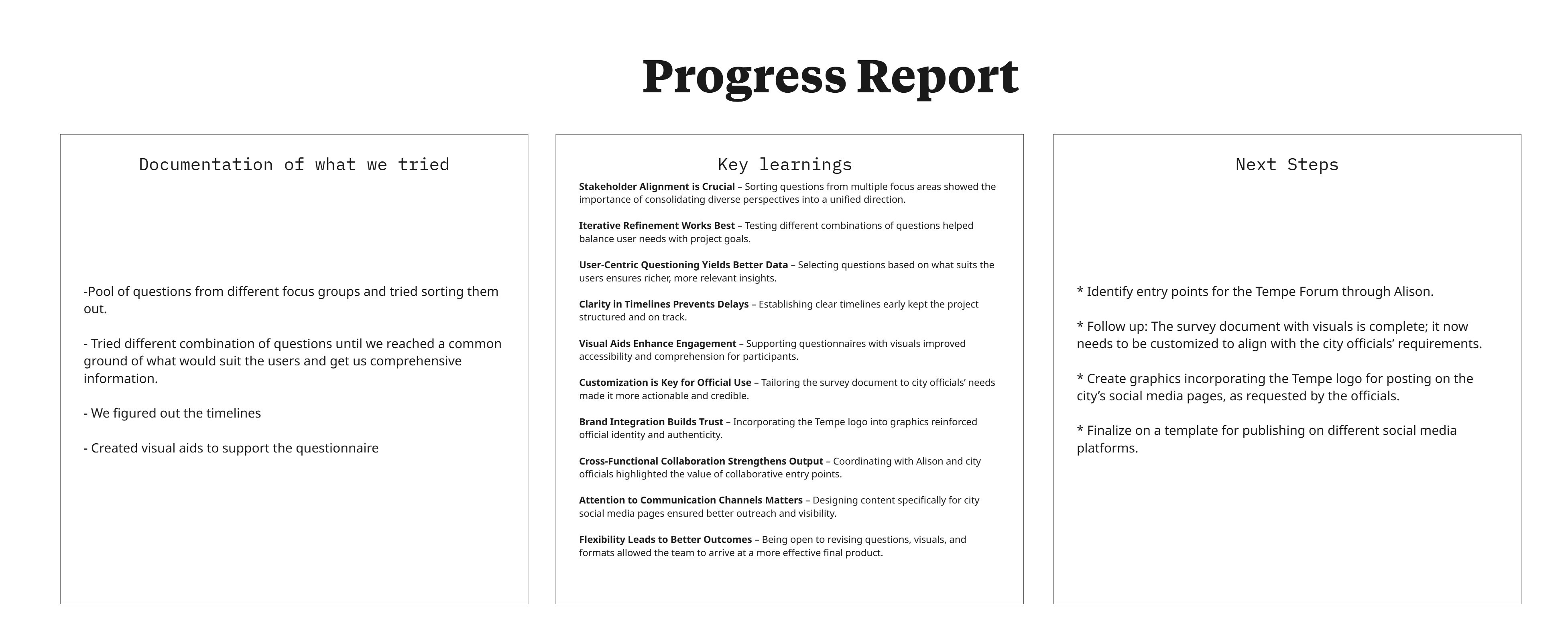
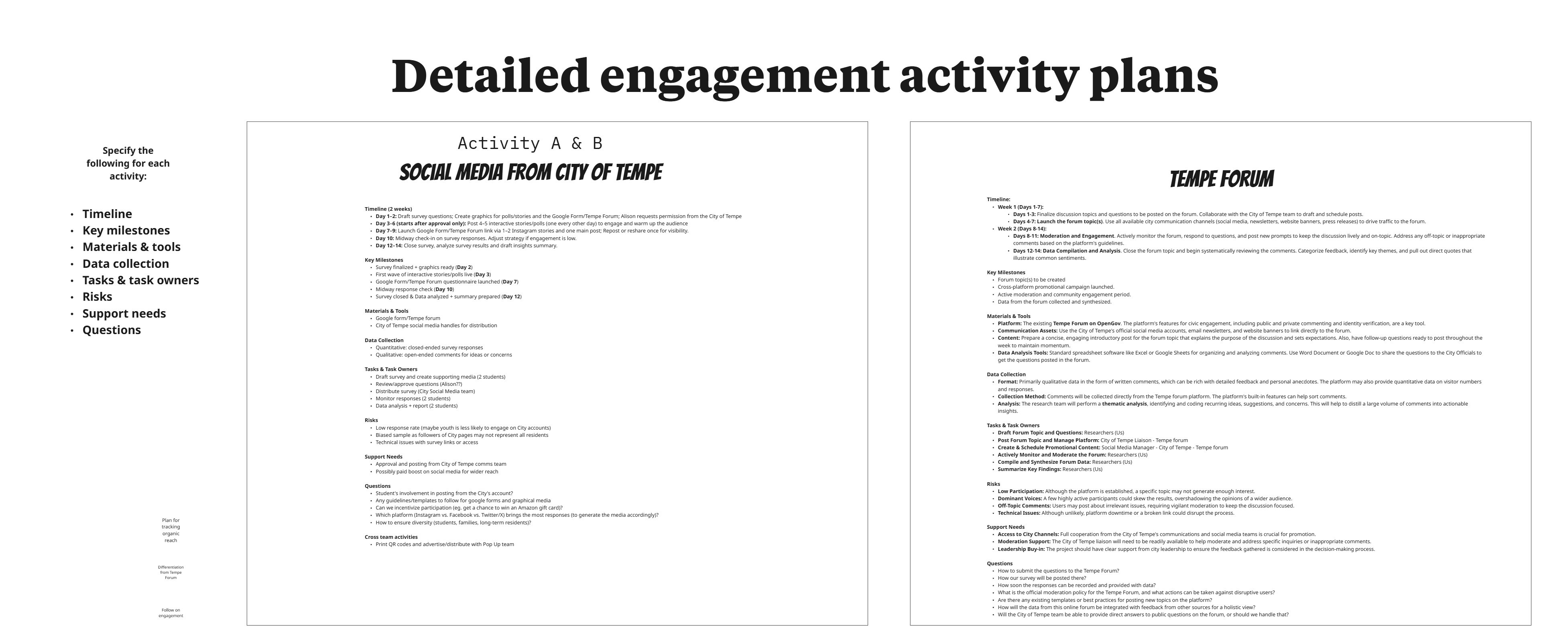
We conducted pop-ups, street interviews, and online surveys to capture community perspectives on health challenges in Tempe. These engagements surfaced key concerns around heat resilience, access to healthcare, mental well-being, and public health infrastructure.
As part of the Pop-Up Team, I directly engaged with residents, documented responses, and synthesized insights into clear problem areas that informed our health signals and future scenarios.
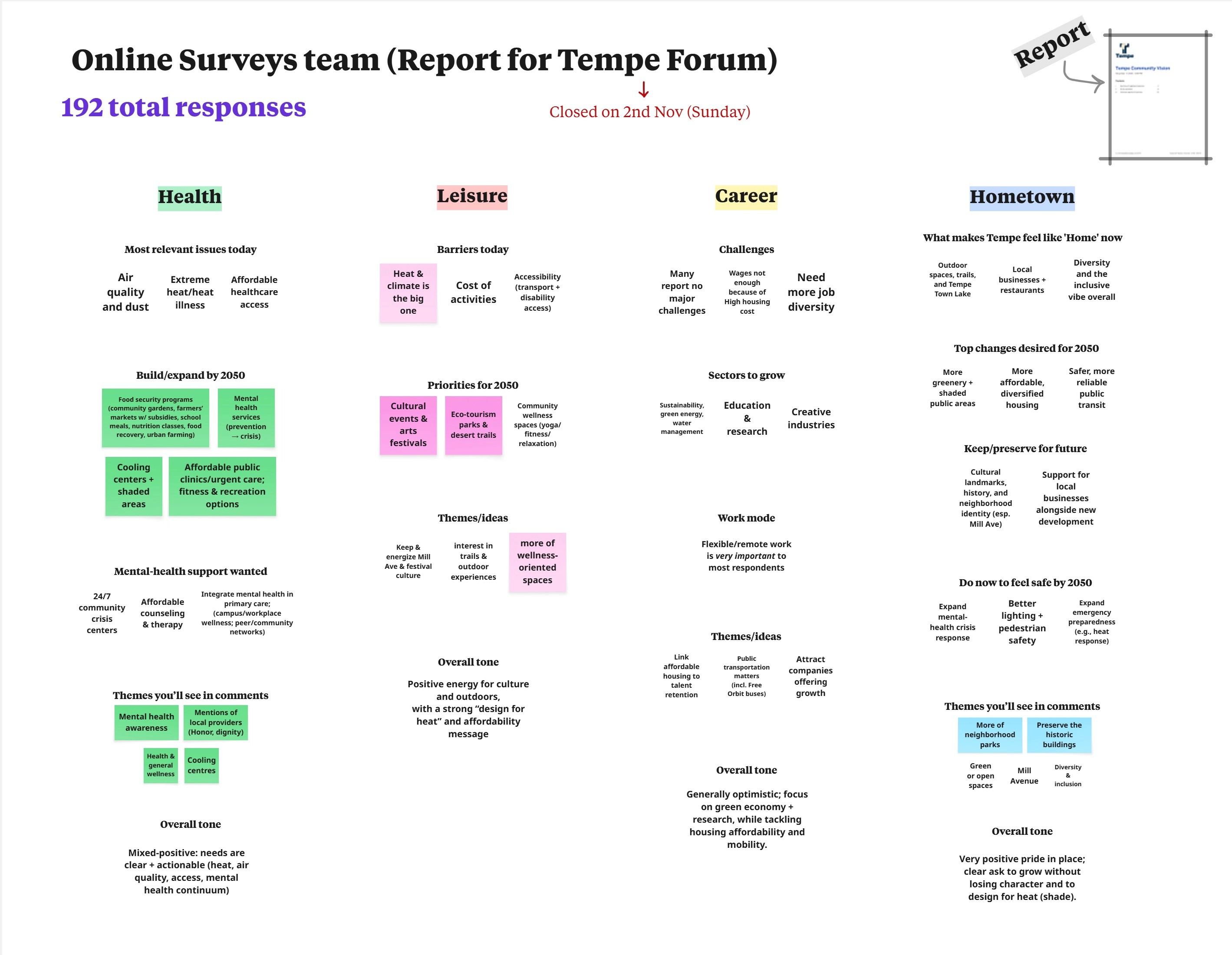
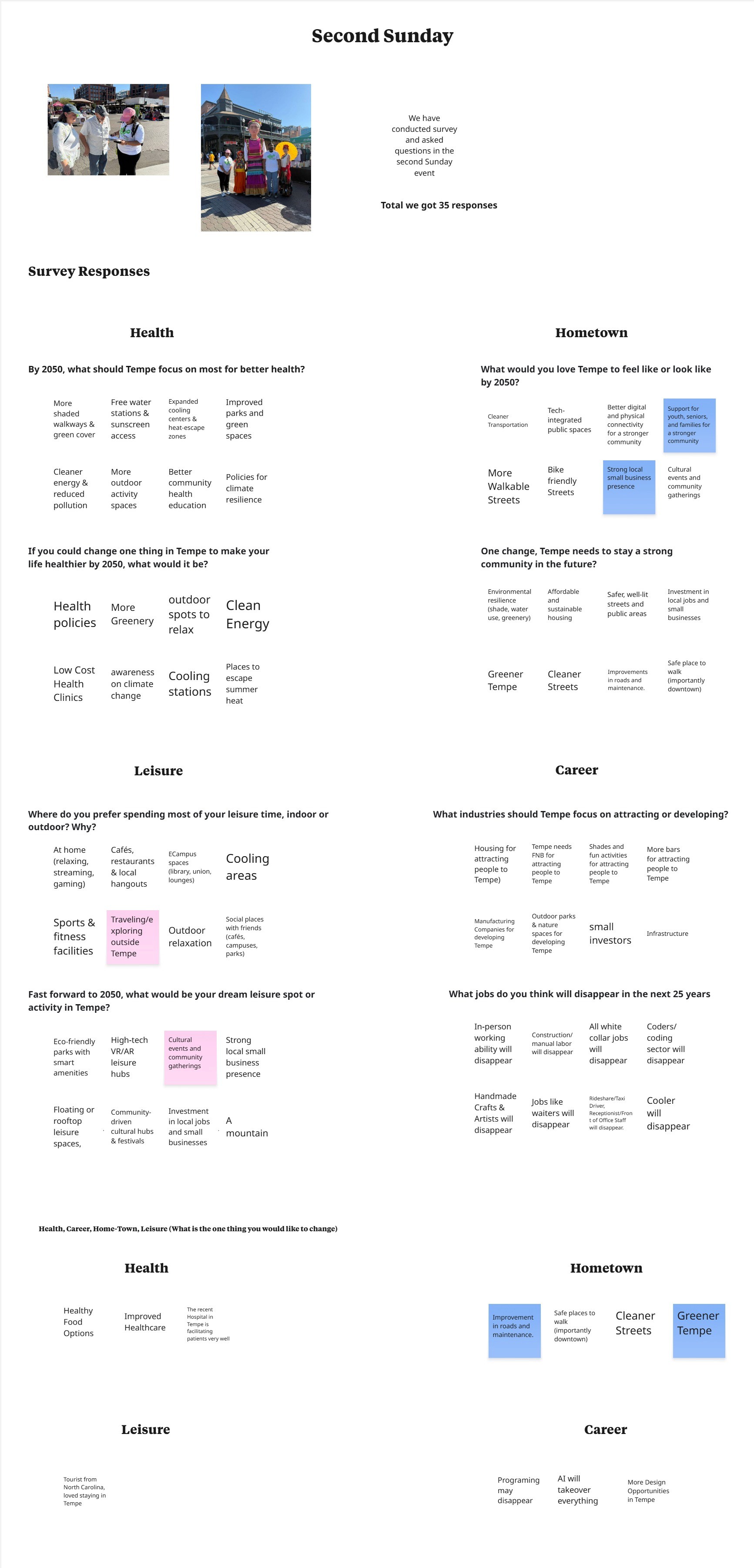
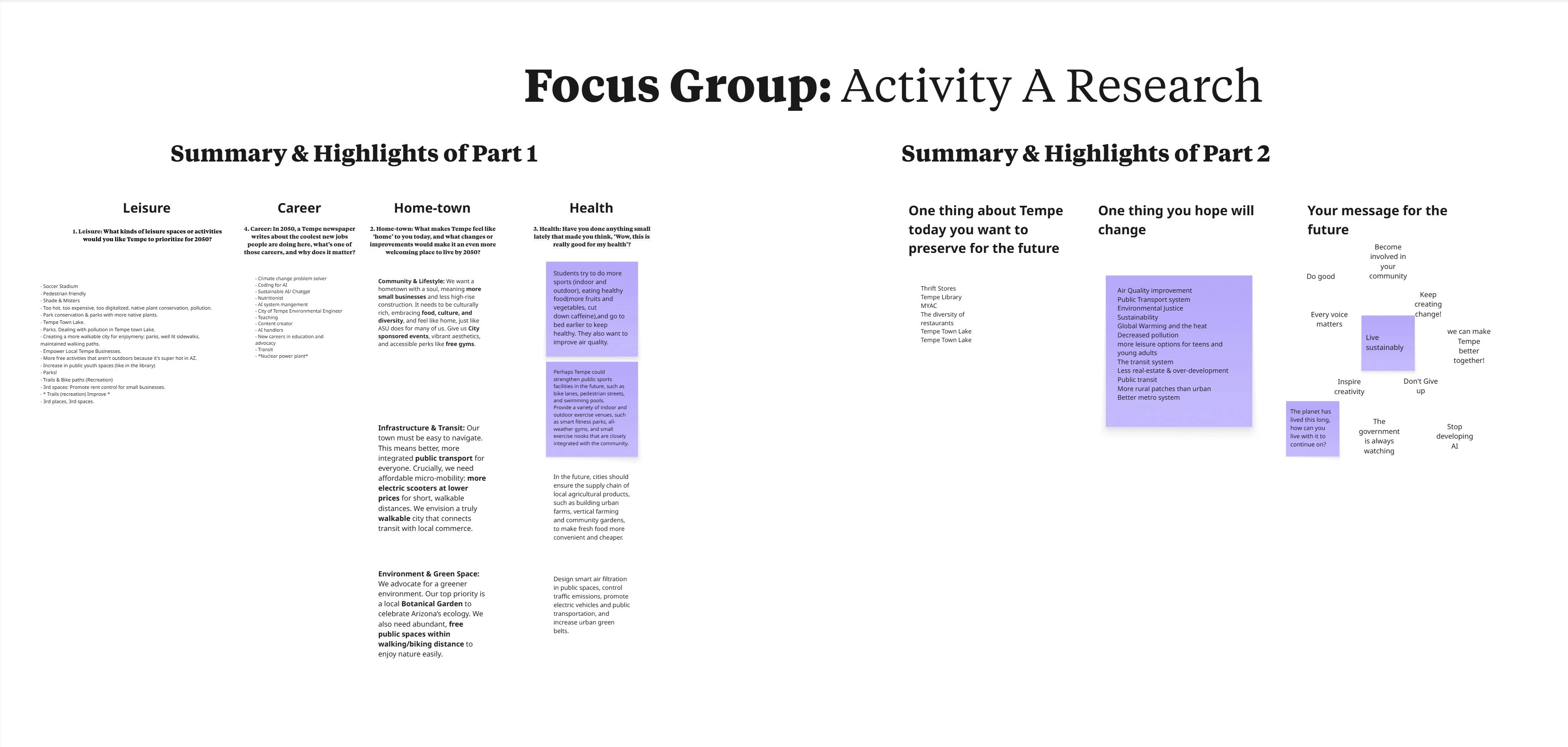
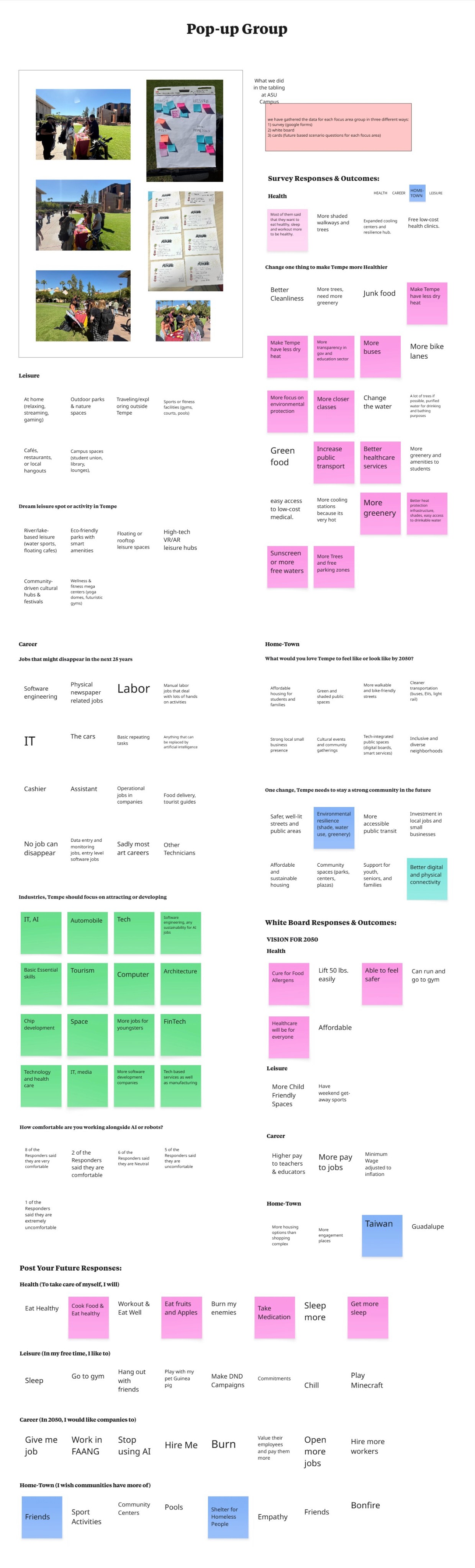
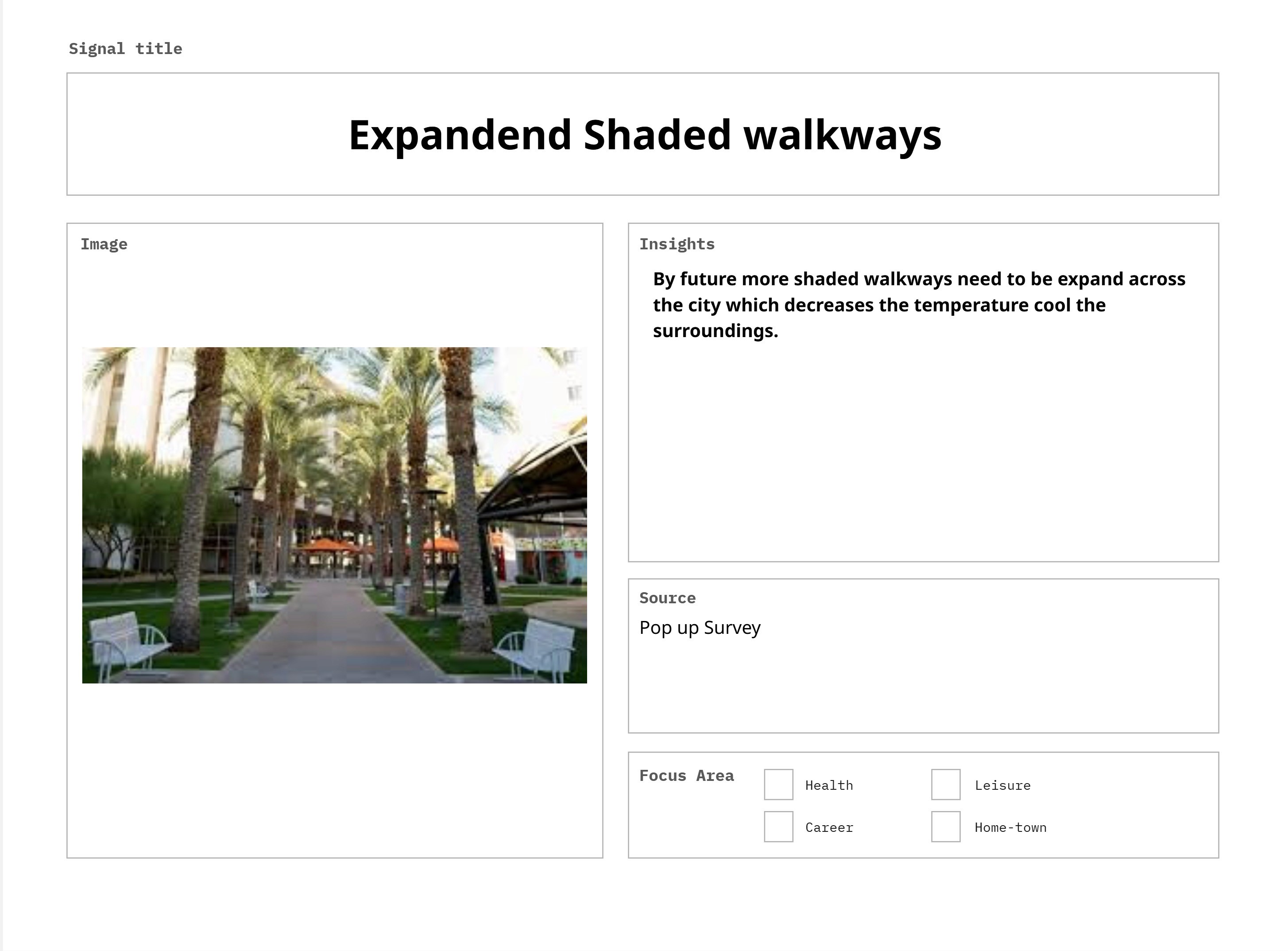
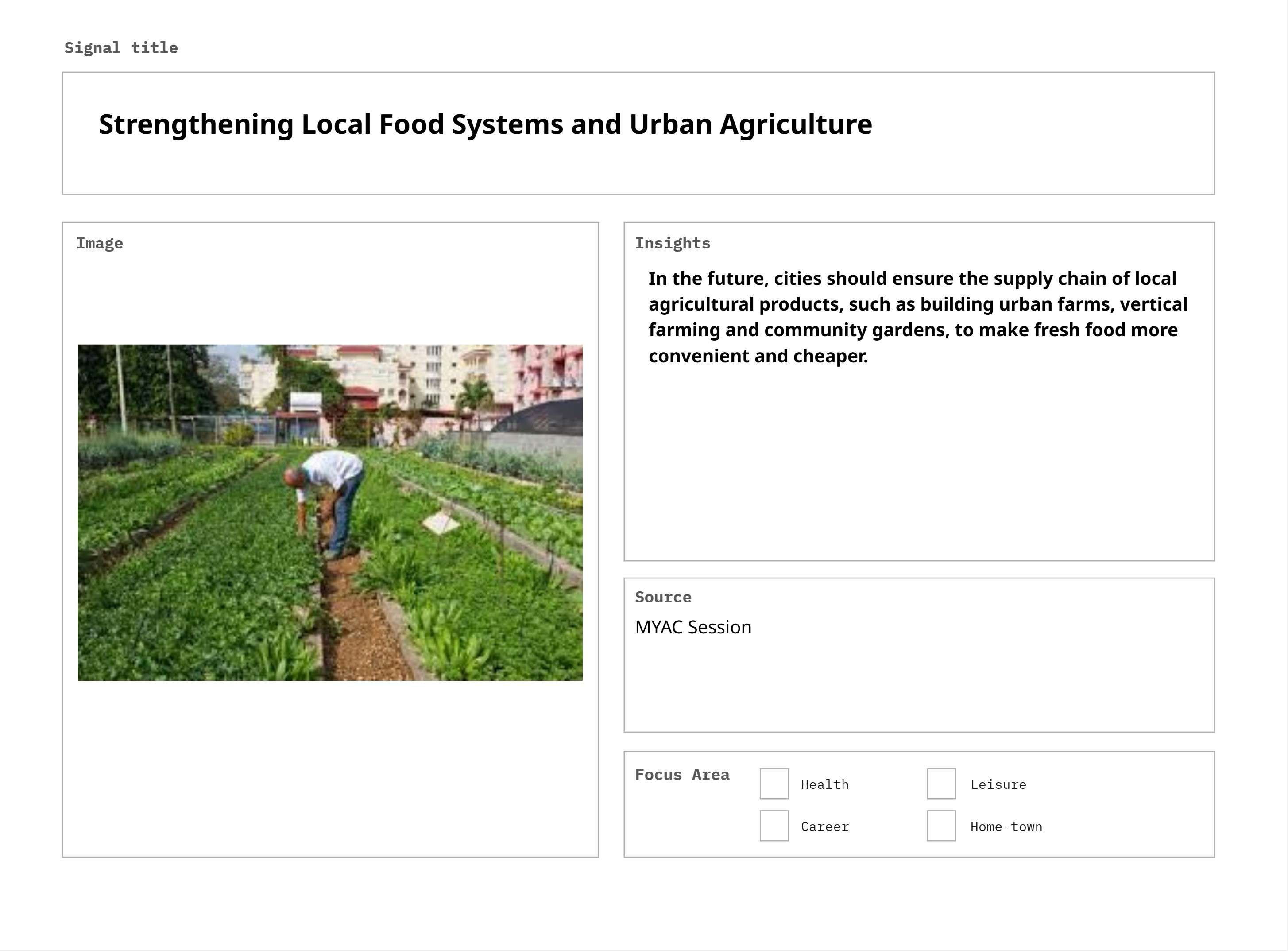
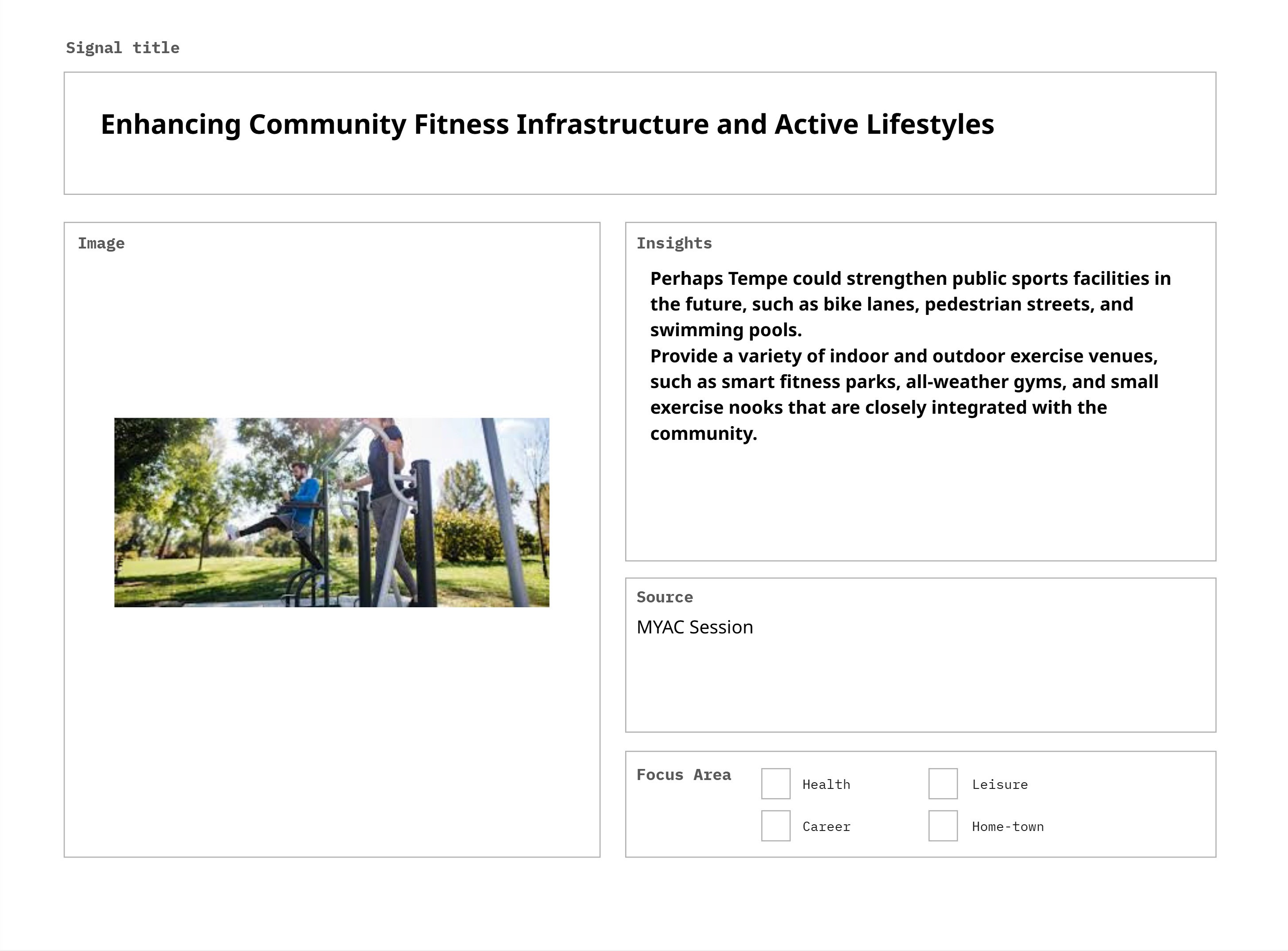
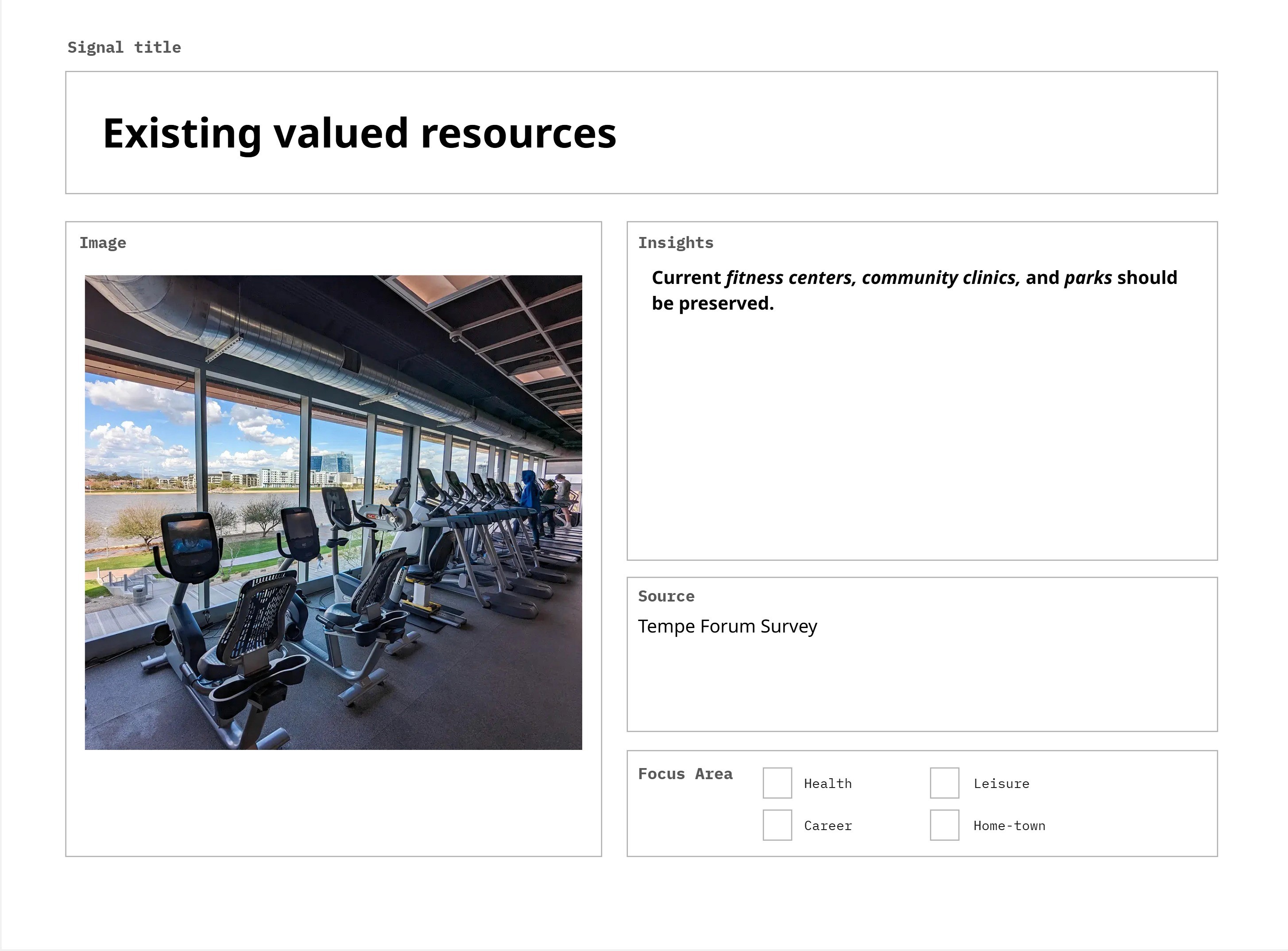
After completing our engagement activities, We synthesized community input into key health signals reflecting residents’ lived experiences and priorities. These insights revealed needs around preventive care, mental health support, shade and heat resilience, and access to healthy food, directly grounding our health scenarios in real community concerns.
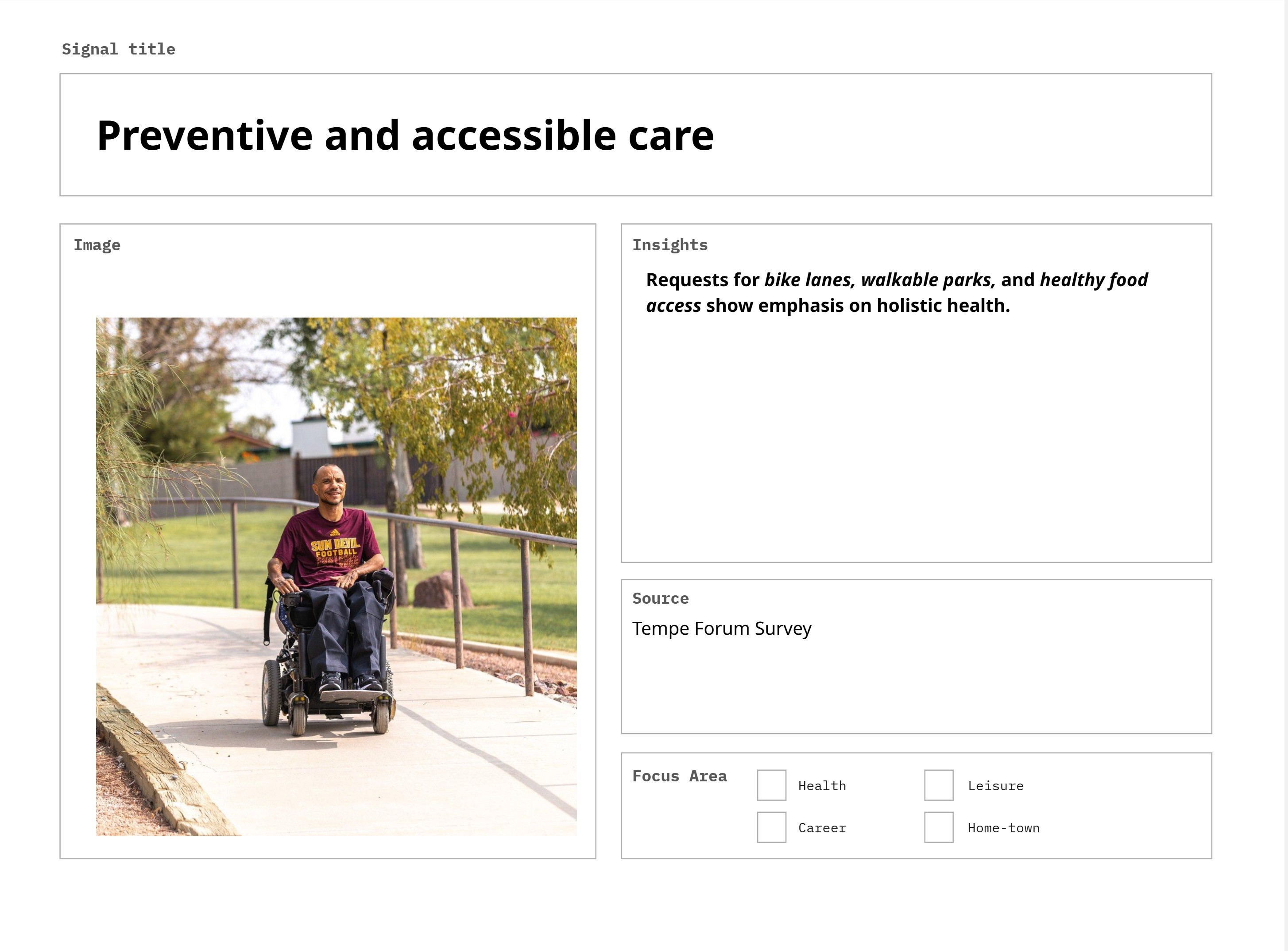
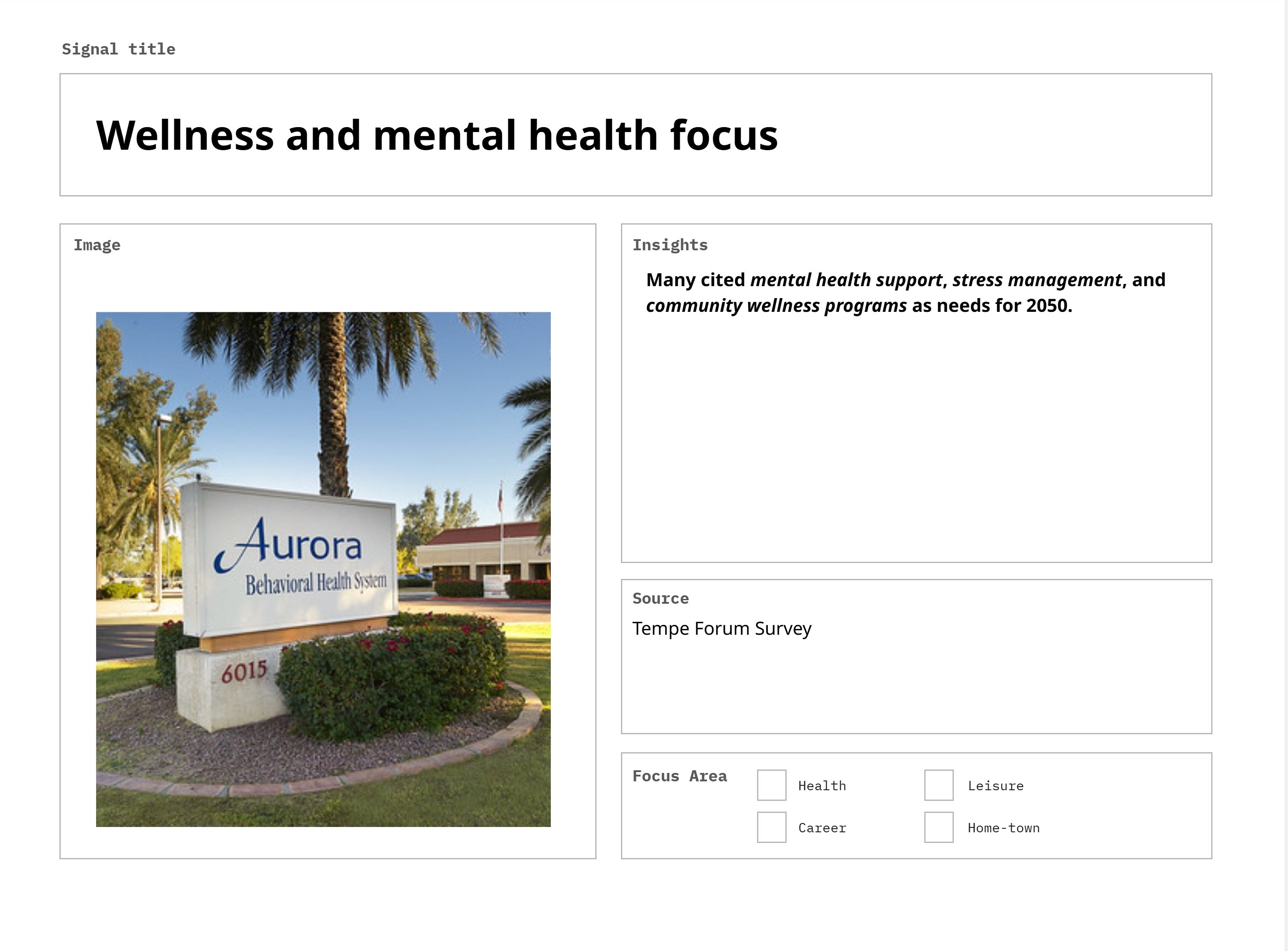
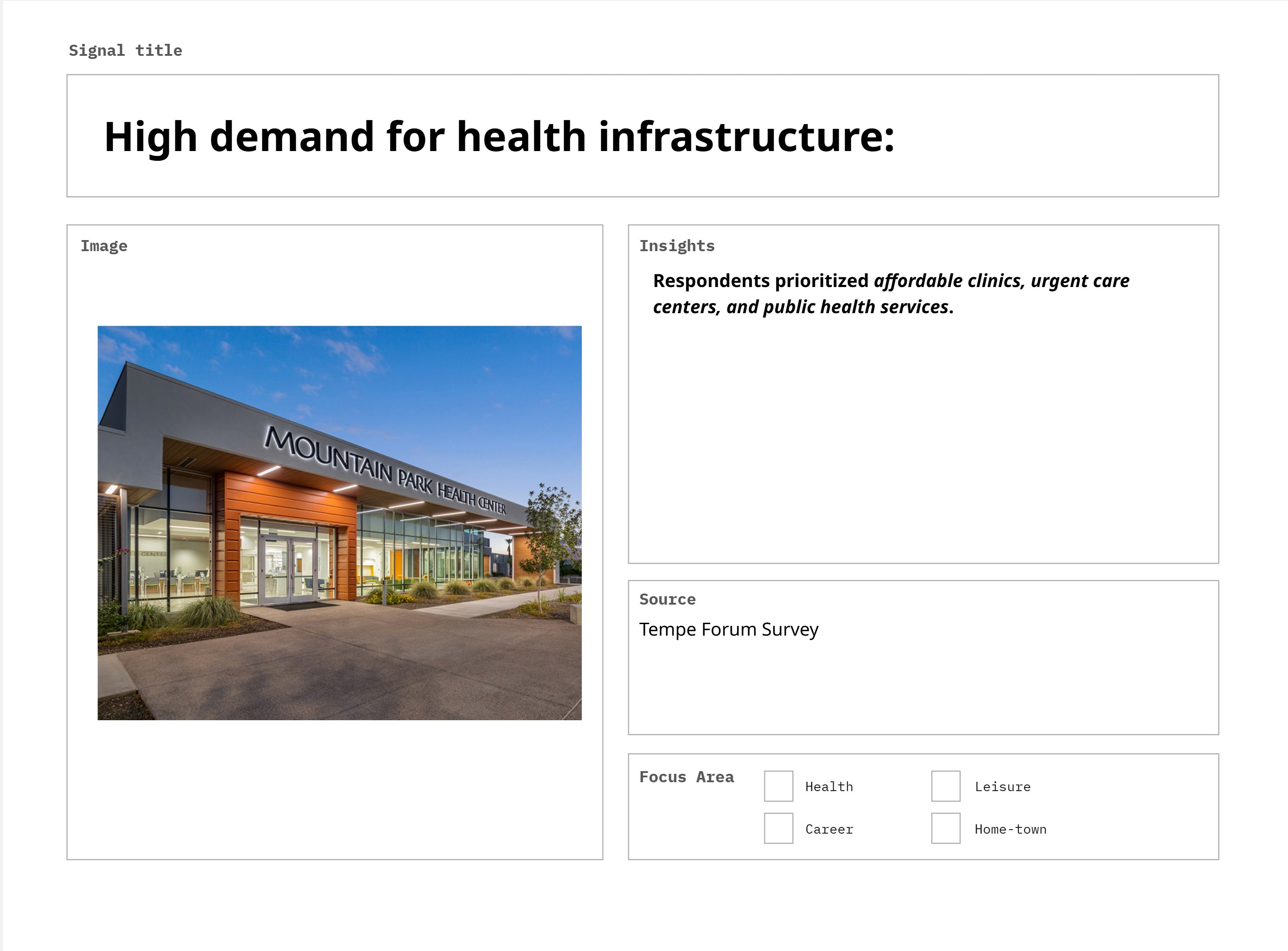
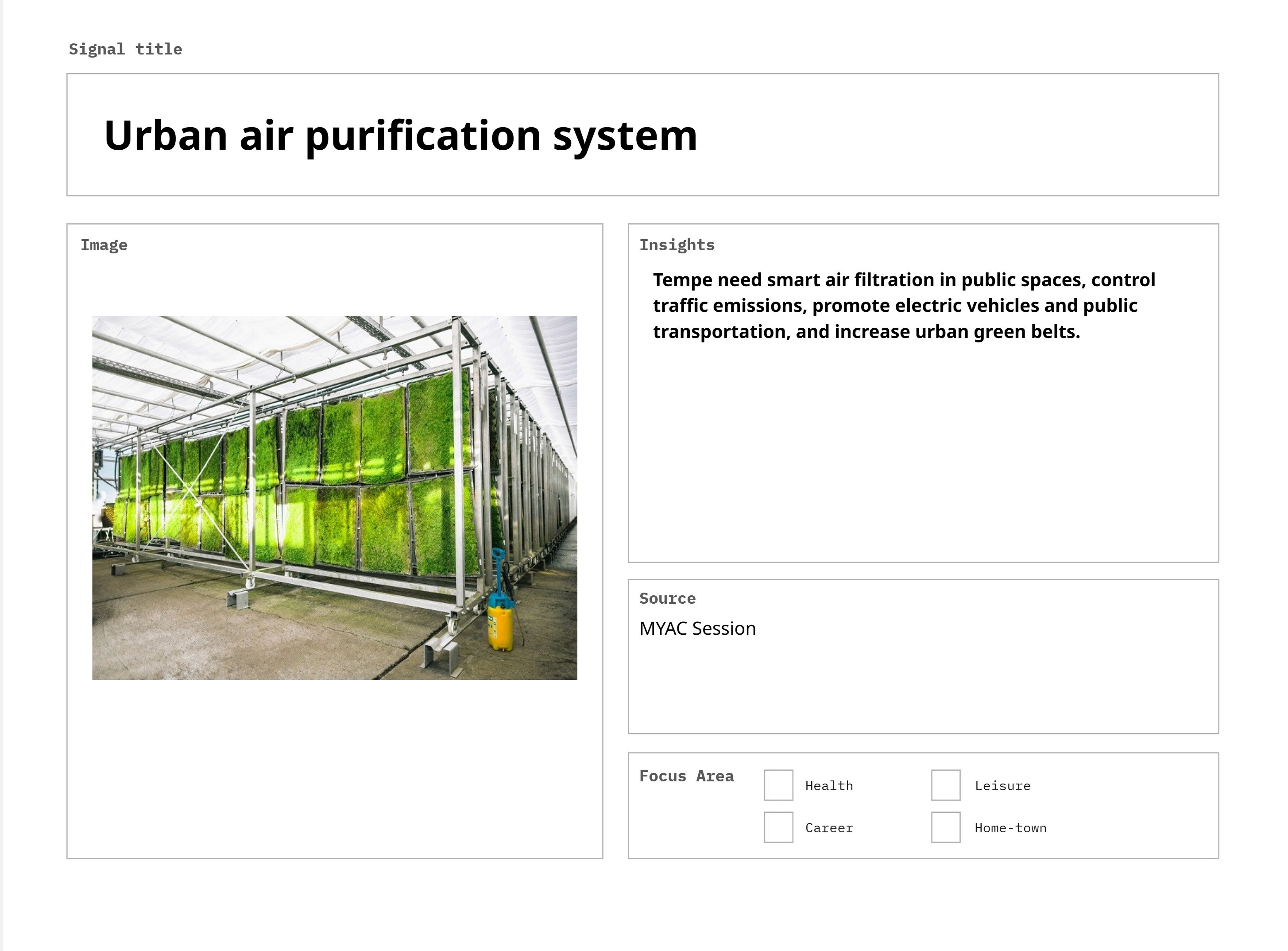
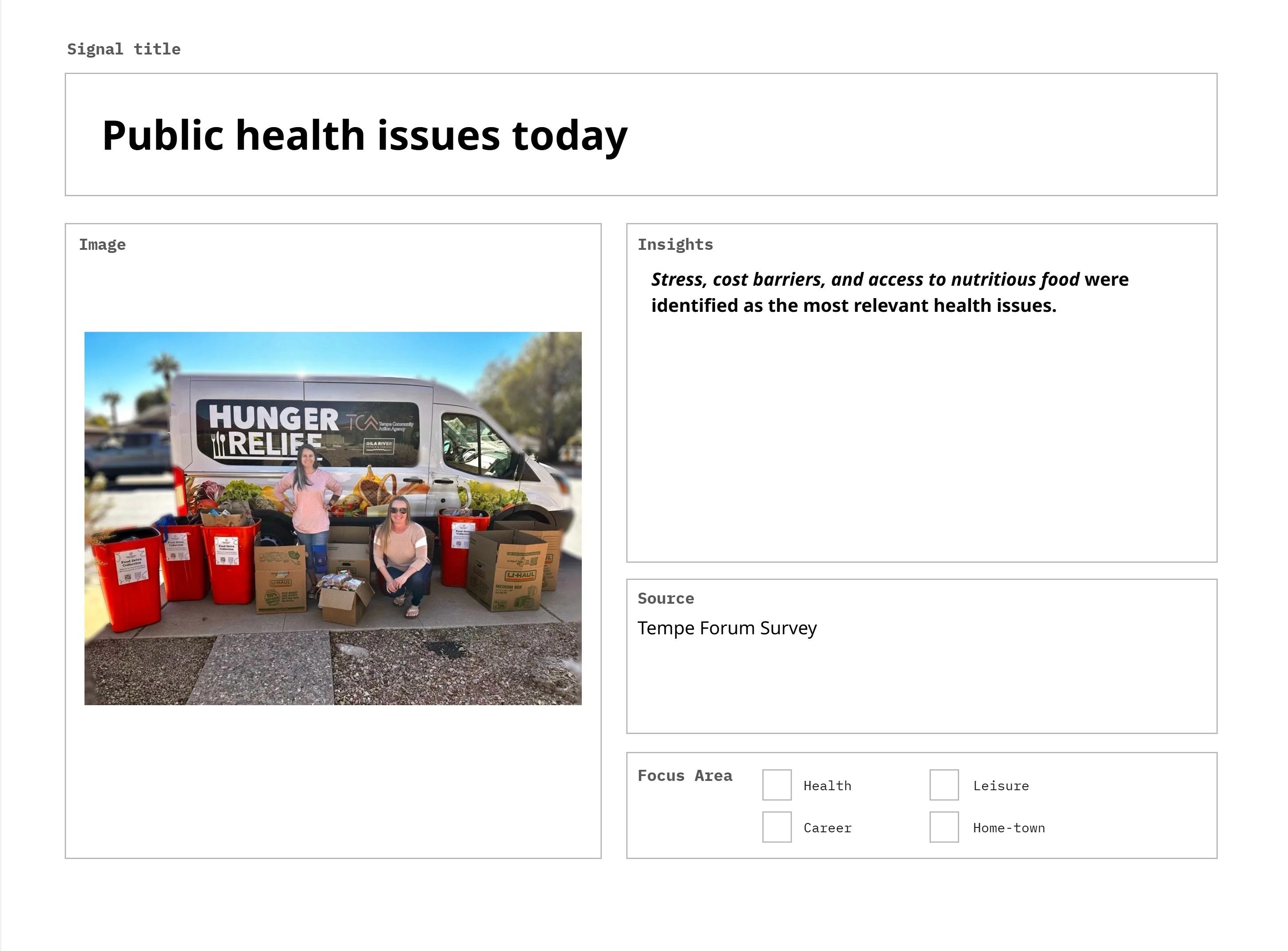
Community Signals
Health Signals
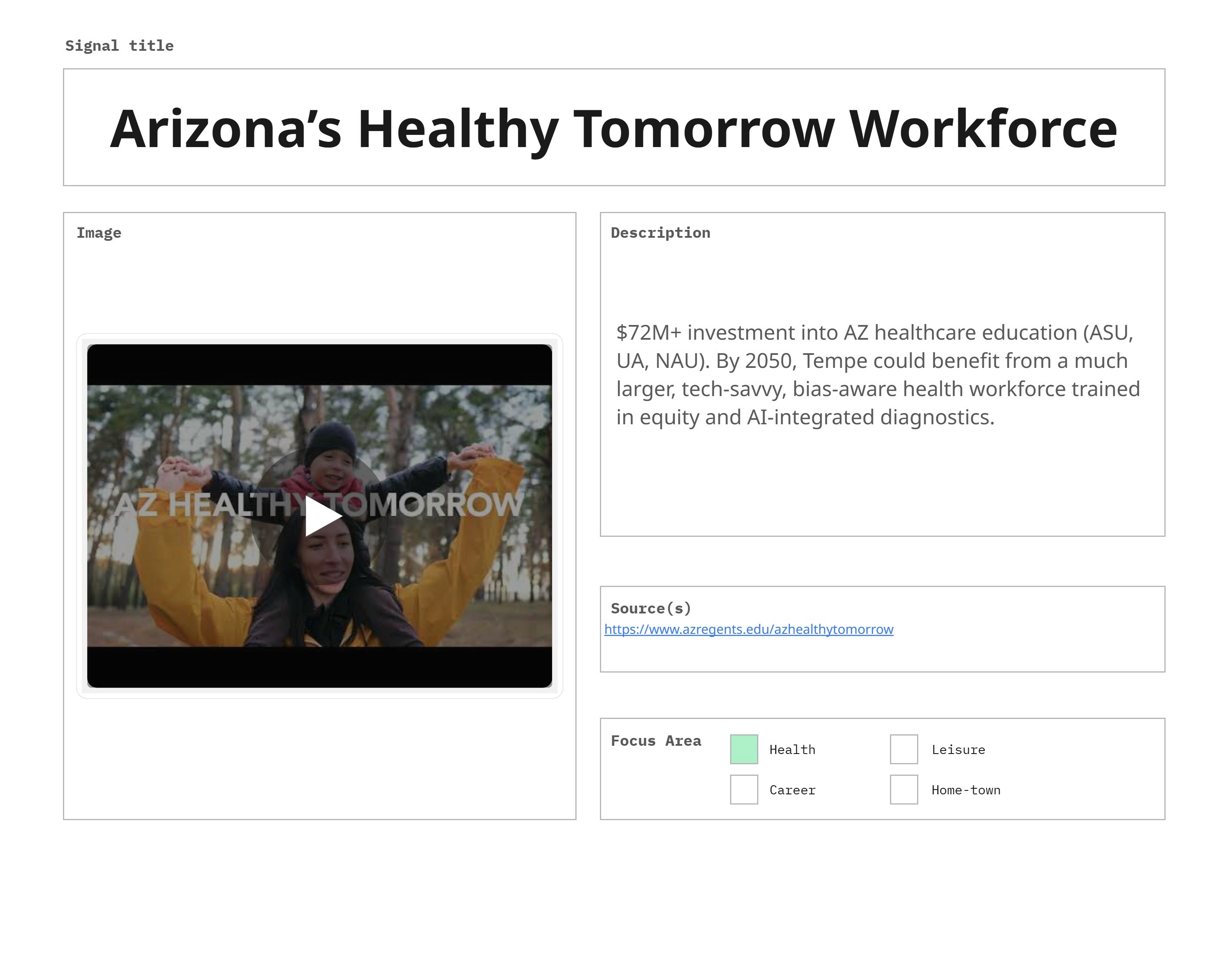
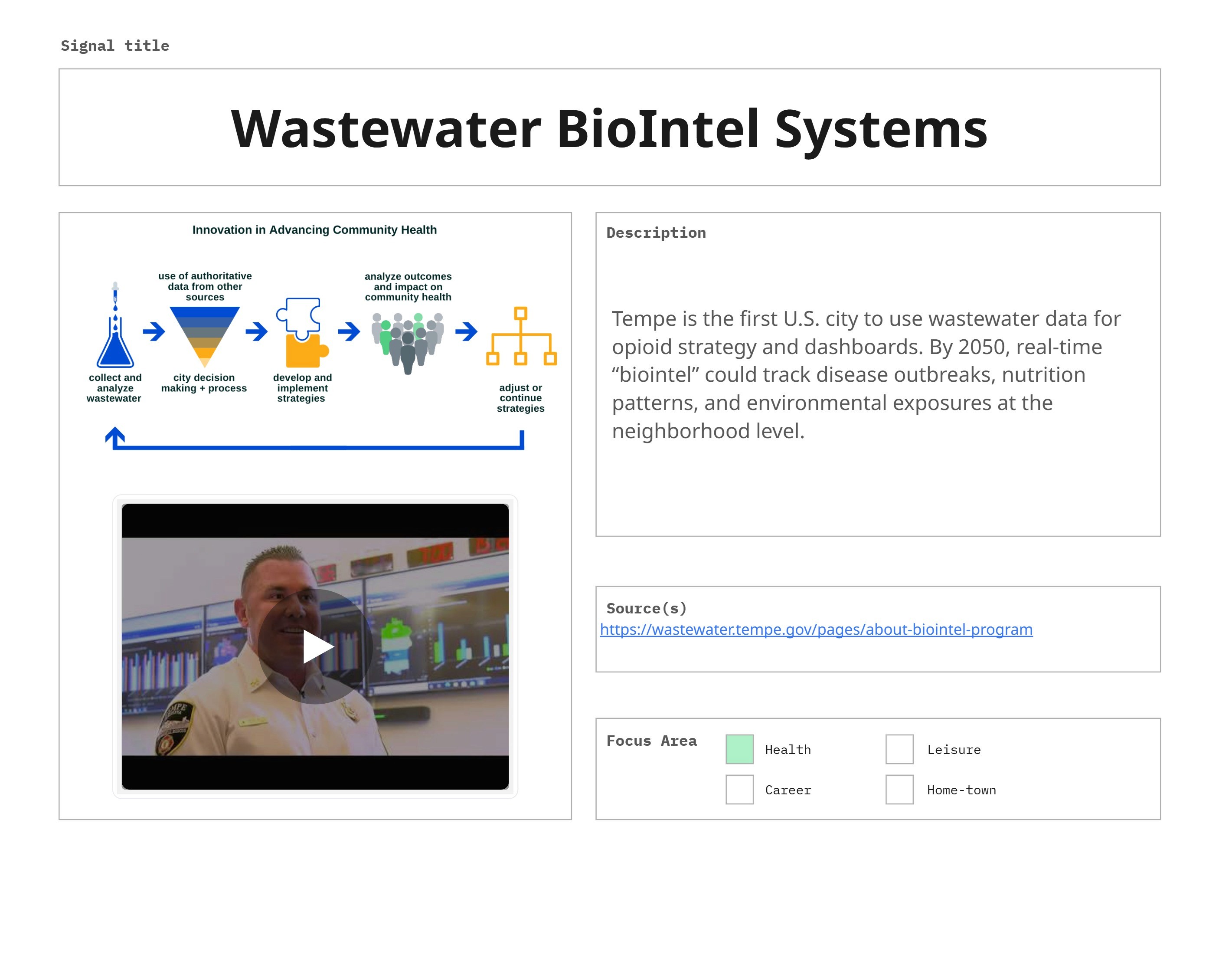
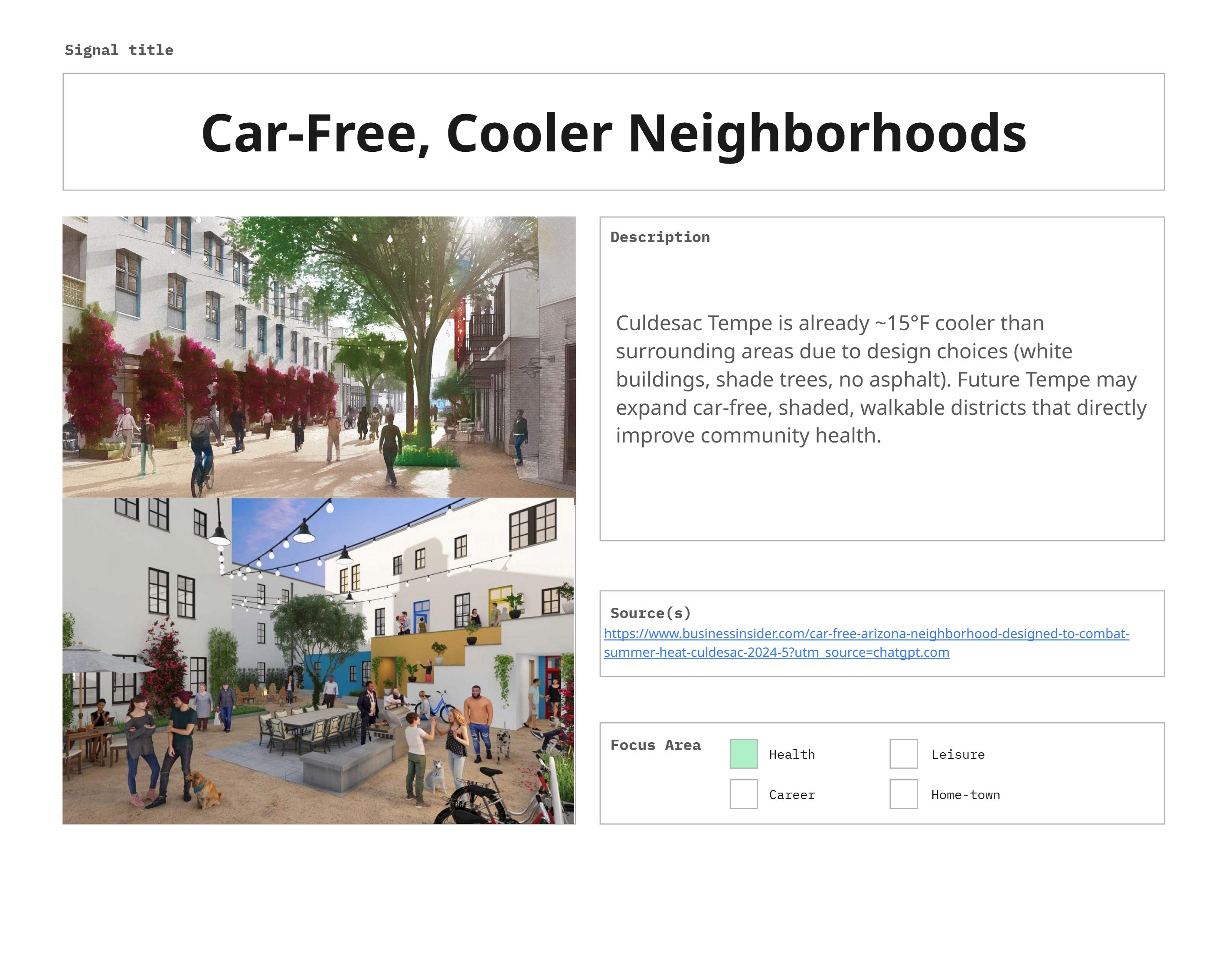
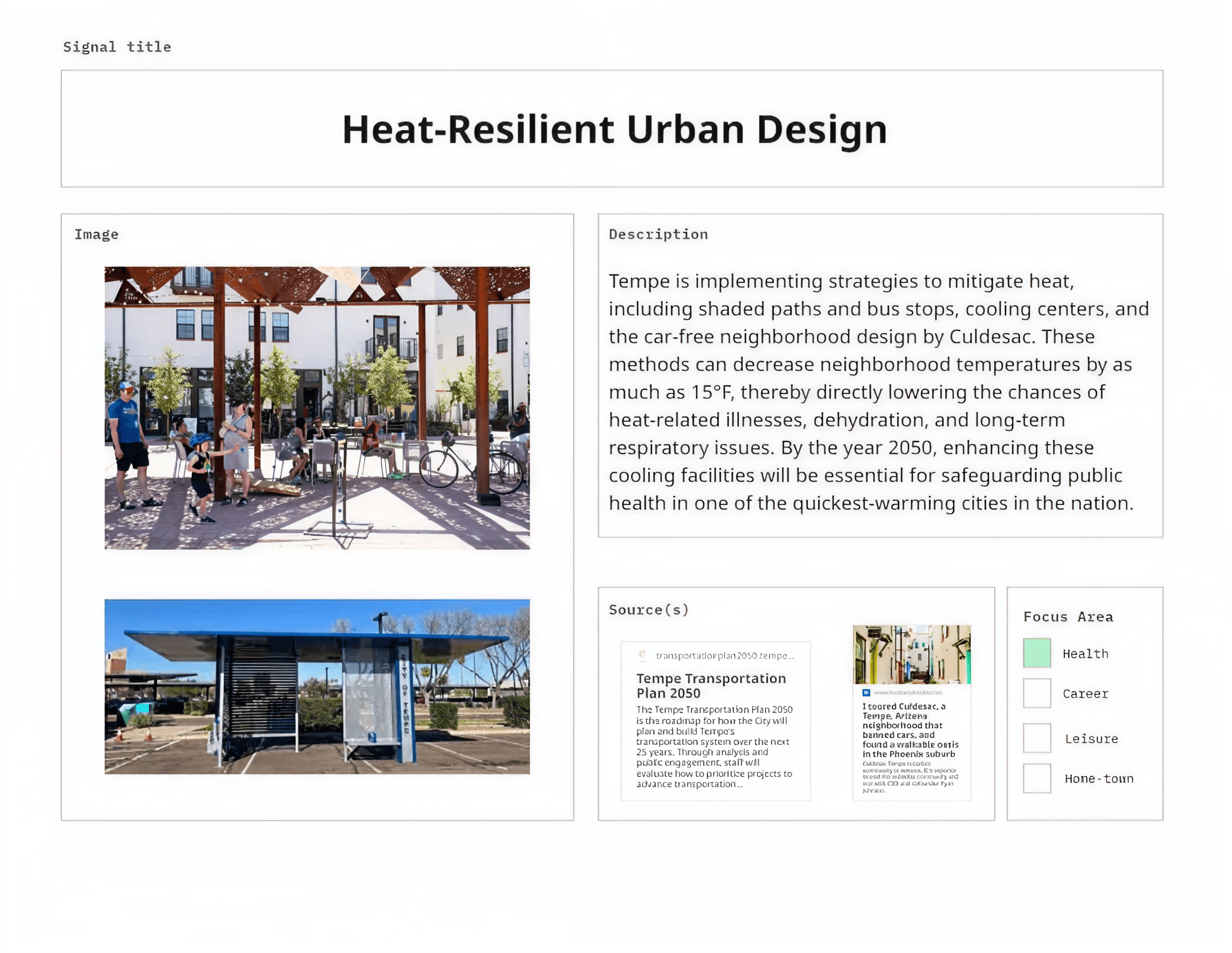
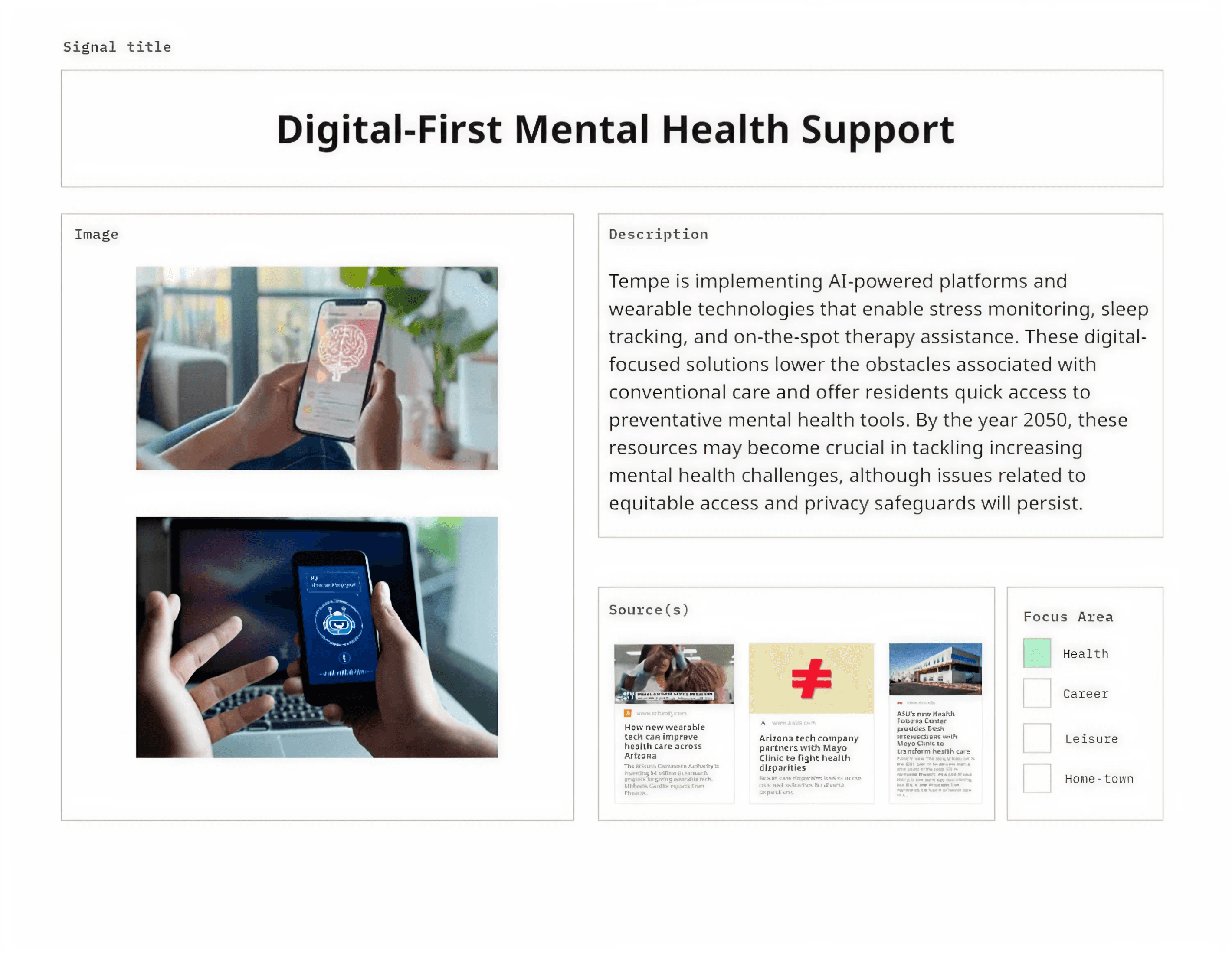
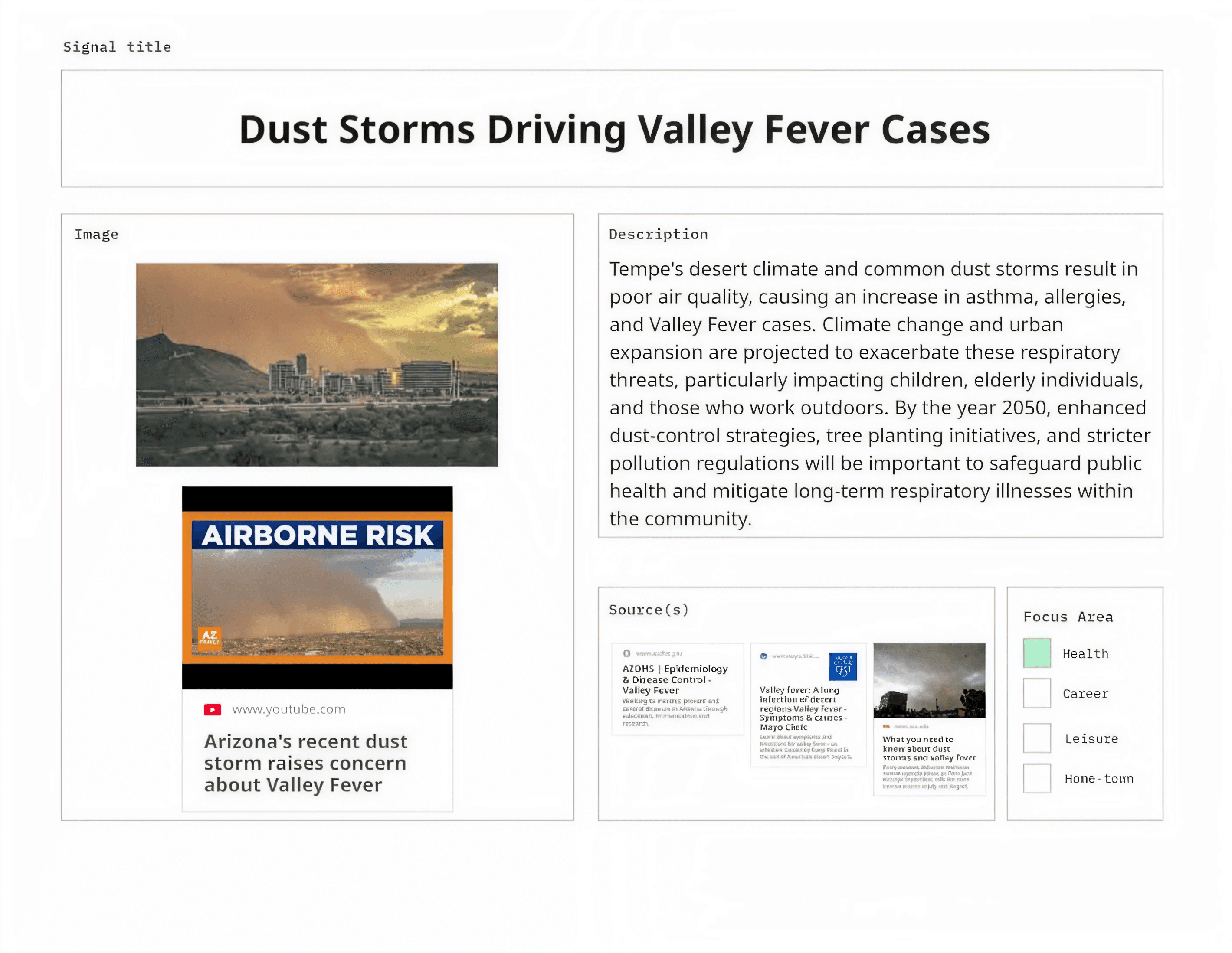
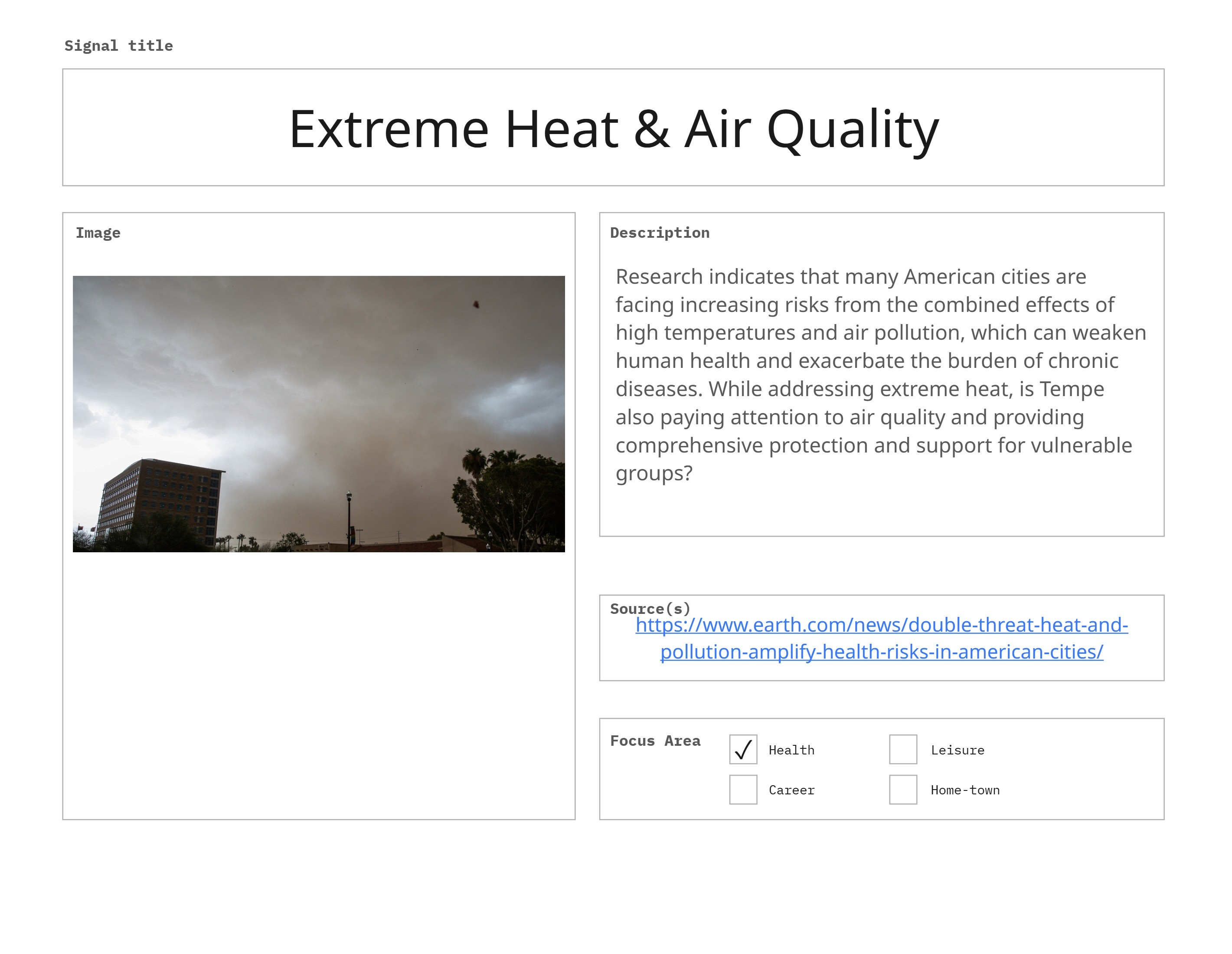
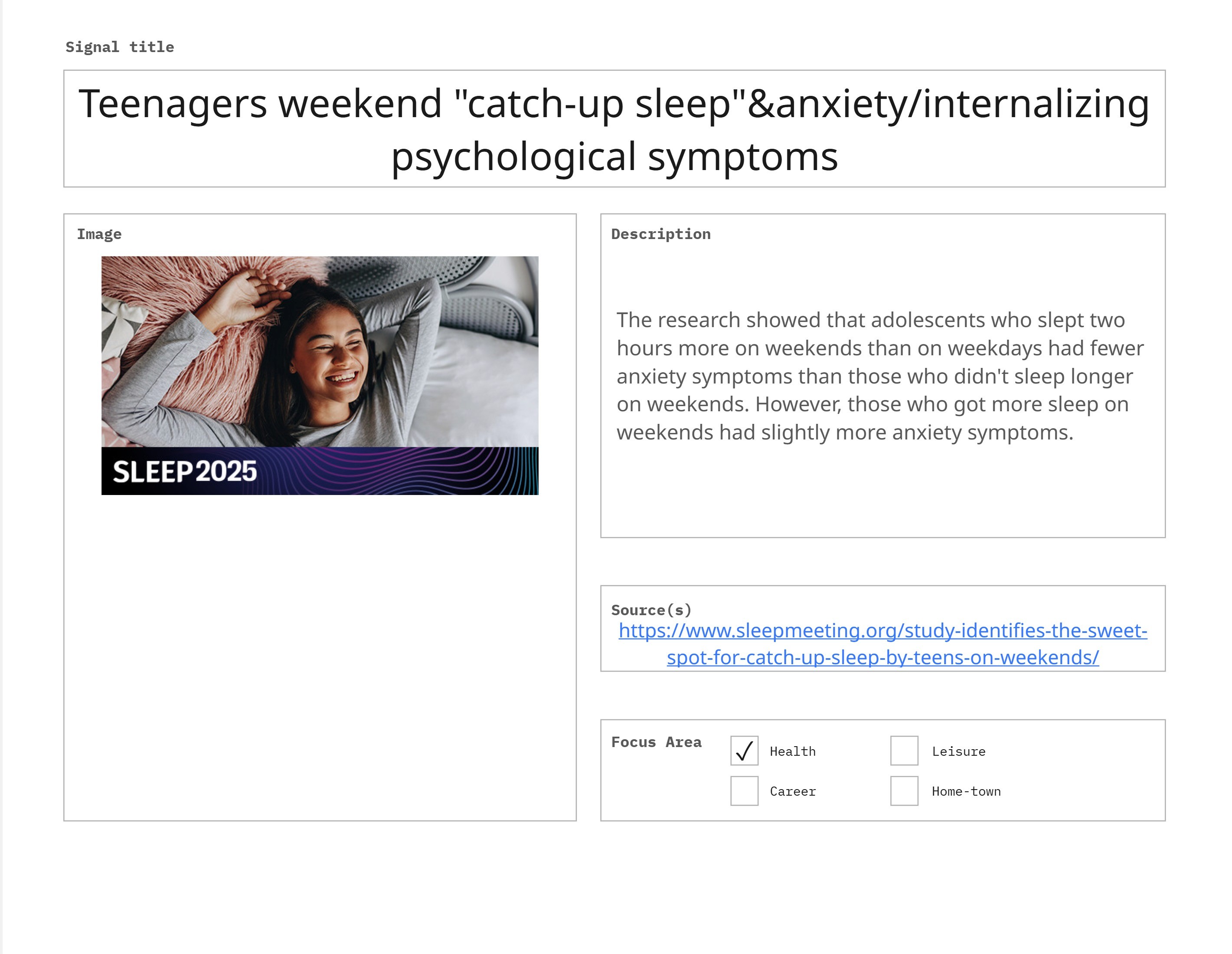
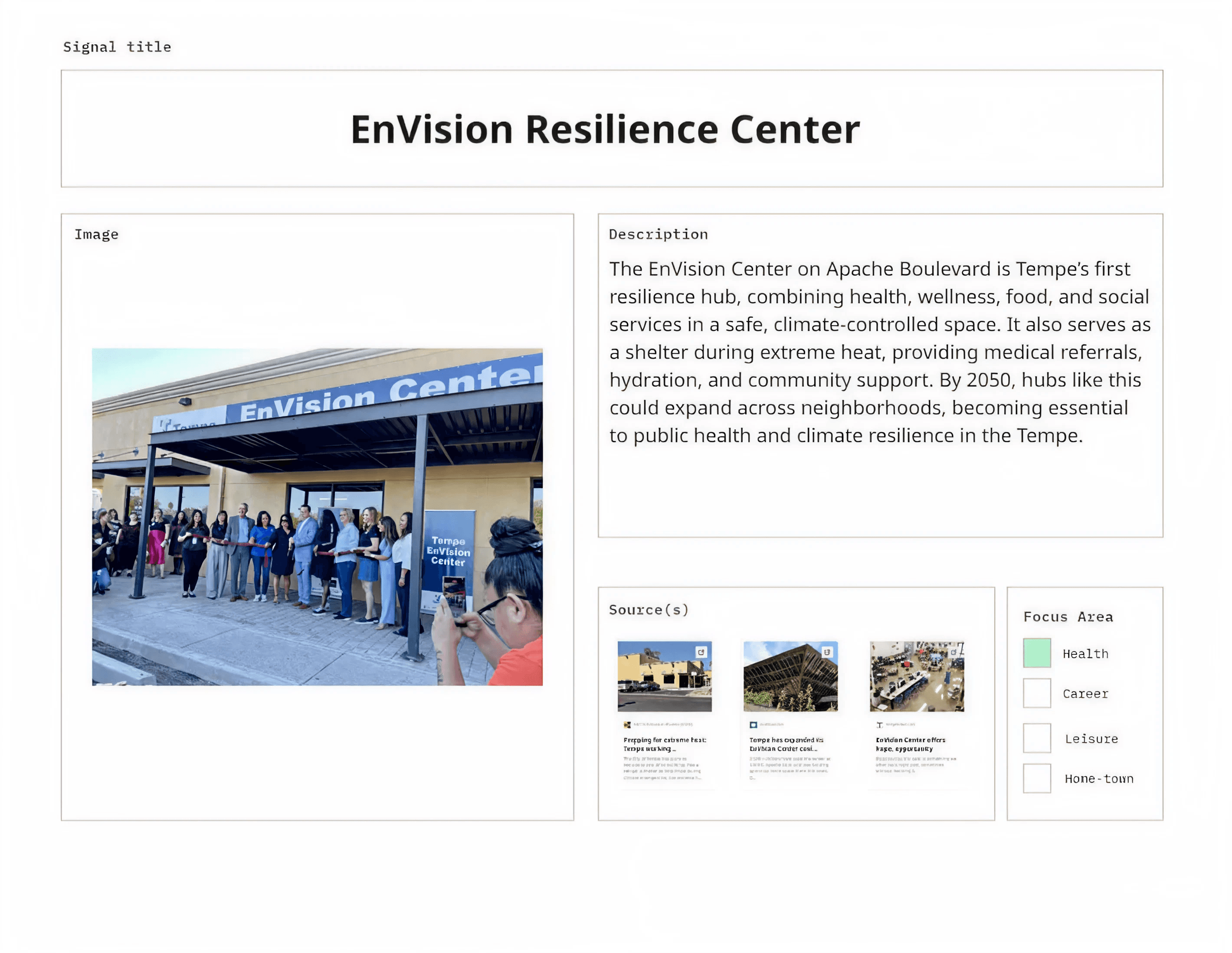
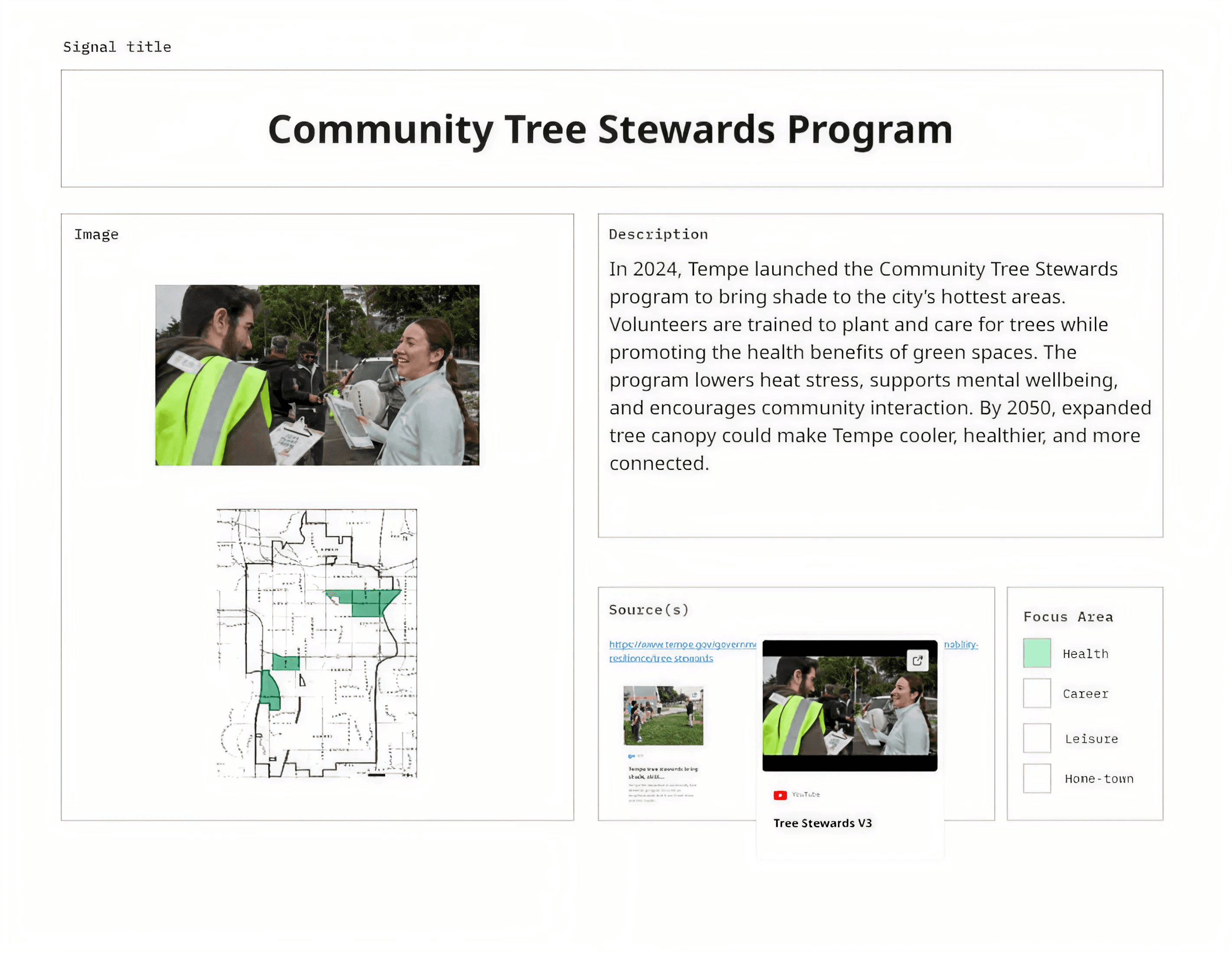
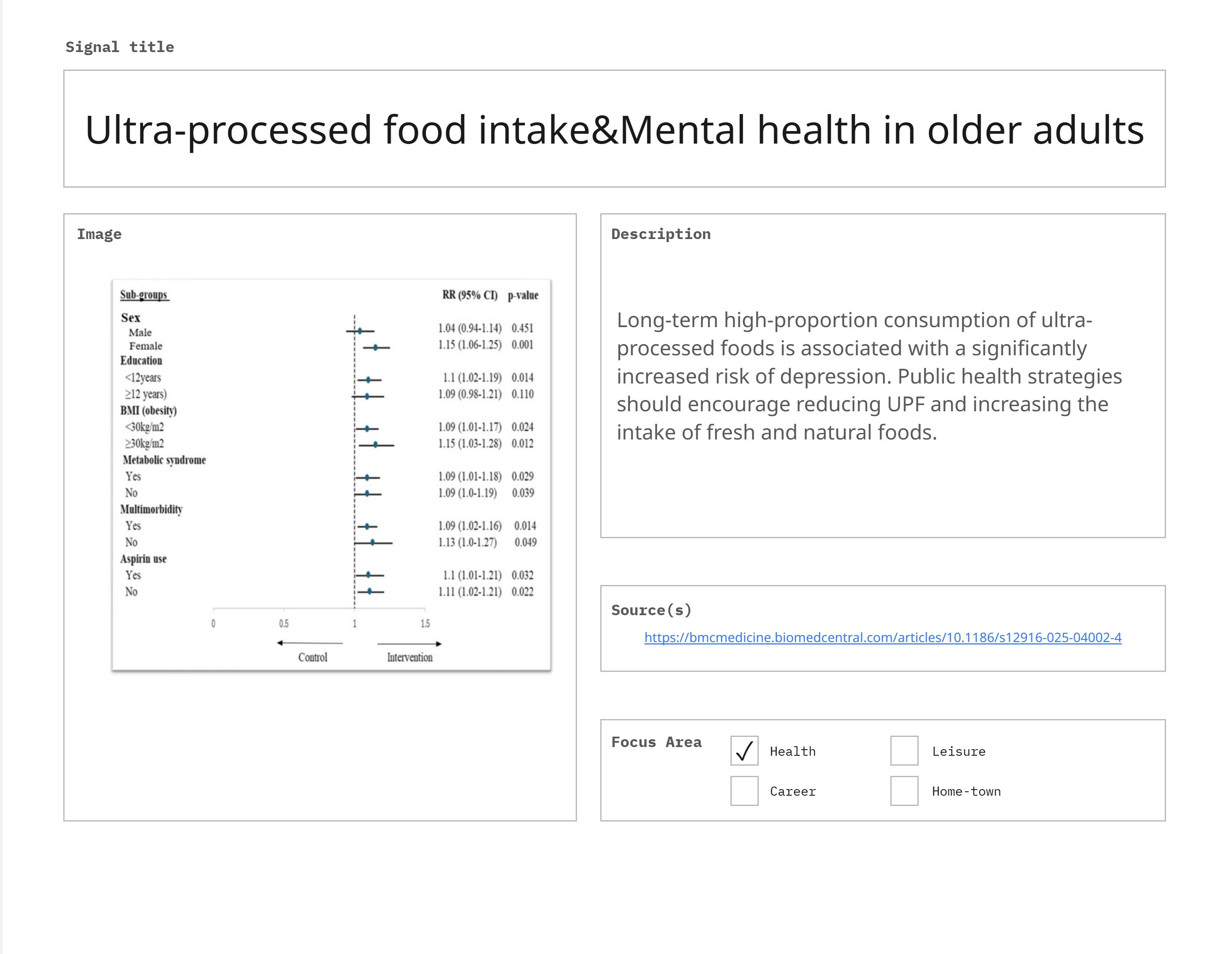
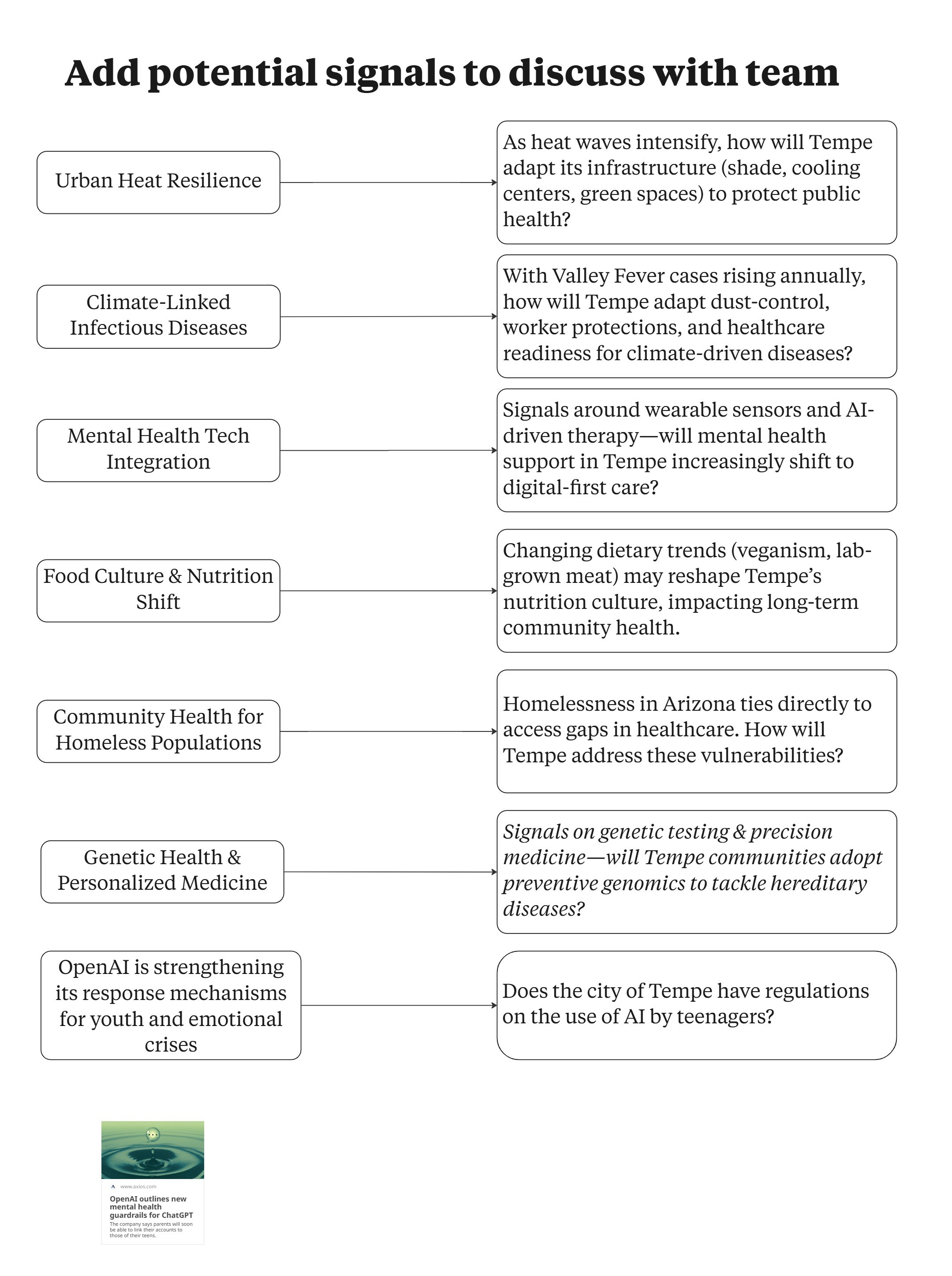
We analyzed primary, secondary, personal, and future signals to understand how health in Tempe may evolve by 2050. Signals were drawn from policy reports, academic research, news, community programs, and lived experiences to ground futures thinking in real-world evidence.
Our synthesis revealed key patterns around climate-driven health risks (extreme heat, air quality, Valley Fever), mental health shifts, food systems, urban cooling, and preventive care. My contribution focused on identifying cross-cutting themes, connecting near-term realities with long-term implications, and translating diverse signals into clear inputs for scenario development. This signal work ensured our health scenarios were research-backed, community-informed, and systemically grounded, rather than speculative in isolation.
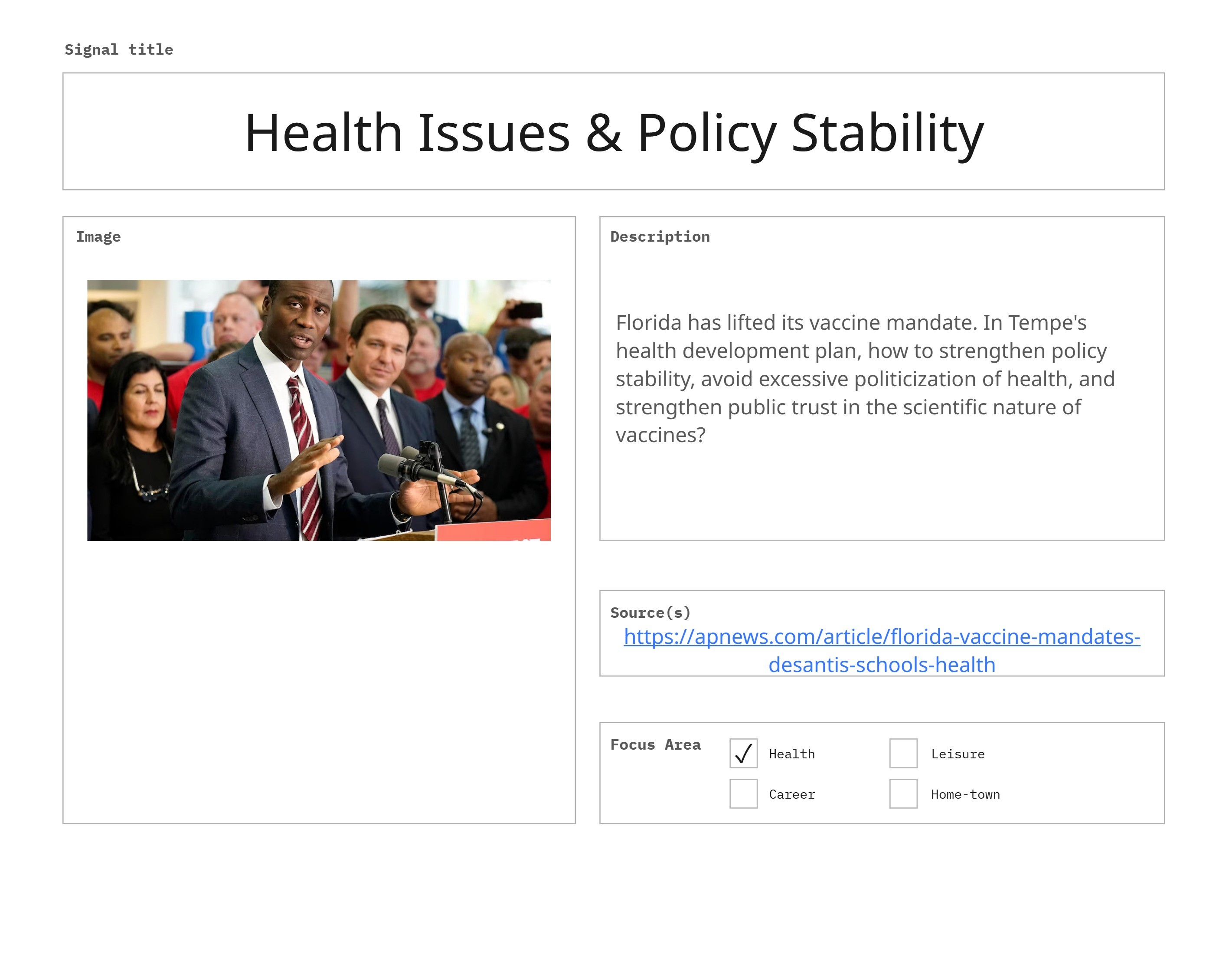
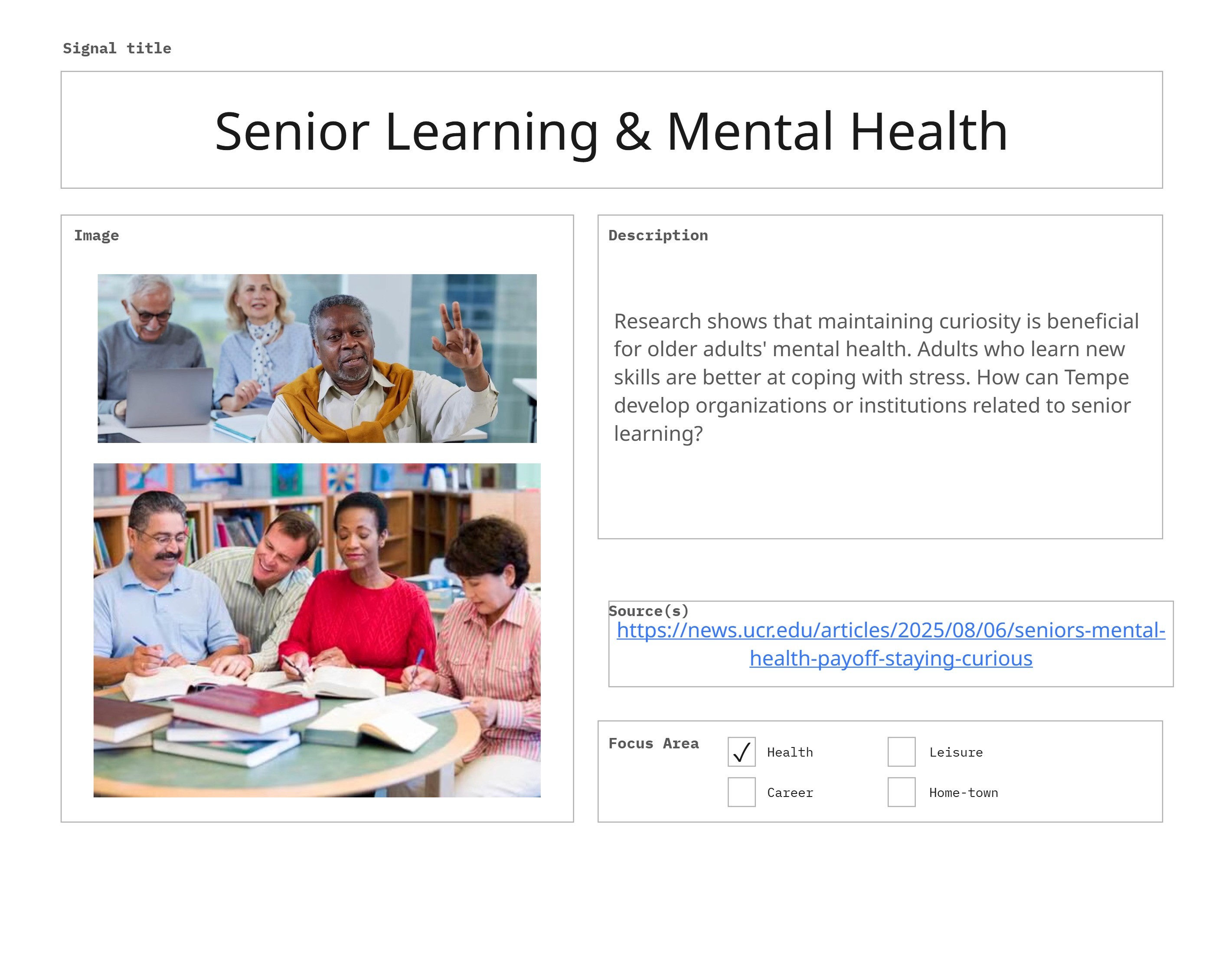
Primary Signals
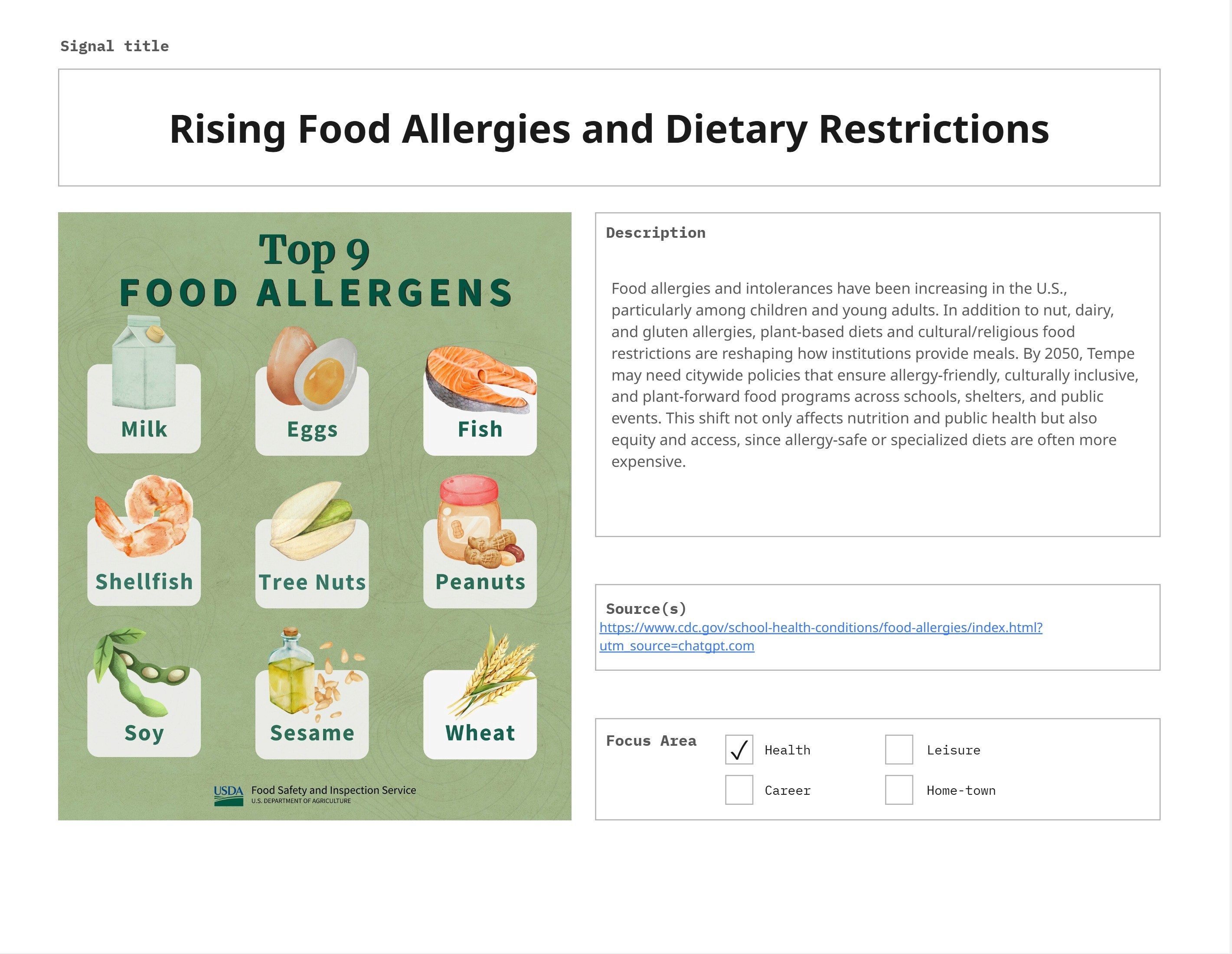
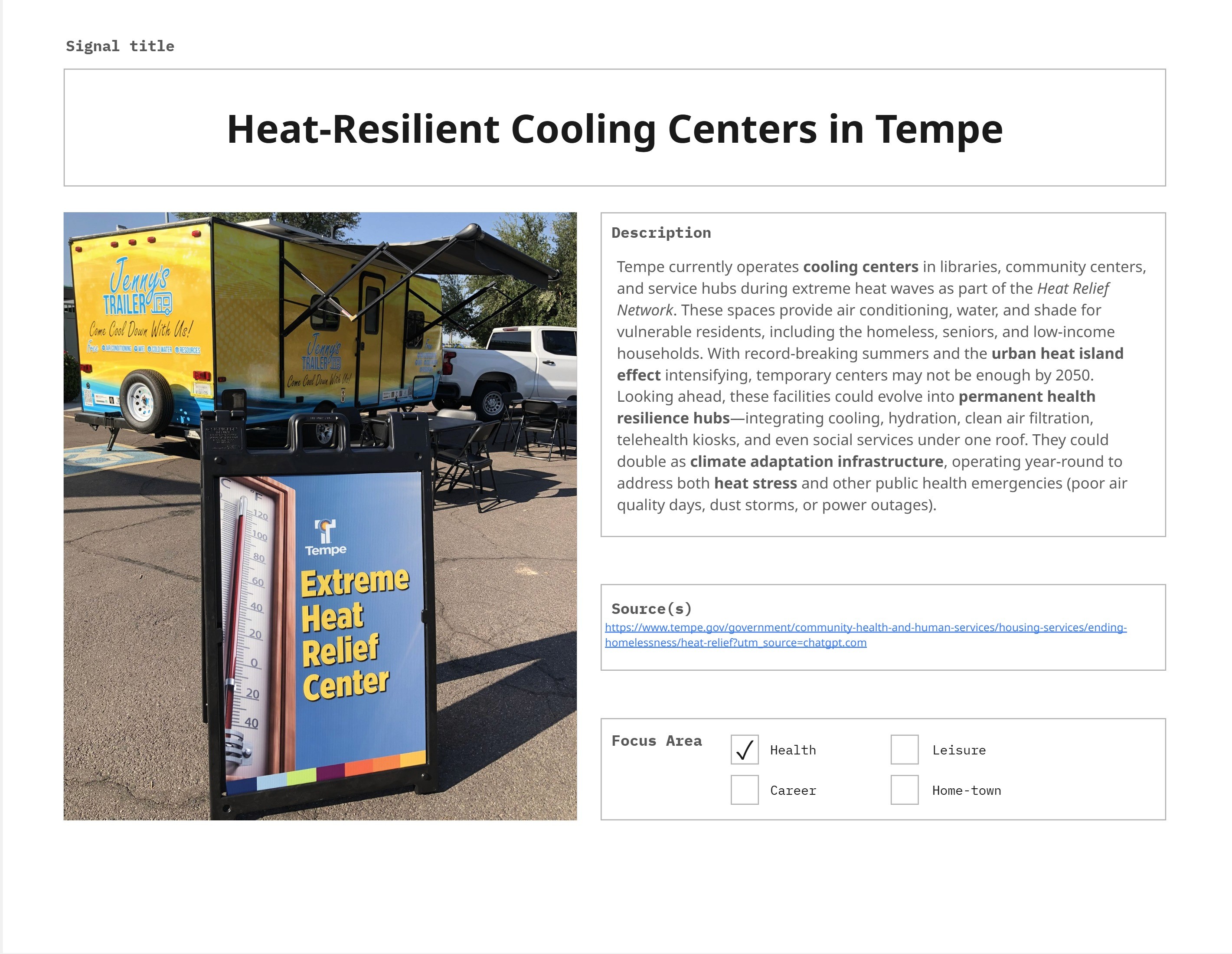
Secondary Signals
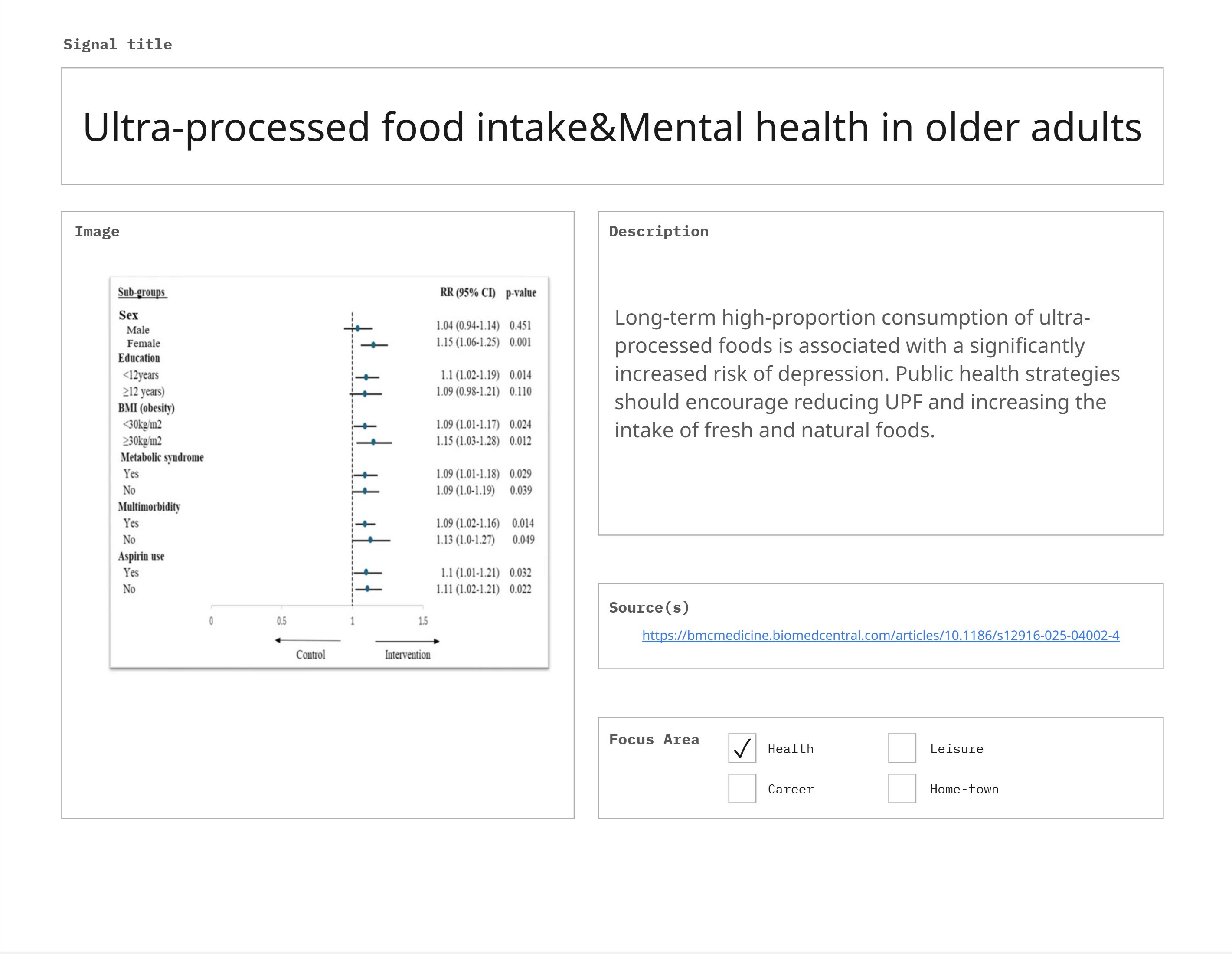
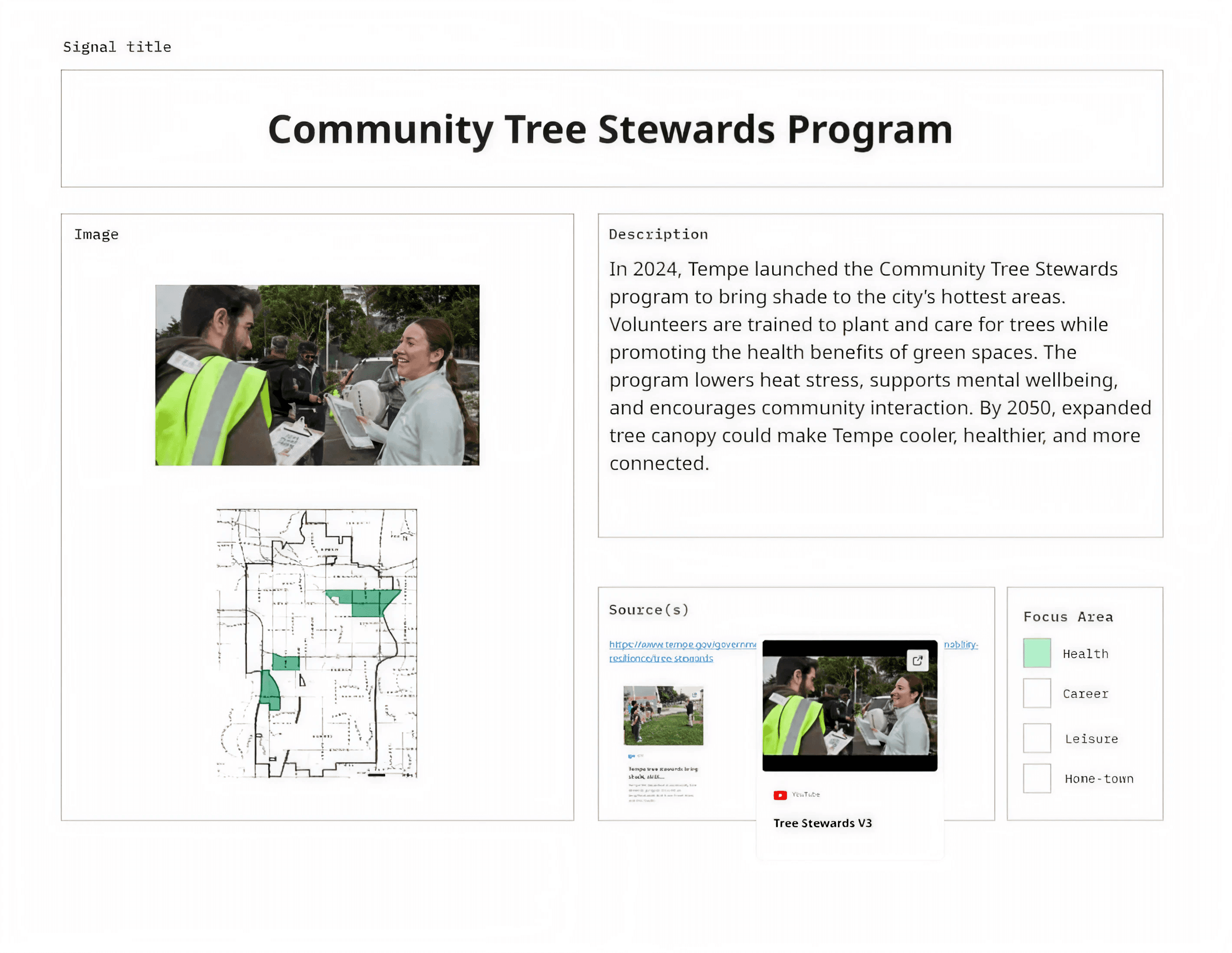
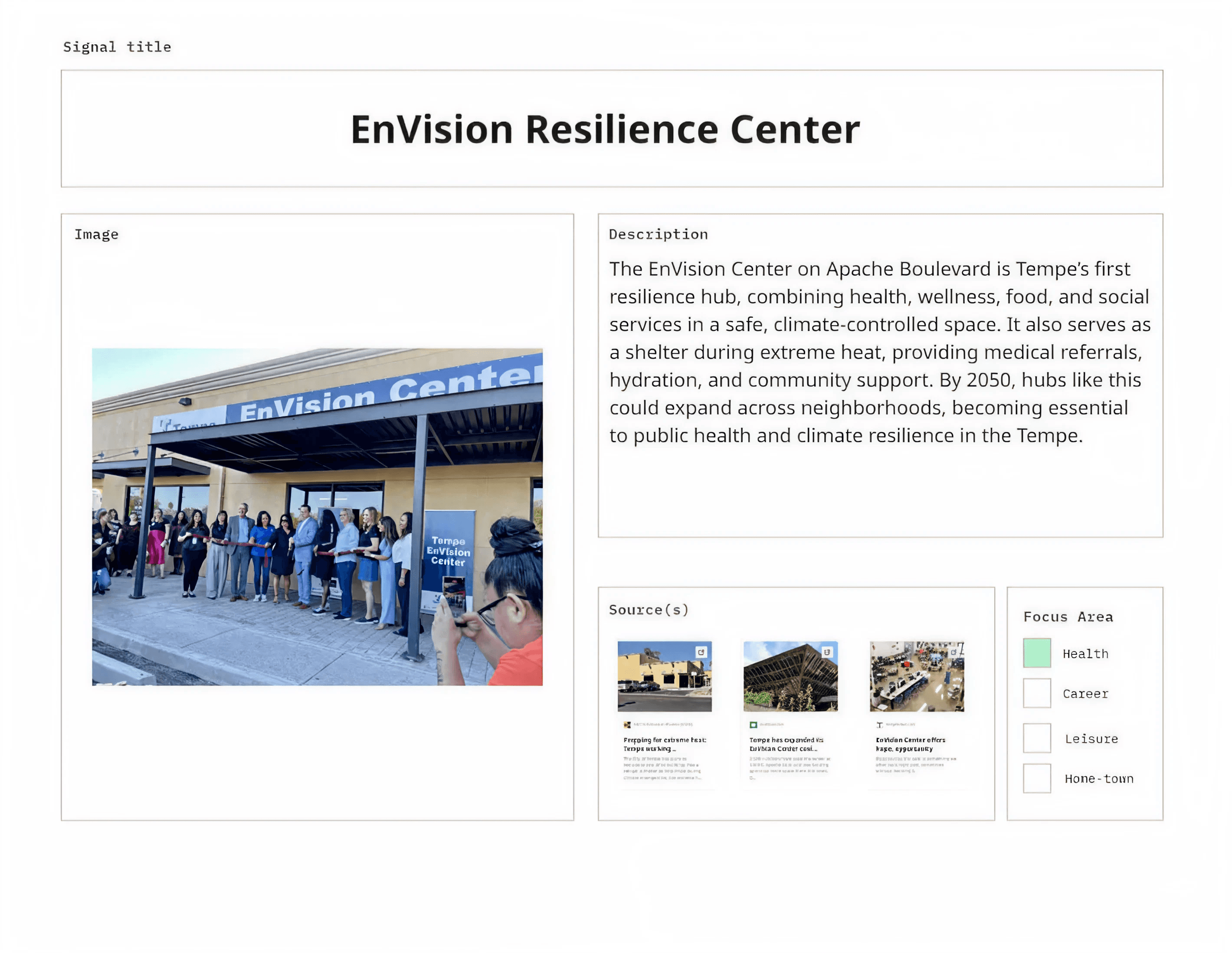
Personal Signals
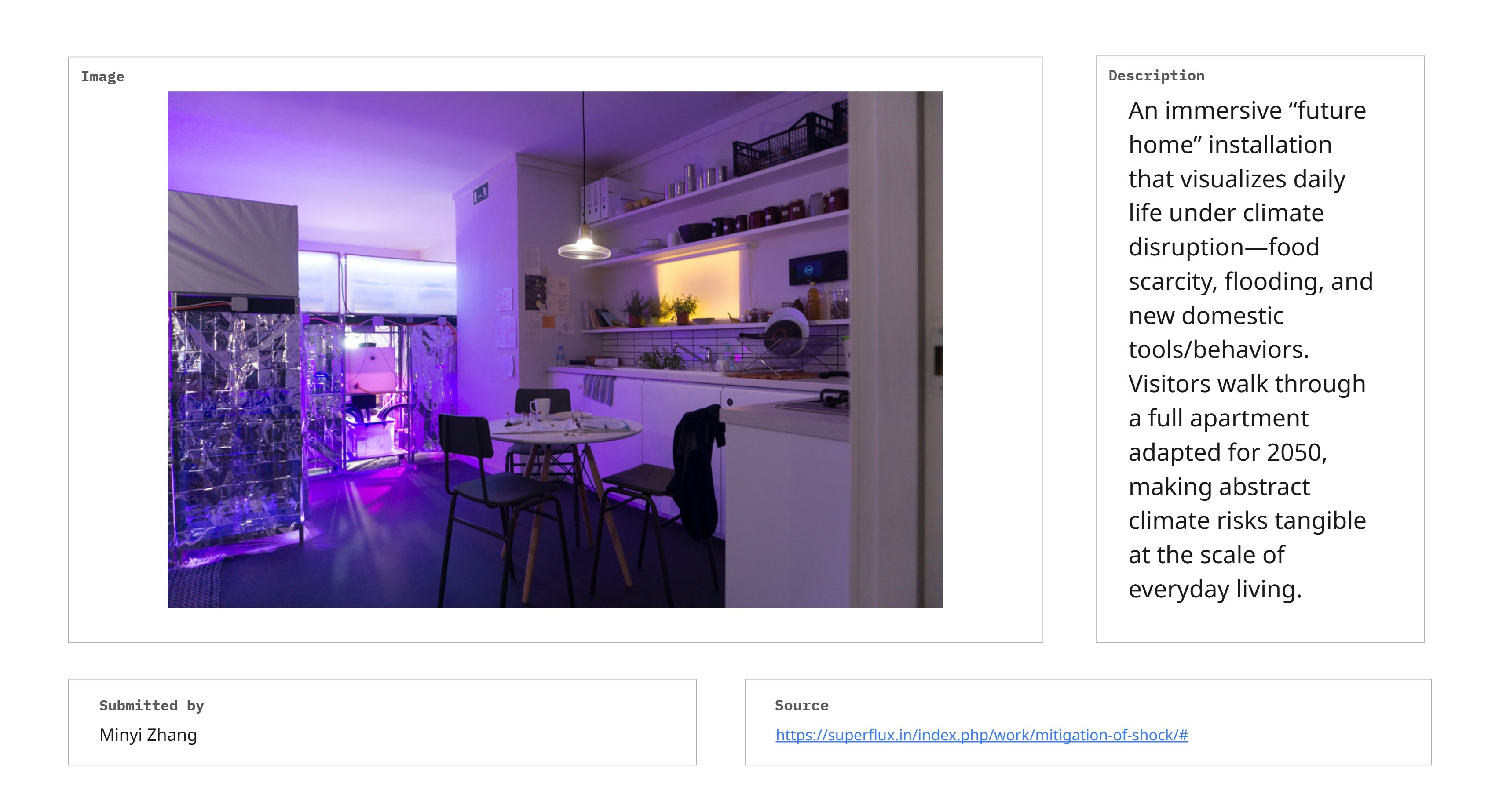
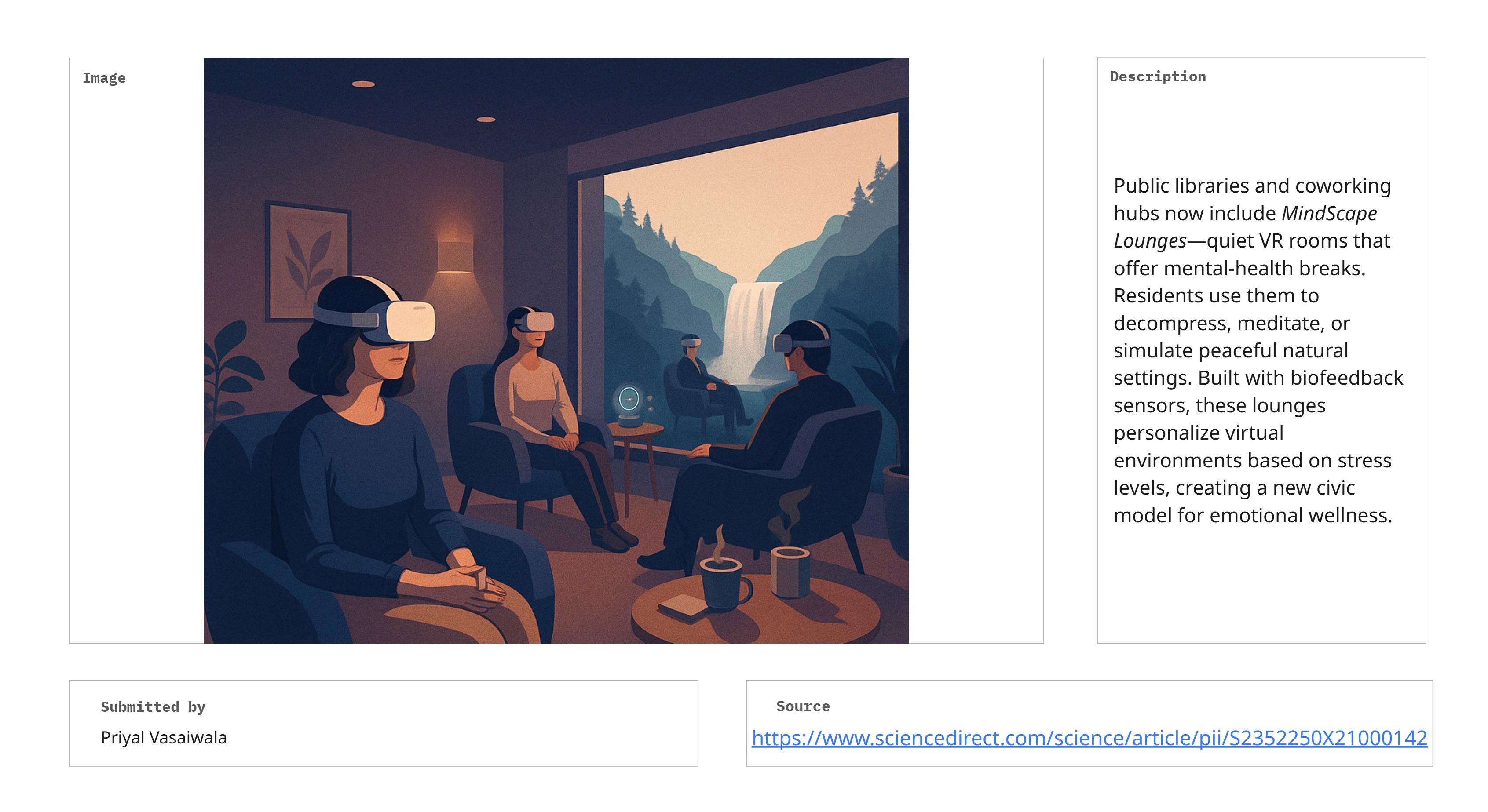
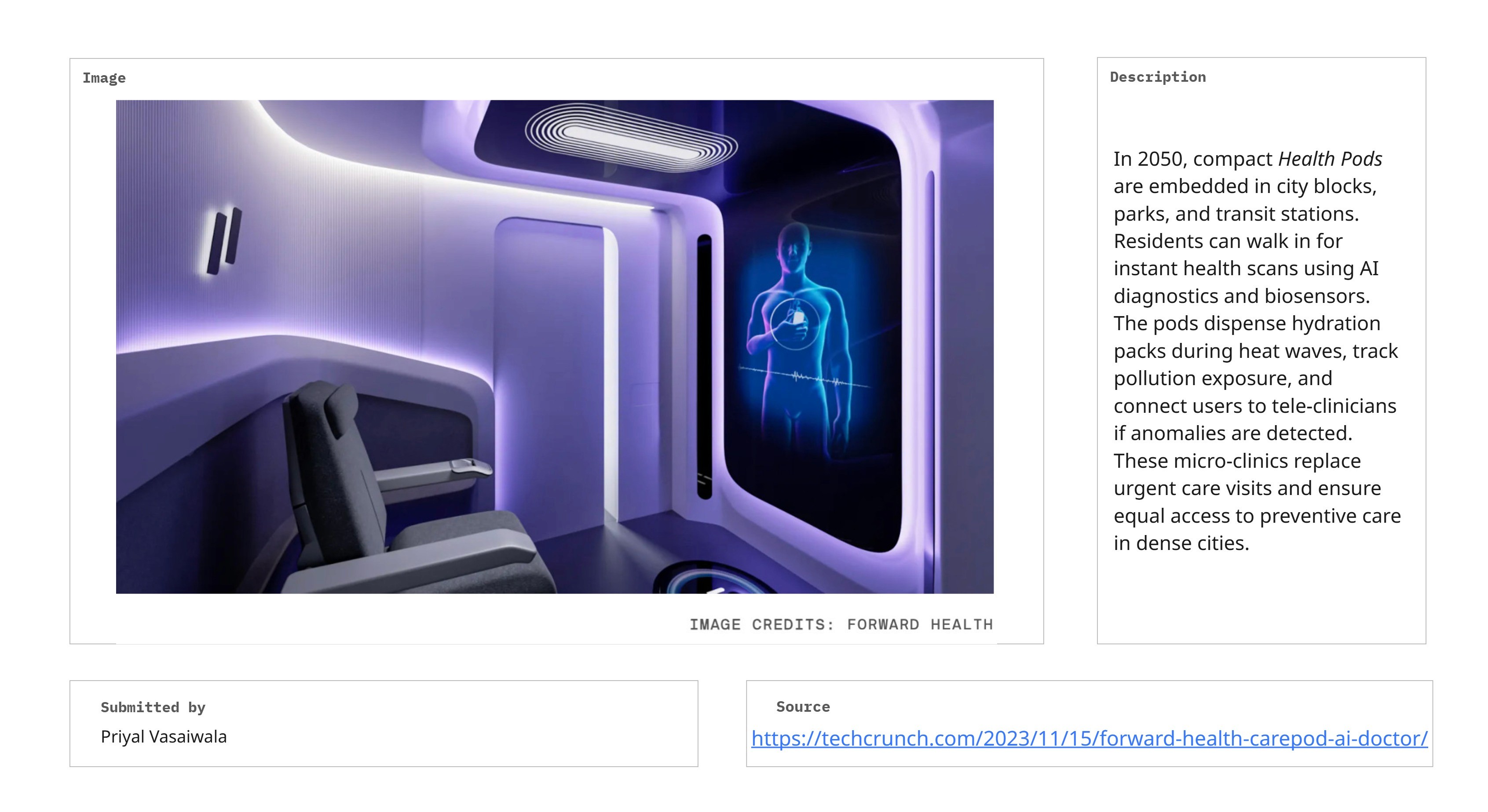
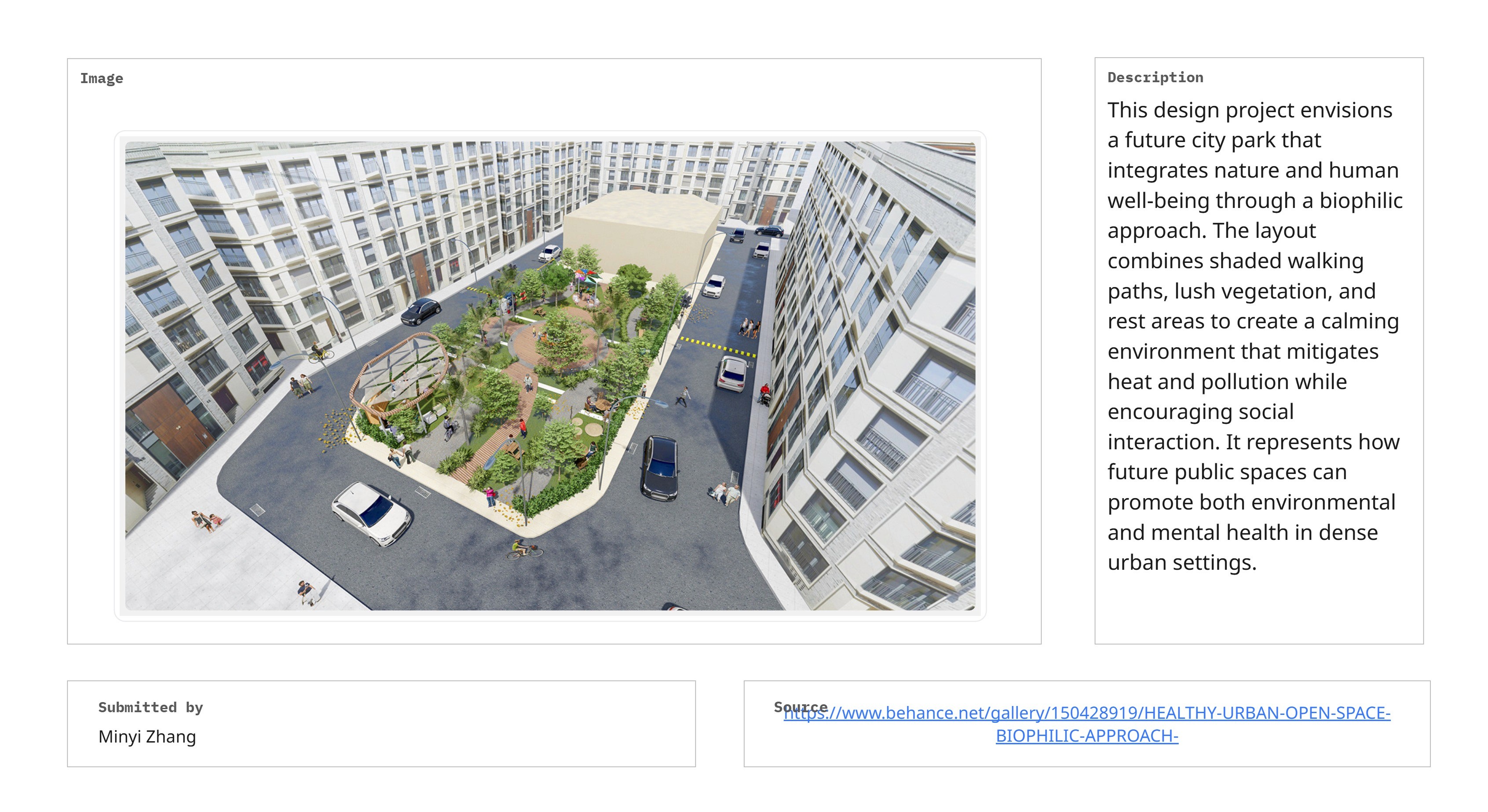
Future Signals
Framing Health Futures & Systems Planning
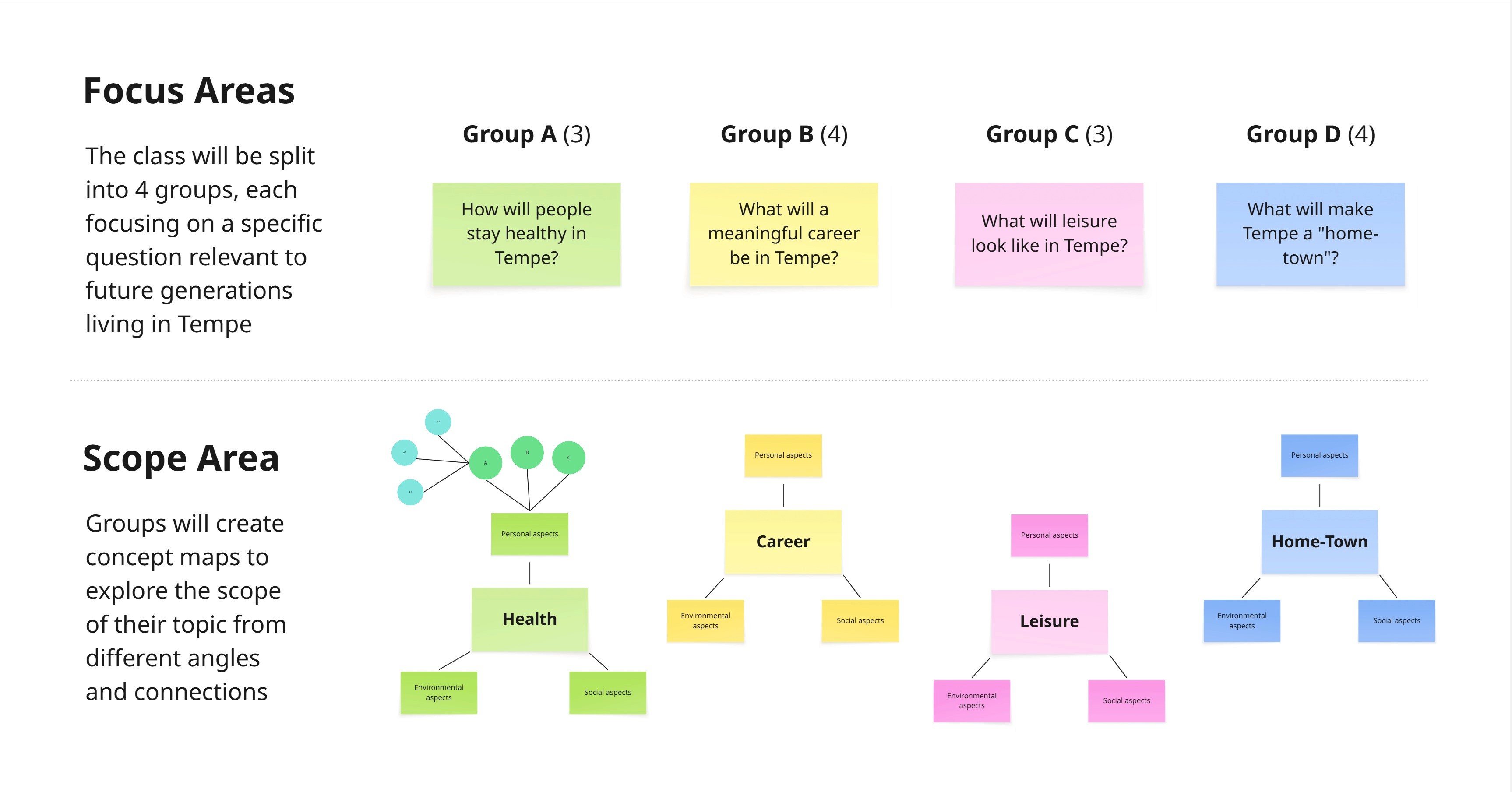
In 2050...how will people stay healthy in Tempe?
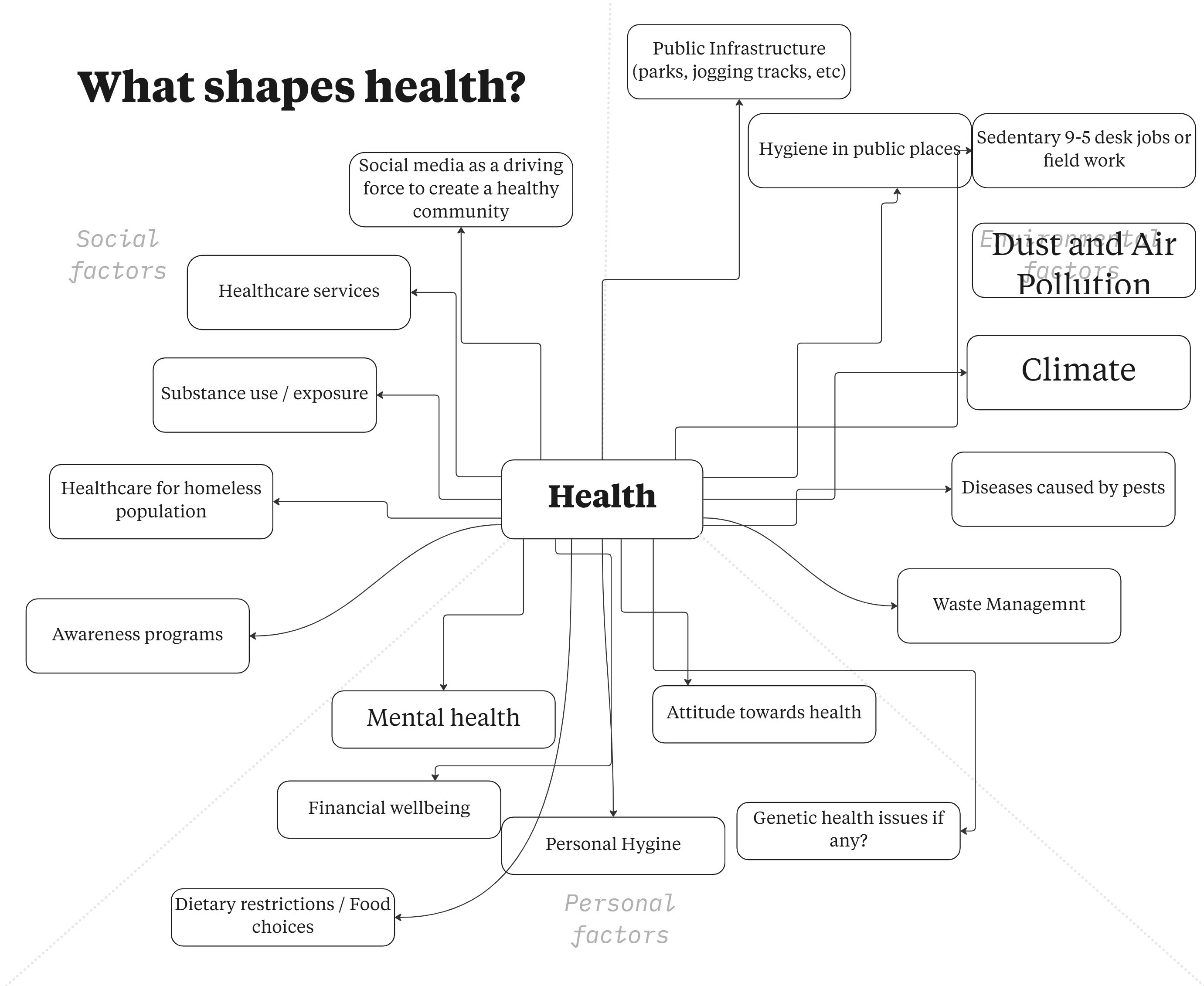
We approached health as a city-scale system, not just a healthcare issue. Our team mapped the environmental, social, and infrastructural factors shaping health in Tempe, including climate, air quality, public space, food access, mental health, and equity, to understand how these factors interact over time. Using systems mapping and stakeholder analysis, we identified key actors across city government, healthcare, community organizations, and residents. My role focused on synthesizing these relationships into clear research directions and translating complexity into actionable questions to guide scenario development. This work grounded our future health scenarios in real community needs, credible research, and long-term systems thinking, ensuring they were both visionary and feasible for city planning.
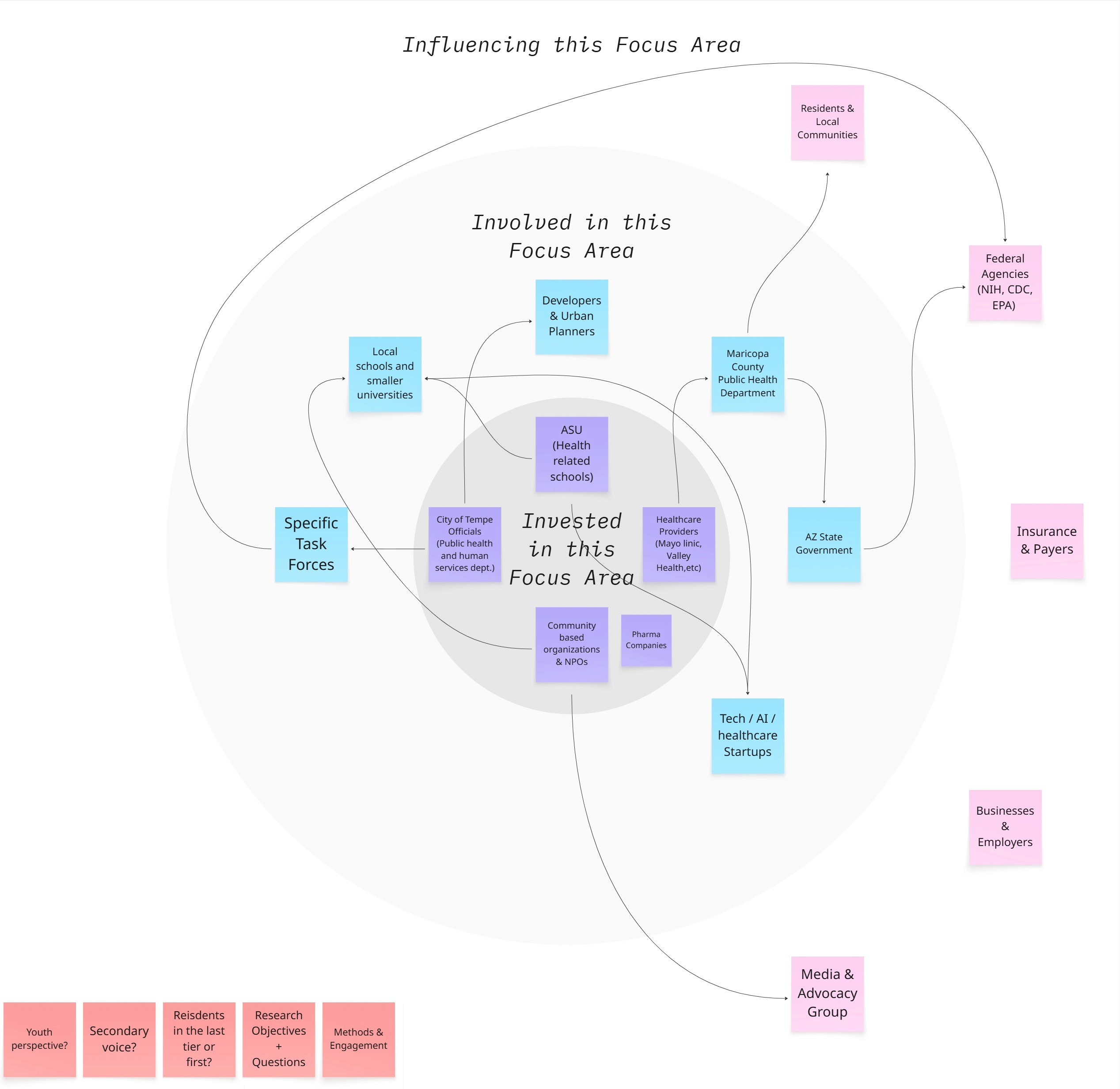
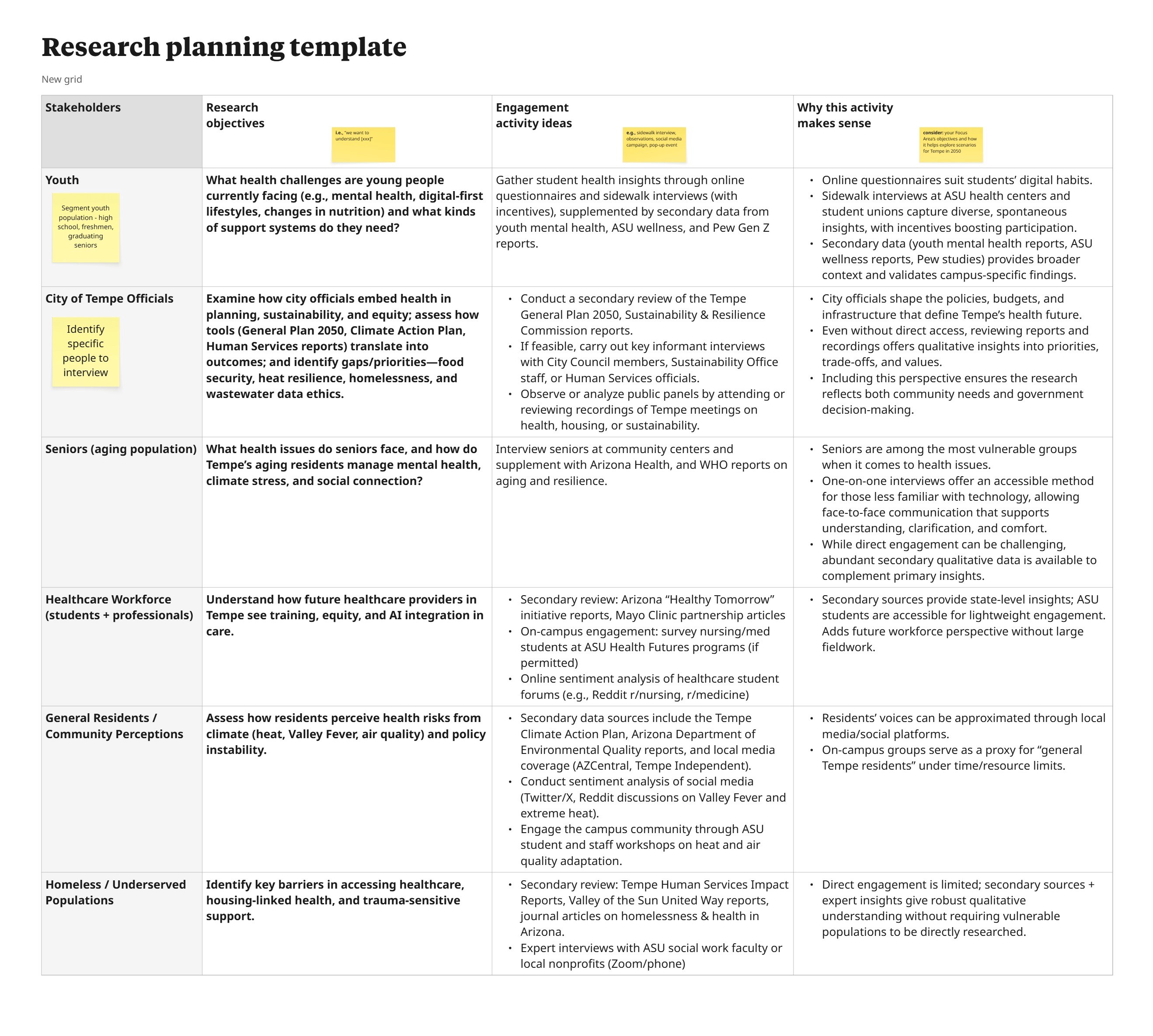
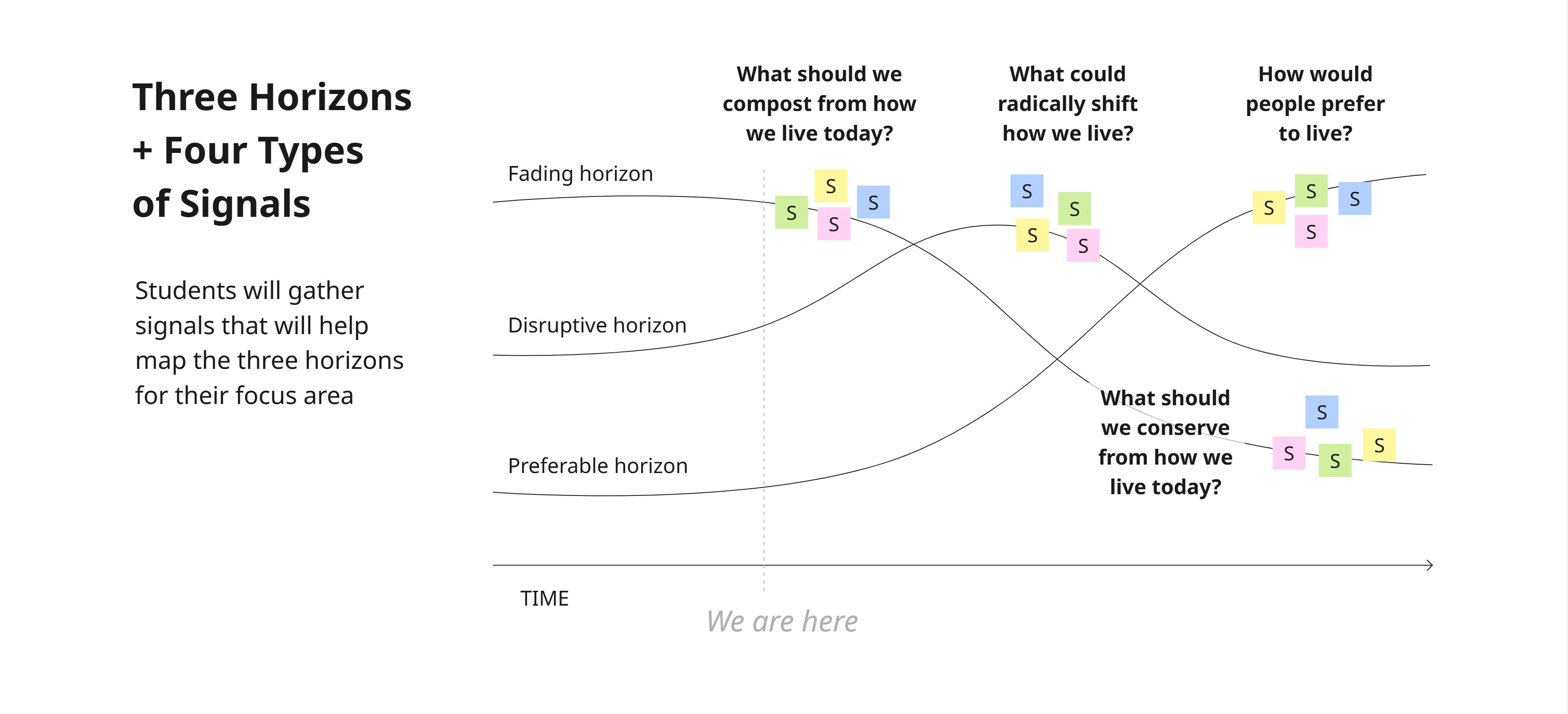
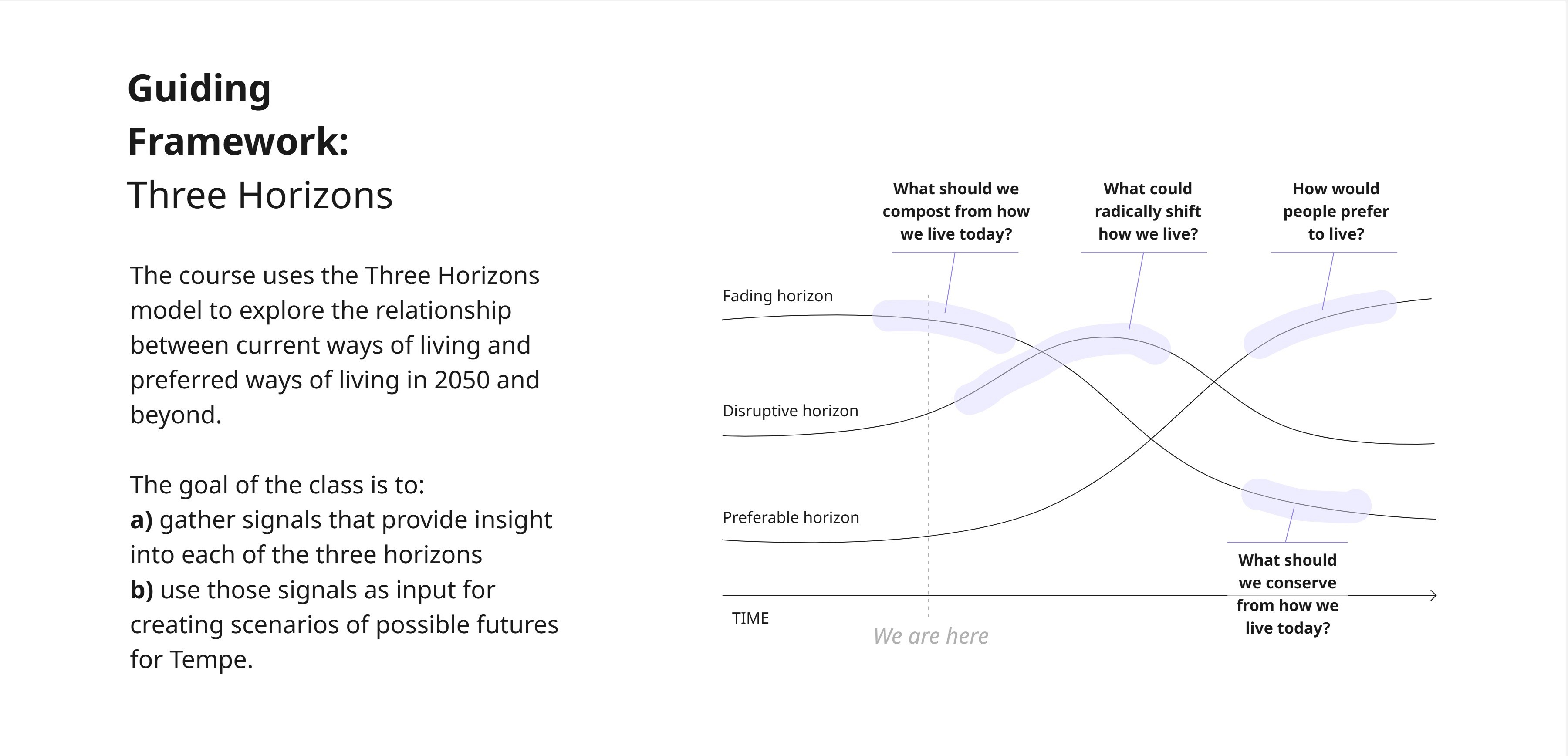
I worked with my team using the Three Horizons framework to structure our futures design process, connecting present-day realities with preferred futures for Tempe in 2050. Together, we gathered and organized signals across fading, disruptive, and preferable horizons, using four signal types: primary, secondary, personal, and future, to understand what should be conserved, composted, or radically reimagined. My contribution focused on helping synthesize signals into meaningful themes and using them as inputs for scenario building. This process provided us with a shared, systematic approach to transition from research insights to speculative yet grounded future scenarios.
Design & Research Process
In collaboration with Arizona State University, the City of Tempe, and ASU Project Cities, our team explored how Tempe can support community health and well-being by 2050. Using futures research, public engagement, and scenario-building, we identified the health challenges residents are facing today, including heat resilience, access to care, mental health, and equity. We translated these insights into actionable future health scenarios. The outcomes were shared with city leadership and the public to inform long-term health planning and policy conversations.
Project Overview
Aug 2025
Project Kickoff
Project introduction, goals, and futures framing
Sep–Oct 2025
Community Learning
Surveys, interviews, and public engagement with residents
Oct–Nov 2025
Scenario Development
Synthesizing signals into future health scenarios
Nov 2025
Open House
Public showcase to gather feedback and refine scenarios
Dec 2025
City Presentation
Final scenarios presented to City of Tempe leadership
Project Timeline
Work Overview
Timeline
August - December 2025
Responsibilities
Futures Research & Signal Analysis
Community & Public Engagement
Insight Synthesis & Sensemaking
Visual Storytelling for Futures
Scenario Development
Disciplines
Design Futures & Strategic Design
Human Computer Interaction
User Experience Research
Tools
Miro Board
Google Forms &
Slides
Focus AReA TEAM-
HEALTH
Preetham Kalle
Priyal Vasiawala
Minyi Zhang
ENGAGEMENT TEAM-
POP-UP
Preetham Kalle
Asritha Vanam
Omdevsinh Zala
Sri Gowri Harini Pasumarti
Vaibhav Doifode
FACULTY & PROGRAM SUPPORT
Andrew Whitcomb - Assistant Professor, ASU Design School
Alison Almand - Program Manager, ASU Project Cities
Tempe Futures
Designing & Exploring Possible Futures for Health in Tempe 2050